Burnout has evolved from a workplace buzzword into a silent epidemic that quietly erodes your mental clarity, physical vitality, and long-term success. It isn’t just about feeling tired after a long week; it’s a state of emotional, physical, and mental exhaustion caused by excessive and prolonged stress. If you’ve been feeling like you’re running on empty, struggling to find motivation, or finding that even simple tasks feel like climbing a mountain, you aren’t alone. In this comprehensive guide, we will explore 10 science-backed, actionable strategies to help you reclaim your energy and build a lifestyle that supports sustainable productivity without sacrificing your well-being.
Why Burnout is the Silent Productivity Killer
Most of us treat burnout like a badge of honor, assuming it’s the price we pay for ambition. But here is the truth: burnout is the enemy of high performance. When you are burnt out, your cognitive function drops, your decision-making becomes impulsive, and your creative output stalls. It’s not a sign that you aren’t working hard enough; it’s a sign that your current way of working is fundamentally unsustainable. By shifting your focus from ‘hustling’ to ‘managing energy,’ you can achieve more with less stress.
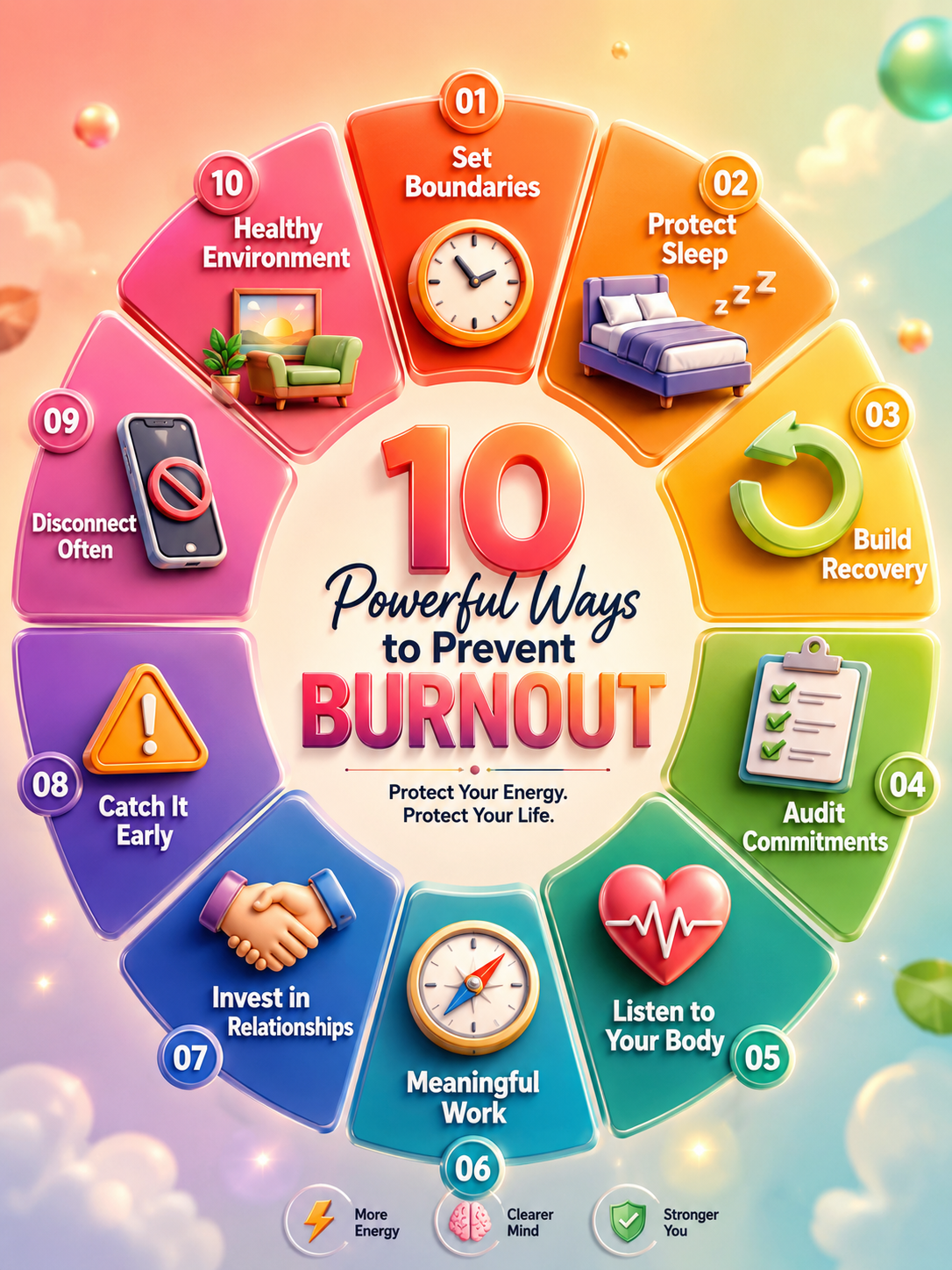
1. Master the Art of Setting Hard Boundaries
In our hyper-connected world, we are expected to be available 24/7. This constant accessibility is a recipe for disaster. Setting boundaries isn’t about being difficult; it’s about protecting your most valuable asset: your focus. You need to draw lines between your professional obligations and your personal peace. Start by setting ‘office hours’ for yourself, even if you work for yourself. Turn off non-essential notifications after a certain time, and stop checking emails while you’re eating dinner. When you protect your time, you protect your brain from the constant, low-level anxiety of pending tasks.
2. Treat Your Sleep Like a Sacred Performance Metric
If you think you can skip sleep to get more done, you are actually sabotaging your results. Sleep is the primary foundation of emotional regulation and cognitive repair. When you are sleep-deprived, your stress hormone (cortisol) spikes, making you more reactive and less resilient to daily challenges. Aim for 7-9 hours of quality sleep, and treat your bedtime routine as a non-negotiable professional commitment. Create a ‘digital sunset’ where you put away all screens an hour before bed. This simple shift can drastically improve your mood, focus, and energy the next day.
3. Build Real, Intentional Recovery Into Your Day
Most people misunderstand recovery. Scrolling through social media or watching Netflix isn’t necessarily restorative—it’s just another form of digital stimulation. Real recovery involves activities that allow your parasympathetic nervous system to take over. This includes short walks in nature, deep breathing exercises, stretching, or simply sitting in silence. You need to build these ‘micro-breaks’ into your calendar. Think of your energy like a battery; if you don’t plug it in to recharge, it will eventually drain to zero.
4. The Power of the Commitment Audit
We often fall into the trap of saying ‘yes’ to everything, forgetting that every ‘yes’ is a ‘no’ to something else—usually your own peace of mind. Regularly audit your commitments. Look at your calendar and ask: ‘Does this task move the needle on my core priorities?’ If not, it’s time to delegate, defer, or delete it. Removing low-value tasks creates the mental space necessary for high-level creative work and strategic thinking, both of which are essential for long-term success.
5. Listen to Your Body’s Internal Warning System
Your body knows you’re approaching burnout long before your mind admits it. Are you feeling uncharacteristically irritable? Are you having trouble falling asleep? Do you feel a physical knot in your stomach when you think about work? These aren’t just ‘bad days’; they are red flags. Instead of pushing through these signals with more caffeine or willpower, stop and pivot. Take a step back, assess your current workload, and ask for help or adjust your pace. Ignoring these signs is the fastest way to turn a manageable stress period into a full-blown breakdown.
6. Cultivate Meaningful Connections
Isolation is a massive catalyst for burnout. When we are stressed, we tend to withdraw, which only makes the pressure feel more intense. Human connection is a natural antidote to stress. Reach out to colleagues, friends, or family who provide support and perspective. Often, just venting about a challenge or hearing a different viewpoint can lighten the emotional load. Don’t let your work schedule crowd out the human interactions that keep you grounded and motivated.
7. Rediscover Your ‘Why’
Burnout often stems from a disconnect between our daily tasks and our deeper purpose. When you lose sight of why you are doing what you are doing, work becomes a meaningless slog. Regularly check in with your goals. Remind yourself of the impact your work has, or find ways to infuse more meaning into your routine. When you are connected to a sense of purpose, you can endure much higher levels of stress with much lower levels of exhaustion.
8. Curate Your Environment for Success
Your environment dictates your mindset. If your workspace is cluttered, chaotic, or filled with negative influences, your brain will struggle to find calm. Create a workspace that encourages focus and creativity. This applies to your digital space, too—clean up your desktop, organize your files, and clear out the digital noise. Surrounding yourself with order and positive, growth-oriented people will naturally boost your energy and help you stay resilient when things get tough.
9. Catch the Signs Before They Escalate
Burnout is a slow-burning fire, not an explosion. It starts with small things: a missed deadline, a snappy comment to a coworker, or a lack of interest in a project you used to love. If you notice these symptoms, treat them with the same urgency as a physical illness. Take a ‘mental health day,’ reset your priorities, or seek professional support. The earlier you catch the symptoms, the easier they are to manage. Don’t wait until you’re completely drained to make a change.
10. Practice Radical Disconnection
Finally, you must learn to fully detach from work. When you are ‘off,’ be completely off. If you are constantly thinking about your to-do list while you are with your family or trying to relax, you aren’t actually recovering. Your brain needs complete downtime to process information and reset. Set firm boundaries around work communication and make it a point to engage in hobbies that have absolutely nothing to do with your career. This practice of radical disconnection will make you sharper, more creative, and more productive when you return to your desk.
Final Thoughts on Sustainable Success
Burnout is not inevitable. It is a byproduct of a culture that values quantity over quality and speed over sustainability. By implementing these 10 strategies, you are not just preventing exhaustion; you are building a foundation for a high-performance life that lasts for decades, not just months. Remember, the goal is not to do more—it’s to be more. When you master your energy, you master your life. Start small, stay consistent, and prioritize your peace above all else.