Ever walk into your home and feel a wave of overwhelm? You know the feeling – drawers overflowing, countertops buried, closets packed to the brim. It’s like a physical manifestation of mental fog! 🌫️ So many people think that to get organized, you need to spend a fortune on fancy acrylic organizers or matching storage bins. 📦 But here’s a secret: true minimalist living isn’t about buying more plastic to hide your excess stuff. 🛑 It’s about a mindset shift, stopping impulse buys before they happen, and freeing up valuable cash flow. 💵
So, how do you actually declutter your home on a budget and save money in the process? It’s all about tackling those clutter hotspots smartly, ditching the expensive storage solutions, and adopting simple rules like the classic “one-in, one-out.” Instead of just tossing unwanted items, think about selling them on local marketplaces or donating them. This not only cuts down on living costs but also prevents you from buying duplicates and helps curb that impulse spending habit.
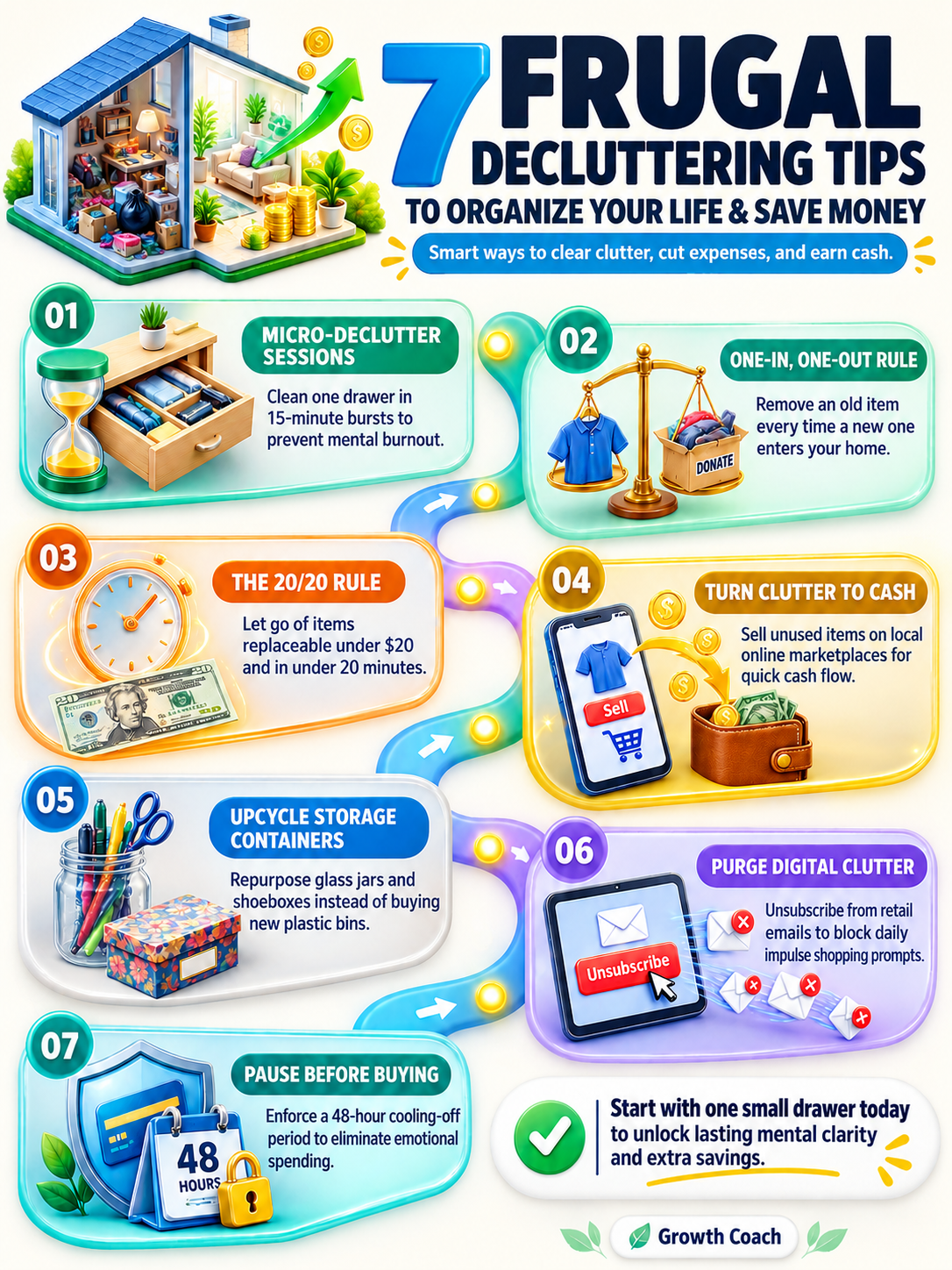
Here at Growth Coach, we’re all about helping you streamline your environment to unlock peak performance and mental clarity. 🚀 Let’s dive into seven practical, super low-cost decluttering strategies you can start implementing right now. 🎯
🌱 1. Start Small with Micro-Decluttering Sessions ⏱️
Trying to declutter your entire house in one weekend? That’s a one-way ticket to burnout! 😫 When the chaos feels overwhelming, the best approach is to shrink your focus. Making your target area smaller makes getting started feel simple and totally stress-free. 🧘
- Set a 15-Minute Timer: Dedicate your energy to one specific zone – think a single junk drawer, the top of your nightstand, or just one kitchen shelf. Work until the timer rings, then step away. You’ll be amazed at how much you can accomplish and feel genuinely accomplished.
- Pick Single Micro-Zones: Don’t try to tackle a whole room. Focus on a very specific, small area. This prevents decision fatigue from creeping in, allowing you to make quicker, clearer choices about what stays and what goes. ✂️
- Build Daily Momentum: Small, consistent wins are the secret sauce to sustainable habits. Doing these short bursts daily creates a compounding effect that’s easy to maintain over months, unlike those dreaded annual purges.
Breaking down the decluttering process into these micro-sessions is key. It prevents that overwhelming feeling and helps you make faster, more confident decisions. 🧠 You’re essentially training your brain to handle clutter reduction without the stress. ✂️
📌 Key Takeaway: Consistency trumps intensity every time. Sorting through one small drawer each evening will clear out far more clutter over a year than a single, overwhelming weekend purge you’ll likely dread and postpone.
Once you master these micro-sessions, you’ll be ready to adopt simple rules that prevent new clutter from entering your home in the first place. 🚪 Let’s talk about the golden rule of decluttering: the “one-in, one-out” principle. ⚖️
🔄 2. Enforce the Strict “One-In, One-Out” Rule 🛍️
Managing clutter effectively in the long run is SO much easier when you have control over what comes into your home. 🛑 Implementing a simple threshold keeps your storage space balanced, meaning you won’t constantly be battling against overflowing closets and drawers. ⚖️
- Wardrobe Balance: This is a big one! Every time you bring home a new shirt, pair of shoes, or even a pair of jeans, commit to letting go of an older item. Sell it, donate it, or repurpose it.
- Book & Media Swap: Love reading? Apply the rule here too. Finish a book before you buy or borrow a new one. For movies or games, the same principle applies.
- Kitchen Tool Caps: Keep your countertops clear and your kitchen functional by donating or selling old gadgets whenever you upgrade or acquire a new tool.
This rule is a powerful tool to combat impulse buying. It forces you to pause and genuinely evaluate whether you need that new item, creating a natural cooling-off period that stops unnecessary purchases in their tracks. 🛑 Think of it as a built-in pause button for your spending habits. 💳
💡 Quick Tip: Keep a donation bag or box readily accessible inside your closet. The moment you realize you no longer love or need an item, toss it into the bag. It’s then ready to go the next time you’re out!
Controlling the inflow of items is crucial, but what about all those duplicate items already lurking in your cabinets? 🔍 Let’s explore a fantastic rule for tackling those “just in case” items: the 20/20 rule. ⏳
⏳ 3. Apply the 20/20 Rule for “Just In Case” Items 🤷
We all have them – those items we keep purely because we *might* need them someday. This is a major culprit for filling up spare closets and storage spaces with unnecessary weight. 🧳 The 20/20 rule provides a clear, logical framework to let go of low-value clutter without the guilt or fear of future regret. 🛡️
- Under $20 to Replace: If an item costs less than $20 to buy brand new, is it really worth the precious space it’s taking up for years? Probably not.
- Under 20 Minutes Away: If you can easily replace or even borrow the item within 20 minutes from a local store or a neighbor, then letting it go is a no-brainer.
- Ditch Spare Cords & Mystery Items: This rule is perfect for those tangled electronic bins filled with mystery charging cords, old remote controls you don’t even know what they’re for, and random hardware.
The reality is, most of these “just-in-case” items end up sitting forgotten in storage boxes for years, never being used. 📦 Letting them go creates immediate breathing room and a sense of lightness throughout your home. 🌬️ It’s about making space for what you actually use and love.
🏆 Best Practice: Before you rush out to buy specialty tools or items you’ll only use for a specific event (like party decorations), check if your local community has a lending library or ask your neighbors. Borrowing items not only saves you money but also keeps your home clutter-free!
Clearing out those unused possessions doesn’t just free up space; it opens up an exciting opportunity to generate some extra cash flow! 💵 Let’s talk about how you can turn your unwanted clutter into real money. 🛒
💵 4. Turn Unwanted Clutter Into Extra Cash Flow 🛒
Did you know that your unused possessions are sitting on a goldmine of hidden value? 📈 This overlooked value could easily fund your savings goals, pay down debt, or simply give you some extra spending money. Selling quality items online or through local channels is a fantastic way to turn physical clutter directly into cash. 💰
- Local Marketplaces: Platforms like Facebook Marketplace, OfferUp, or Craigslist are perfect for selling larger items like furniture, tools, electronics, and even kids’ gear. Focus on quick local cash pick-ups to streamline the process.
- Consignment Apps: For brand-name clothing, shoes, and accessories, apps like Poshmark, ThredUp, or Mercari can connect you with buyers nationwide. It takes a little more effort, but the return can be worth it.
- Host a Neighborhood Yard Sale: This is a classic for a reason! Bundle lower-value household goods, kitchenware, books, and toys together. It’s a great way to clear out a lot of items quickly and attract bargain hunters.
Seeing real dollars appear in your bank account can transform decluttering from a tedious chore into a genuinely rewarding project. 🛍️ That extra income can be a game-changer for your finances, helping you pay down debt faster or build up that crucial emergency fund. 🛡️
🧠 Expert Insight: Set a strict deadline for items you’ve tagged for sale – 14 days is a good rule of thumb. If an item doesn’t sell within that timeframe, donate it immediately. This keeps your space moving forward and prevents your home from becoming a consignment shop!
Turning clutter into cash feels fantastic, but let’s be honest: keeping your home organized shouldn’t require buying a bunch of new stuff. 🛑 It’s time to get creative with upcycling containers! 🎨
🎨 5. Upcycle Household Containers Instead of Buying Bins 🍾
Those big-box stores make a fortune selling rows upon rows of plastic organizer bins, but here’s the catch: buying new storage often just adds more physical items to your home. 🛒 Why buy new when you can repurpose items you already own? It saves you cash and drastically reduces waste. 🌿
- Glass Jars for Pantry & More: Clean out those pasta sauce jars, pickle jars, or mason jars. They are perfect for organizing spices, grains, nuts, hardware supplies, or even craft items. They look neat and keep things contained.
- Shoebox Drawer Dividers: Don’t toss those sturdy shoeboxes! Cut off the tops and use them to create custom dividers for socks, underwear, cables, office supplies, or anything else cluttering up deeper drawers.
- Repurpose Existing Baskets: Woven baskets, decorative tins, or even sturdy cardboard boxes can be moved around your house. A basket that once held magazines in the living room could be perfect for extra blankets or kids’ toys in a bedroom or playroom.
Creative upcycling keeps your organizing budget at absolute zero while delivering that clean, visual order you’re looking for. 🧰 It forces you to work with what you have, organizing your existing belongings rather than just buying more storage space for them. 📦
⚠️ Common Mistake: People often buy cute storage containers *before* they’ve sorted through their belongings. This is a trap! Always purge unwanted items first. That way, you only organize what you truly need, use, and love, ensuring you don’t buy unnecessary storage.
Okay, so organizing your physical belongings is one part of the equation. But what about the digital clutter that’s constantly vying for your attention? 📱 Streamlining your digital environment is just as crucial for focus and productivity. 💻
💻 6. Streamline Your Digital Environment and Inbox 📧
Digital clutter can cause just as much silent stress as those physical piles sitting on your desk. 🤯 A messy desktop, thousands of unread emails, and an endless barrage of phone notifications can seriously drain your attention span daily. 🧠
- Unsubscribe from Retail Emails: Be ruthless! Stop those promotional newsletters at the source. Every email you unsubscribe from is one less temptation and one less item cluttering your inbox.
- Clean Your Phone Screen: Delete unused apps that you never open. Then, organize the ones you do use into neat, category-focused folders. It makes finding what you need so much faster.
- Organize Cloud Files: Clear out old downloads, duplicate photos, and temporary files from your cloud storage. This not only declutters your digital space but can also prevent you from paying for extra storage tiers you don’t need.
A clean digital workspace cuts down on daily friction and friction leads to wasted time. 🎯 It keeps your attention focused on high-value tasks and goals. Plus, it can save you money on those monthly subscription fees for extra digital storage. 📈
📖 Mini Summary: Digital decluttering isn’t just about aesthetics; it actively protects your mental energy, prevents impulse buying triggered by constant email promotions, and can save you real money on cloud storage fees.
Once you’ve got your physical and digital clutter under control, the final step to lasting success is solidifying a frugal mindset when it comes to acquiring new things. 🌿 Let’s compare the frugal approach to the traditional, often costly, organizing methods. 🧠
📊 Comparing Frugal Organization vs. High-Cost Organizing ⚖️
When you compare traditional organizing habits with a truly frugal approach, it becomes clear why spending less money often leads to far better, more sustainable results. 👥
| Decluttering Focus | 🔴 Traditional Approach | 🟢 Frugal Growth Strategy |
|---|---|---|
| Storage Solutions | Buys expensive plastic containers and bins. 🛍️ | Upcycles jars, boxes, and existing baskets. 📦 |
| Unwanted Items | Often throws items away or leaves them in piles. 🗑️ | Sells items for cash or donates them strategically. 💵 |
| Project Pace | Tries to tackle everything in overwhelming weekend marathons. 😫 | Uses short, manageable 15-minute daily micro-sessions. ⏱️ |
| Shopping Habits | Continues buying new items impulsively without limits. 💳 | Applies the “one-in, one-out” rule to control inflow. ⚖️ |
| “Just in Case” Items | Hoards items for uncertain future needs. 🤷 | Applies the 20/20 rule to let go of low-value items. ⏳ |
| Digital Clutter | Ignores digital organization, leading to distraction. 🤯 | Unsubscribes from emails and organizes digital files. 📧 |
By adopting these simple, intentional choices, you can cultivate a peaceful, organized environment without draining your bank account. 🌿 Let’s quickly recap the key takeaways to help you maintain your momentum. 🏆
📌 Key Takeaways for Frugal Home Organization 💡
- Tackle decluttering using short, 15-minute daily sessions to avoid mental burnout and build consistent habits.
- Implement the “one-in, one-out” rule diligently to prevent new items from overwhelming your closets and drawers.
- Apply the 20/20 rule to confidently let go of low-value “just-in-case” items that are taking up valuable space.
- Turn quality unwanted items into extra cash by utilizing local online marketplaces and consignment apps.
- Get creative and upcycle household items like glass jars and shoeboxes instead of purchasing expensive new plastic storage bins.
- Don’t forget your digital life! Unsubscribe from unnecessary emails and organize your digital files to reduce mental clutter and save money on storage.
🌟 Final Thoughts: Build a Peaceful, Prosperous Environment Today 🚀
Organizing your life isn’t about creating a sterile, picture-perfect showroom for social media validation. 🌿 It’s fundamentally about freeing up physical space, reducing daily mental noise, and ensuring your hard-earned money is working towards your real life goals, not just accumulating stuff.
Your challenge today: Choose one small area to clear out right now. 🎯 Set that 15-minute timer, grab a box for donations, and experience firsthand how quickly a cleaner space can boost your focus, reduce stress, and improve your overall peace of mind.
Ready to streamline your habits, boost your daily productivity, and unlock high-performance growth in all areas of your life? 🚀 Connect with our dedicated team at Growth Coach today to access actionable frameworks and personalized strategies tailored to your success! 💥