Are you tired of pouring sweat onto the treadmill, only to see the scale stubbornly refusing to move? It’s a familiar frustration, right? You push yourself, day after day, feeling the burn, but the results just aren’t showing up. Many of us believe that more cardio equals faster fat loss, but the truth is a little more nuanced. While it feels like the most direct path to a leaner physique, overdoing cardio without paying attention to your plate can actually backfire. We’re talking about hitting a metabolic wall, experiencing those dreaded hunger pangs that lead to overeating, and generally feeling exhausted. The key to unlocking efficient fat loss while keeping your metabolism happy and healthy lies in understanding the powerful synergy between what you eat and how you move.
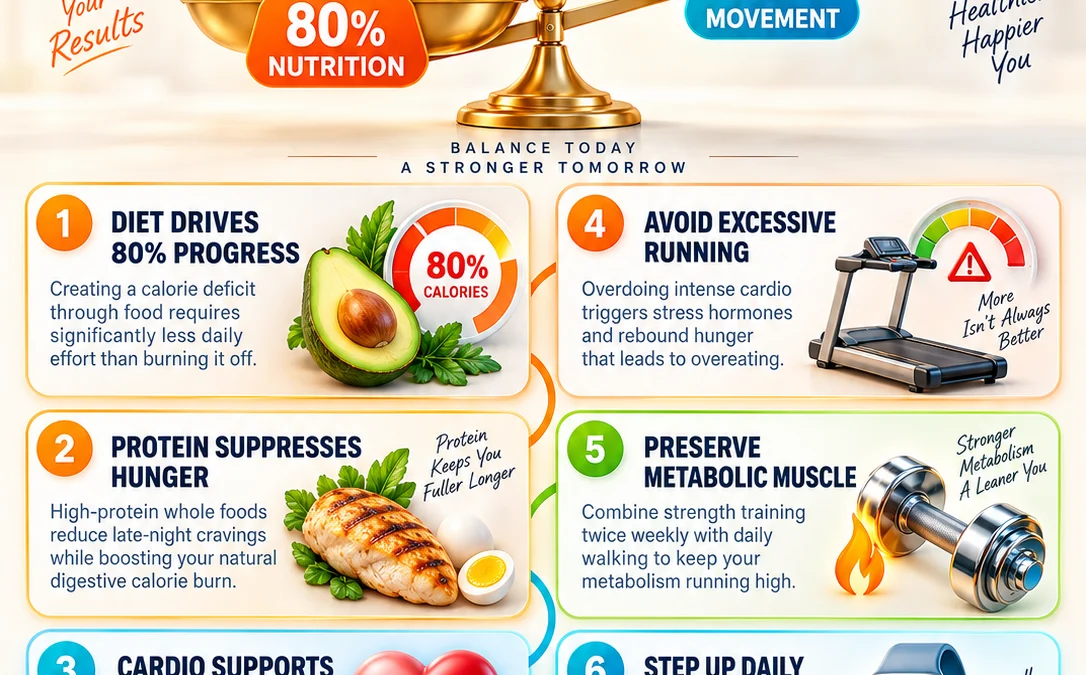
So, what’s the real secret? Which plays a bigger role in shedding those extra pounds: what you eat or how much you exercise? The answer, overwhelmingly, points to your diet. Creating a calorie deficit through smart food choices is significantly more effective and requires far less effort than trying to burn off every single calorie you consume through exercise alone. Think of it this way: diet is the engine driving your fat loss, while cardio is the supportive passenger, enhancing your overall health and boosting your daily energy expenditure. Let’s dive into why prioritizing your nutrition is the game-changer for your weight loss journey and how to integrate exercise strategically.
🍽️ Why Diet is the Undisputed Champion of Fat Loss (The 80% Rule!) ⚖️
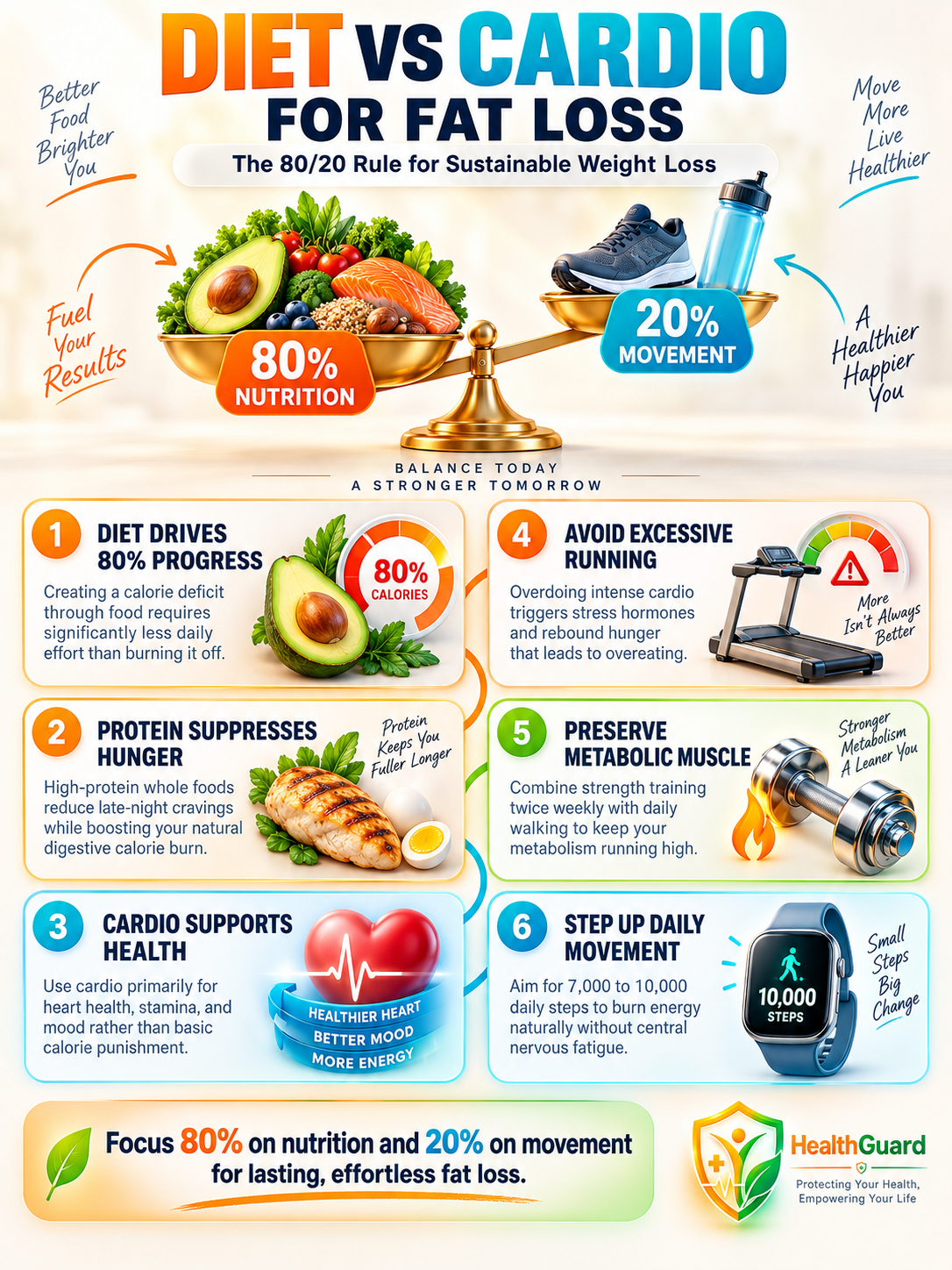
At the heart of losing body fat is a simple principle: creating an energy deficit. This means you need to consume fewer calories than your body uses. Now, how you achieve this deficit makes all the difference. Opting for nutrient-dense, lower-calorie foods is a far more manageable and sustainable approach than trying to out-exercise a less-than-ideal diet. Imagine the effort involved!
- The Muffin vs. The Run: Did you know that a single, delicious coffee shop muffin can pack the same calorie punch as 45 to 60 minutes of intense running? That’s a significant amount of exercise to negate with just one treat!
- Protein Powerhouse: Meals rich in protein don’t just build muscle; they’re also incredibly effective at keeping you feeling full and satisfied. This natural appetite suppression can significantly curb those late-night cravings that often derail progress.
- The Thermic Effect of Food: Whole, unprocessed foods require more energy for your body to digest and break down compared to highly processed options. This means your body is working harder (and burning more calories!) just to process the nutrients from healthy meals.
- Metabolic Friendliness: Adjusting your food intake doesn’t typically lead to the severe central nervous system fatigue that can come with extreme exercise. You can create a calorie deficit without feeling completely drained.
Consider this: cutting just 500 calories from your daily intake might be as simple as swapping out processed snacks for high-fiber fruits, vegetables, and lean protein sources. On the flip side, burning those same 500 calories through cardio often requires grueling, high-impact physical exertion, like a long bike ride or an intense HIIT session. When you make your nutrition the priority, fat loss transforms from an exhausting battle into a predictable, manageable daily habit. It’s about making smart choices that work *for* you, not against you.
📌 Key Takeaway:
You simply cannot out-run a bad diet. Your nutrition choices directly control your caloric intake, while exercise primarily influences your caloric output. Therefore, focusing on what you eat first is the most effective strategy for sustainable fat loss.
While your food choices are the primary driver of the numbers on the scale, exercise, particularly cardio, plays a crucial supporting role in your overall health and fitness transformation. Let’s explore its true purpose.
🏃 The True Value of Cardio: Beyond Just Calorie Burning 🫀
Cardiovascular exercise is, without a doubt, incredibly beneficial. It’s a powerhouse for your heart, strengthens your lungs, boosts your mood, and enhances your overall daily stamina. However, using cardio solely as a form of punishment for what you’ve eaten can foster an unhealthy, negative relationship with both food and exercise. It’s important to view cardio through a different lens.
- Low-Impact for Muscle Preservation: Activities like brisk walking are fantastic for burning calories steadily while minimizing the risk of muscle loss, which is crucial for maintaining a healthy metabolism.
- Metabolic Flexibility: Moderate-intensity cardio can significantly improve your body’s insulin sensitivity, making it more efficient at managing blood sugar and improving overall metabolic flexibility.
- Hormonal Balance: While exercise is a stress reliever, excessively high-intensity workouts, especially when overdone, can spike stress hormones like cortisol. Chronic high cortisol levels can hinder fat loss and promote fat storage.
- Managing Hunger Cues: For some individuals, prolonged or overly intense running can trigger intense rebound hunger, leading to compensatory overeating that negates the calories burned during the workout.
Your body is remarkably adaptive. Over time, it becomes more efficient at performing repetitive cardio routines. This means that the number of calories you burn during a specific workout might decrease as you get fitter. For example, the 500 calories you might have burned running during your first week could drop to around 300 calories by week six, simply because your body has become more efficient at that particular movement. Relying solely on endless cardio often forces you to continually increase the duration or intensity of your workouts just to achieve the same rate of fat loss. This can quickly lead to burnout.
⚠️ Common Mistake:
A frequent pitfall is engaging in hours of extreme cardio while simultaneously implementing a drastic calorie deficit. This combination can be a recipe for disaster, often leading to muscle loss, a significant drop in your resting metabolic rate, and persistent feelings of exhaustion. It’s a fast track to metabolic slowdown, not sustainable fat loss.
The most effective and sustainable approach to fat loss involves a harmonious blend of smart nutrition strategies and well-chosen physical activity. This is where the 80/20 rule comes into play, offering a balanced blueprint for success.
🛡️ Your 80/20 Action Plan for Lasting Fat Loss Success 🥦
Achieving significant and lasting body transformations isn’t about extreme measures; it’s about finding a sustainable balance. Applying an 80/20 framework to your weight loss efforts ensures that you’re prioritizing the most impactful elements while keeping your metabolism firing and preventing workout burnout. Here’s how you can implement this powerful strategy:
- 80% Nutrition Focus: Dedicate the majority of your daily energy and attention to planning your meals, ensuring adequate protein intake, staying hydrated, and making mindful food choices. This is where the biggest impact on your calorie deficit will come from.
- 20% Movement Integration: Allocate the remaining portion of your effort to incorporating active movement into your day. This includes regular walking, light conditioning exercises, and other forms of physical activity that complement your nutrition goals.
- Step Up Your Game: Aim for a daily step count of 7,000 to 10,000 steps. This non-exercise activity thermogenesis (NEAT) significantly contributes to your total daily calorie expenditure without requiring dedicated workout time.
- Strength Training is Key: Incorporate strength training sessions into your routine at least twice a week. Building and maintaining muscle mass is crucial because muscle tissue burns more calories at rest than fat tissue, effectively keeping your metabolism elevated.
When you prioritize preserving muscle through resistance training and ensuring sufficient protein intake, your body becomes a more efficient calorie-burning machine, even when you’re simply relaxing. Combining a modest, sustainable calorie deficit with consistent daily movement creates a powerful synergy for fat loss that doesn’t leave you feeling depleted or deprived.
🧠 Expert Insight:
Don’t underestimate the power of everyday movement! Daily non-exercise physical activity—like taking the stairs, walking during breaks, or simply standing more—can burn significantly more total calories throughout the week than fitting in three separate 30-minute cardio sessions. Integrating more movement into your daily life is a highly effective, low-effort strategy.
To help you solidify your understanding and refine your personal fitness approach, let’s quickly recap the most important takeaways from this discussion.
📌 Key Takeaways for Smart Fat Loss 📌
- Nutrition is King: Remember that nutrition accounts for approximately 80% of your fat loss results. It’s simply far more efficient and manageable to control your calorie intake through diet than to burn excess calories through exercise.
- Cardio Caution: Be mindful that excessive or overly intense cardio can disrupt hormonal balance, trigger intense hunger, and lead to metabolic adaptations that can slow down progress over time.
- Prioritize Protein and Fiber: To effectively manage hunger and maintain a consistent calorie deficit, focus on incorporating plenty of lean protein and fiber-rich foods into your diet. These nutrients promote satiety and help you feel fuller for longer.
- Cardio for Health, Not Just Calories: Utilize cardio primarily for its benefits to your cardiovascular system, mental well-being, and overall daily stamina, rather than viewing it solely as a tool for calorie burning.
- Embrace Daily Movement and Strength: Prioritize daily walking and incorporate regular strength training sessions. This combination is essential for preserving lean muscle mass, which is vital for keeping your metabolism running high and supporting long-term fat loss.
🏁 Final Thoughts: Sustainable Habits Trump Extreme Effort 🌿
Achieving your fat loss goals doesn’t require enduring punishingly long gym sessions or resorting to extreme, restrictive fad diets. The most effective and sustainable path to a leaner, healthier you involves a balanced approach. By focusing on nutrient-dense, satisfying meals and integrating smart, consistent daily movement, you can reach your goals while maintaining high energy levels and enjoying your life.
Take an honest look at your current routine. Prioritize nourishing your body with the right foods first, and then let your exercise choices serve as a supportive addition to your overall health and fitness journey. True, long-lasting vitality and a healthy weight are built on making smart, consistent choices every single day. Start today!