As the temperature drops and winter winds begin to blow, you might find yourself reaching for that extra sweater and reminding loved ones to bundle up. It’s a familiar scene, isn’t it? For generations, we’ve heard warnings about going outside with wet hair or not wearing a hat, all in an effort to avoid catching a cold or the dreaded flu. This common sense advice seems to make perfect sense, especially when sniffles and coughs seem to spike every time the mercury falls. But what if I told you that the cold weather itself isn’t the direct culprit behind your winter sniffles? It’s a common misconception, but the truth is, germs – specifically viruses – are what cause colds and flu, not the chilly air or a bit of dampness. Understanding how these illnesses actually spread is your best defense for staying healthy throughout the colder months. So, let’s dive in and bust five of the most widespread winter health myths to help you navigate the season with confidence and well-being.
Myth 1: Cold Weather Directly Causes Colds and Flu
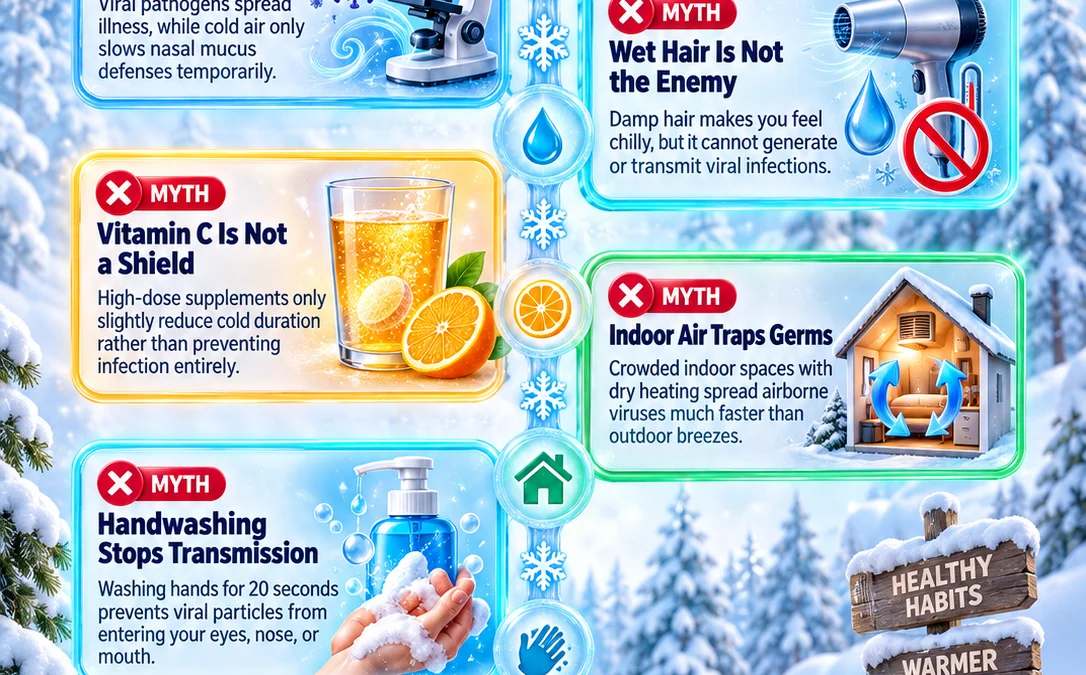
This is probably the most persistent myth out there. You step outside into a crisp, cold day, and a few days later, you’re down with a sore throat and a runny nose. It’s easy to connect the dots and blame the weather. However, the scientific reality is that viral infections require exposure to specific viruses, like the rhinovirus (responsible for the common cold) or the influenza virus. You can’t simply ‘catch’ a cold from being cold without encountering these pathogens. So, where does this myth come from? While cold weather doesn’t *create* viruses, it does create conditions that make it easier for them to spread and for our bodies to be more susceptible. Think about it: when it’s cold, we tend to spend more time indoors, often in close proximity to others. This increases the chances of airborne germs spreading rapidly. Furthermore, dry indoor heating can dry out our nasal passages, and cold air itself can slightly impair the immune response in our nose, making it harder to fend off invading viruses. So, while the cold air isn’t the direct cause, it plays a supporting role in the seasonal spread of illness.

❄️ Myth 2: Going Outside With Wet Hair Will Make You Sick
Ah, the classic warning from parents everywhere: “Don’t go out with wet hair, you’ll catch your death!” This belief is deeply ingrained, suggesting that damp locks will lead to a fever or a nasty cold. But let’s get real – does water on your head magically conjure up a virus? The science says no. While walking around with wet hair in freezing temperatures might be uncomfortable and could potentially lead to feeling chilled, it doesn’t introduce a virus into your system. Sicknesses like colds and flu are caused by pathogens, not by a drop in your scalp temperature. Think of it this way: your hair doesn’t have a direct line to your respiratory system that can be ‘chilled’ into submission. The discomfort from being cold and wet is real, and it might make you feel generally unwell, perhaps even more susceptible to germs if you’re already exposed, but it’s not the direct cause of infection. So, while drying your hair might be a matter of comfort and keeping warm, it’s not the key to preventing illness.
Myth 3: Huge Doses of Vitamin C Are a Cold Cure-All
In the first sign of a scratchy throat, many of us instinctively reach for the Vitamin C supplements, often in mega-doses. The idea is that a hefty amount of Vitamin C can act as a superhero shield, completely warding off colds. While Vitamin C is certainly essential for a healthy immune system, the notion that high doses can prevent colds is largely a myth. Extensive research has shown that while regular Vitamin C intake might slightly shorten the duration of a cold for some people, it doesn’t prevent them from getting sick in the first place. Your body can only absorb so much Vitamin C at a time; any excess is simply flushed out. True immune resilience comes from a holistic approach to health, not from megadoses of a single vitamin. This includes getting enough Vitamin C naturally from a diet rich in fruits and vegetables, maintaining adequate Vitamin D levels (especially crucial during winter months), and prioritizing quality sleep. Relying solely on supplements without addressing these fundamental aspects of health is like expecting a single soldier to win a war. A balanced lifestyle is your best bet for a robust immune system.
Myth 4: Staying Indoors is the Safest Strategy
When the weather outside is frightful, the idea of hunkering down indoors under a warm blanket seems like the ultimate protection against winter bugs. However, this can be a double-edged sword. While you’re avoiding the cold, you might be increasing your exposure to viruses in other ways. Think about it: when we’re all indoors, especially in poorly ventilated spaces, germs can easily circulate. Heaters that keep us warm also tend to dry out the air, which can create an environment where airborne viruses can survive and travel more effectively. Instead of isolating yourself completely, focusing on maintaining good indoor air quality is key. This means ensuring some level of ventilation, even for short periods, to exchange stale indoor air with fresh outdoor air. Using a humidifier can also help keep nasal passages moist, strengthening your natural defenses. Sometimes, a brisk walk outdoors in the fresh air, bundled up appropriately, can actually be healthier than spending all day in a germ-laden indoor environment.
Myth 5: You Can ‘Catch a Chill’ and Get Sick
This is a variation of the ‘cold weather causes illness’ myth, but it focuses more on the feeling of being chilled to the bone. You might have heard that if you get really cold, you’ll inevitably get sick. While being severely cold can stress your body and potentially make you more vulnerable, it’s not the direct cause of illness. Your body has remarkable mechanisms to maintain its core temperature. The real issue arises when you’re exposed to viruses. If you happen to be in a situation where you are chilled *and* exposed to germs (perhaps due to increased indoor proximity during cold weather, as we discussed), then you might get sick. But the chill itself isn’t the pathogen. It’s important to stay warm and comfortable, especially in winter, to support your body’s overall well-being and its natural defenses. However, don’t let the fear of catching a chill keep you from necessary activities, especially if you’re practicing good hygiene and avoiding direct contact with sick individuals.
The Real Heroes of Winter Wellness: Science-Backed Strategies
Now that we’ve busted some common myths, what *should* you focus on to stay healthy this winter? It’s all about understanding the real players and taking proactive steps:
1. Prioritize Hand Hygiene: This is your number one defense. Viruses often enter our bodies through our eyes, nose, and mouth after touching contaminated surfaces. Washing your hands frequently and thoroughly with soap and water for at least 20 seconds is incredibly effective. Think of it as a daily ritual: after commuting, before eating, after using the restroom, and anytime you’ve been in public spaces.
2. Boost Your Immune System Naturally: Forget magic pills. A strong immune system is built on consistent, healthy habits. This includes eating a balanced diet rich in fruits, vegetables, and whole grains; getting adequate sleep (7-9 hours per night is crucial for immune function); staying hydrated; and managing stress. Consider your immune system a complex army that needs proper fuel, rest, and strategic support.
3. Manage Indoor Air Quality: As we touched upon, indoor air can become a breeding ground for germs. Use a humidifier to keep your nasal passages moist and to help airborne particles settle faster. If possible, briefly open windows daily to allow for air exchange. Air purifiers with HEPA filters can also be beneficial in capturing circulating viruses and allergens.
4. Stay Active and Get Fresh Air: Don’t let the cold keep you entirely indoors. Regular physical activity is excellent for your immune system and overall well-being. Dress warmly and enjoy a brisk walk outdoors. The fresh air can be invigorating, and you’re less likely to encounter high concentrations of germs than in a crowded indoor space.
5. Understand Viral Transmission: Knowing that viruses spread through respiratory droplets (coughing, sneezing, talking) and contaminated surfaces empowers you. Practice social distancing when feeling unwell, avoid touching your face, and be mindful of high-touch surfaces in public areas.
Embrace Winter with Confidence, Not Fear
Winter is a beautiful season, and it doesn’t have to be synonymous with illness. By understanding the science behind how colds and flu spread, you can ditch the outdated myths and focus on effective strategies for staying healthy. Instead of worrying about whether your hair is dry enough or if a slight chill will bring you down, concentrate on the proven methods: diligent handwashing, a balanced lifestyle that supports your immune system, good indoor air quality, and staying active. These are the real keys to enjoying the winter months to their fullest, feeling robust and well. For more practical wellness tips, honest health guides, and straightforward advice, keep exploring our latest content right here at TopBestRated. Let’s make this winter your healthiest one yet!