Do you ever wake up feeling utterly exhausted, even after a full night’s sleep? It’s a common frustration, and many of us tend to chalk it up to a busy schedule or a stressful week. But what if that persistent tiredness is actually your body’s way of signaling a deeper issue? When your body is running low on essential nutrients, especially iron, your daily vitality can take a serious nosedive. Iron is a powerhouse nutrient, absolutely critical for building red blood cells that act like tiny oxygen delivery trucks, transporting vital oxygen from your lungs to every single part of your body – your brain, your muscles, your organs. When iron levels dip too low, your entire system struggles to function at its best. At Health Guard, we’re big believers that recognizing these subtle, often overlooked, physical warning signs is the first, most crucial step toward proactive wellness and reclaiming your vibrant energy.
So, what exactly are the most common signs and symptoms that might point to a low iron deficiency? Think extreme fatigue that leaves you feeling unrefreshed no matter how much you sleep, feeling short of breath even during simple daily activities, noticing a pale complexion or pale lips, experiencing frequent headaches, feeling dizzy or lightheaded, noticing your heart pounding or skipping beats, having perpetually cold hands and feet, experiencing that frustrating ‘brain fog’ that makes concentrating difficult, dealing with nails that break or split easily, and even developing unusual cravings for things like ice, dirt, or chalk.

By paying close attention to these evolving physical cues, you can often head off prolonged periods of unexplained sluggishness. The good news is that making small, smart adjustments to your diet can naturally replenish your body’s vital mineral stores and help you feel like your energetic self again. Let’s dive into a clear, supportive exploration of how an iron shortfall affects your body and how you can become a pro at spotting the signs.
The Oxygen Bottleneck: Understanding the Hidden Signs of Low Mineral Reserves
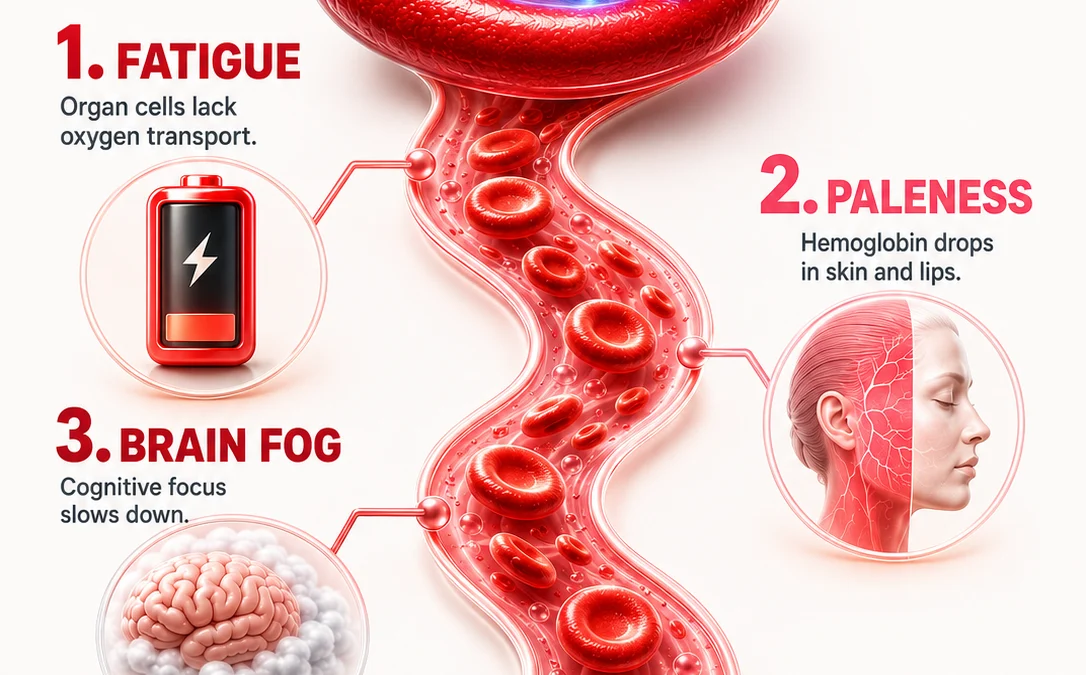
When your body is running on low iron, your bone marrow can’t produce enough hemoglobin – that crucial protein that gives your blood its signature red color. Without sufficient hemoglobin, your bloodstream simply can’t ferry oxygen efficiently to your hardworking tissues. This systemic slowdown is the direct culprit behind several distinct and noticeable physical indicators. Think of it as a traffic jam for oxygen delivery!
🔋 Unrefreshing Fatigue: This isn’t just feeling a bit tired; it’s a profound sense of exhaustion because your vital organs aren’t getting the consistent oxygen flow they need to function optimally.
🌬️ Shortness of Breath: You might find yourself gasping for air or feeling winded after climbing just one flight of stairs or walking a short distance. This happens because your body is desperately trying to compensate for the lack of oxygen-carrying capacity in your blood.
🎯 Pale Skin and Lips: A visible reduction in that healthy, rosy color can appear across your face, inside your lower eyelids, or along your gum lines. This paleness is a direct reflection of reduced hemoglobin in your blood.
🧠 Frequent Dizziness & Headaches: You might experience regular headaches or that unsettling lightheaded feeling, especially when you stand up too quickly. This is your brain signaling that it’s not getting enough oxygen.
Ignoring these critical warning signs can have a cumulative effect, impacting your ability to focus, your memory recall, and your overall performance at work and in life. Your brain, in particular, is an oxygen hog, demanding a significant portion of your body’s oxygen supply just to handle everyday cognitive tasks. When that supply is restricted, your thinking can feel sluggish and muddled, leaving you frustrated and unfocused by lunchtime.
💡 Quick Tip
Want a simple visual check? In a well-lit mirror, gently pull down your lower eyelid. 👁️ If the inner membrane appears pale pink or even whitish, rather than a vibrant, healthy red, it could be a straightforward visual clue that your body needs a little help boosting its hemoglobin production.
Surface Indicators and Strange Cravings: How an Iron Shortfall Alters Your Body
Beyond the more obvious signs, an iron deficiency can also subtly alter how your body regulates temperature, maintains your skin and hair, and even influences your deep-seated metabolic instincts. 🧩 When your body senses an iron shortage, it prioritizes sending oxygen to your brain and heart, often at the expense of less critical areas. This survival mechanism can lead to very specific changes in your skin, the temperature of your limbs, and even what you crave.
❄️ Persistent Cold Extremities: You might find your hands and feet are consistently icy cold, even when you’re indoors in a perfectly comfortable, warm room. This is because blood flow is being diverted away from the extremities.
💓 Sudden Heart Palpitations: You may experience your heart beating erratically, feeling like it’s skipping beats or pounding unusually fast. This is your heart working overtime to try and circulate the limited oxygen your blood can carry.
💅 Brittle Nails and Hair Loss: Notice your fingernails becoming thin, brittle, and prone to splitting vertically, sometimes even curving inward (koilonychia)? You might also experience increased hair thinning, especially noticeable during your morning shower or when brushing your hair.
🧊 Unusual Material Cravings (Pica): This is a classic, albeit strange, sign. You might develop an intense, persistent desire to chew on non-food items like ice cubes (pagophagia), clean dirt, clay, paper, or even chalk. This condition is known as pica and is strongly linked to iron deficiency.
These external changes are powerful reminders of how deeply interconnected your internal mineral levels are with your outward appearance and even your behaviors. 💎 When your heart has to work harder just to deliver the standard amount of oxygen your body needs, it puts significant extra strain on your cardiovascular system. Addressing these mineral deficiencies not only helps restore your physical stamina but also supports the healthy growth and strength of your hair and nails.
⚠️ Common Mistake
It’s crucial to understand that self-diagnosing iron levels and randomly buying high-dose supplements can be risky. 🛑 Consuming too much iron without a diagnosed deficiency can lead to iron overload, where the mineral builds up in your vital organs like the liver and heart, potentially causing serious damage. Always consult with a healthcare professional for an accurate blood test before starting any iron supplementation.
Smart Dietary Building Blocks: Rebalancing Mineral Absorption for Lasting Vitality
If a professional blood test confirms that your iron storage levels are indeed running low, making strategic adjustments to your daily diet is a wonderfully effective and gentle way to start rebuilding them. 🥗 The world of food offers iron in two primary forms: heme iron, which is found in animal-based foods and is generally more easily absorbed by the body, and non-heme iron, which is abundant in plant-based foods. Understanding how to pair these foods can make a significant difference in how much your body actually absorbs and utilizes.
Plant-based iron sources, while incredibly healthy, often require a little extra help to make it efficiently through your digestive system and into your bloodstream. 🌱 Fortunately, pairing your iron-rich plant foods with certain vitamin-rich foods can naturally multiply your mineral absorption rate. Let’s explore a practical guide to optimizing your meals for excellent iron bioavailability.
| Iron-Rich Dietary Choices 🥬 | Absorption Boosting Pairs 🍊 | What to Avoid Nearby ☕ |
|---|---|---|
| Lentils, dark chickpeas, and black beans | Fresh lemon squeezes or chopped bell peppers (Vitamin C powerhouses!) | Strong black tea or morning coffee (tannins can block absorption) |
| Fresh baby spinach and tender kale greens | Sliced ripe strawberries or orange wedges (more Vitamin C!) | High-calcium dairy products or antacid tablets (calcium competes for absorption) |
| Toasted pumpkin seeds and raw cashews | A glass of fresh, homemade tomato juice (rich in Vitamin C and lycopene) | Processed bran cereals high in phytic acid (can bind to iron) |
As this table clearly shows, adding just a simple splash of Vitamin C-rich food to your plant-based meals can dramatically enhance how your body processes and absorbs iron. 🌟 Simultaneously, keeping your beloved cups of tea and coffee at least an hour away from your meals helps prevent certain natural compounds (like tannins and phytates) from binding with your iron and hindering absorption. These small, yet impactful, culinary adjustments are key to protecting your gut health while steadily improving your daily energy levels naturally.
🏆 Best Practice
Consider cooking your favorite acidic sauces, hearty tomato stews, or flavorful vegetable curries inside a traditional cast-iron skillet or pot. 🍳 This simple, time-tested cooking method allows trace amounts of dietary iron to naturally infuse into your food, giving you an extra boost without even trying!
Proactive Steps: Designing a Comfortable, Nutrient-Dense Lifestyle Plan
Effectively overcoming mineral exhaustion and preventing the return of chronic fatigue requires a consistent, everyday commitment to self-care. 🧗♂️ When you focus on holistic habits that actively support your red blood cell production and function, you create a smoother, more sustainable path to recovery. These supportive lifestyle steps work synergistically with your improved dietary choices to restore robust systemic strength and energy.
🚀 Include Sprouted Grains and Soaked Seeds: Opt for sprouted beans and soaked seeds in your meals. This process significantly reduces the natural phytates present in these foods, which can otherwise interfere with mineral absorption.
🎯 Space Out Your Caffeine Intake: Enjoy your morning coffee or soothing evening herbal tea between meals rather than during them. This simple timing adjustment helps prevent potential nutrient absorption interference.
🌱 Support Your Gut Lining: Incorporate fermented foods like yogurt, kefir, sauerkraut, or kimchi into your diet. A healthy gut lining is crucial for efficient nutrient absorption from all the foods you eat.
📈 Track Your Progress with Professionals: Schedule regular wellness check-ups with your doctor or a qualified nutritionist. Monitoring your blood markers over time is essential to ensure your dietary and lifestyle changes are effectively improving your iron levels.
Implementing these straightforward health shifts can protect your body from unwelcome energy crashes and help you reclaim your sharp focus and zest for life. ⚓ Adopting a calm, balanced approach ensures you can confidently tackle your demanding professional and personal life without becoming overly reliant on quick caffeine fixes. Every mindful choice you make contributes to building a solid foundation for a truly healthy and energized existence.
📖 Mini Summary
Low iron levels critically limit the essential oxygen your body needs to function at its best, leading to fatigue, brain fog, and more. 🌪️ You can effectively reverse this trend by strategically combining plant-based iron sources with Vitamin C-rich foods and consistently monitoring your progress with the guidance of a trusted healthcare expert. 🧭
Quick Reference Milestones for Tracking Blood Vitality
Keep these quick, actionable health tips top of mind as you focus on optimizing your body’s essential oxygen levels this month: 🗺️
📌 Heed the Warnings: Never dismiss ongoing tiredness, perpetually cold hands, or sudden dizzy spells as just the normal stresses of life. They could be your body’s urgent signals.
📌 Squeeze the Citrus: Make it a habit to add fresh lemon or lime wedges to your salads and leafy green bowls. This simple act instantly boosts the absorption of plant-based iron.
📌 Separate Your Cups: Consciously keep your black coffee and herbal teas separate from your main meals. This simple separation helps shield your body’s ability to absorb vital minerals.
📌 Cook With Iron: Embrace the use of traditional cast-iron cookware. Warming up stews and sauces in these pots naturally adds beneficial iron content to your meals.
📌 Consult an Expert: Partner with a trusted healthcare professional. Regular check-ins and blood tests are the most accurate way to understand and manage your internal iron levels.
📌 Key Takeaway
Reclaiming your natural, vibrant energy truly begins with learning to tune into your body’s subtle, yet important, warning signals. 🌸 Making simple, strategic shifts in your food pairings can easily untangle nutritional knots, significantly improving your bloodstream’s ability to deliver optimal oxygen to every single cell in your body.
Final Thoughts: Welcoming a Lighter and Fully Energized Tomorrow
Actively listening to your body’s cues and taking proactive steps to protect your mineral health is one of the most profound investments you can make in your long-term well-being. 🌅 By consciously pairing iron-rich whole foods with smart absorption strategies and stepping away from habits that hinder nutrient uptake, you empower your body to truly thrive. Your vascular system is an absolutely incredible network, and it functions beautifully when provided with the proper, natural inputs it needs. Let go of the pressure to self-diagnose, and instead, celebrate every steady, positive step you take toward achieving vibrant internal vitality.
Are you ready to finally shed the heavy burden of persistent fatigue and help your system breathe easy and function at its peak again? 🌟 We warmly invite you to join our growing Health Guard community today! Subscribe to our exclusive wellness newsletter for a continuous stream of evidence-informed advice and practical tips. Don’t hesitate to share this comprehensive guide with a loved one who might also be struggling with low energy – together, let’s take a confident, healthy step toward a more energized and fulfilling life! 💌