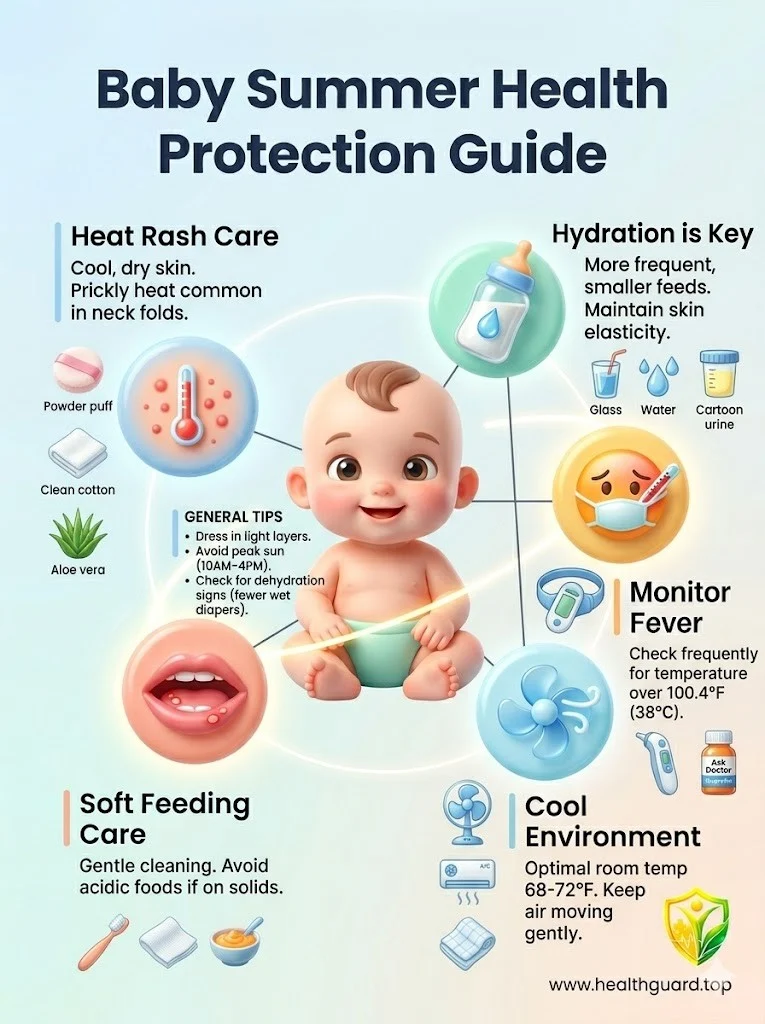
Summer is a season of sunshine and outdoor fun, but for new parents, it often brings a unique set of worries. When the temperature rises, our little ones are particularly vulnerable to heat-related health issues. Because a baby’s internal thermostat isn’t yet as efficient as an adult’s, they can struggle to cope with high humidity and intense heat. From pesky heat rashes that make your baby irritable to more concerning issues like dehydration or feeding strikes, it is crucial to stay proactive. In this comprehensive guide, we will walk you through the common summer health challenges for infants, how to spot the signs early, and the best ways to keep your baby cool, comfortable, and healthy all season long.
Why Does Summer Hit Babies So Hard?
Have you ever wondered why your baby seems so much more bothered by the heat than you are? It boils down to biology. Infants have a larger surface area relative to their body weight, and their sweat glands are still developing. This means they cannot cool themselves down through perspiration as effectively as we can. When you add high humidity and poor indoor air circulation into the mix, a baby can quickly become overheated, leading to a cascade of minor—and potentially major—health complications. By understanding these risks, you aren’t just being a ‘worrier’; you are being a prepared, proactive parent.
1. Handling Heat Rash and Prickly Heat (Ghamaoriya)
If you notice tiny, red, itchy bumps on your baby’s neck, chest, or skin folds, you are likely looking at heat rash. This occurs when sweat ducts become blocked, trapping perspiration beneath the skin. It is incredibly common in summer, especially when babies are dressed in layers or are confined in a car seat or stroller.
What Causes It?
- Exposure to high ambient temperatures for long periods.
- The buildup of sweat in skin folds (neck, armpits, diaper area).
- Wearing synthetic, non-breathable fabrics that trap heat against the skin.
- Lack of airflow in the nursery or play area.
Symptoms to Watch For
- Clusters of small, red bumps that look like tiny pimples.
- Visible irritation or redness in skin creases.
- The baby scratching or rubbing the affected area, signaling discomfort.
- General fussiness, especially when the skin gets warm.
The Best Ways to Prevent and Treat Heat Rash
The golden rule for heat rash is simple: keep it cool and keep it dry. Stick to lightweight, breathable cotton clothing that allows the skin to ‘breathe.’ During bath time, use lukewarm water and mild, fragrance-free soap. Avoid heavy lotions or thick creams that can clog pores further. If the rash persists, a cool compress can help soothe the irritation, but always consult your pediatrician before applying any medicated powders or creams.
2. Why Your Baby Might Refuse Milk in the Heat
One of the most frequent complaints during summer is a sudden drop in a baby’s appetite. It’s natural to feel anxious when your baby rejects the breast or bottle, but often, this is just a reaction to the heat. Just as adults have less of an appetite on a scorching day, babies feel the physical toll of high temperatures, which can lead to fatigue and a lack of interest in feeding.
Why It Happens
- The baby is feeling physically ‘heavy’ or lethargic due to the heat.
- The effort of sucking can actually increase a baby’s body temperature, making them want to stop.
- Mild dehydration may cause the baby to feel sluggish.
Strategies for Success
Don’t force-feed. Instead, try smaller, more frequent sessions. If you are breastfeeding, your milk naturally adjusts its composition to provide more hydration during hot weather, making it the perfect source of nutrients. Keep the feeding environment as cool as possible—perhaps use a fan (not directed at the baby) or air conditioning. If you are using formula, ensure you are preparing it exactly as directed, as improper dilution can lead to serious health issues.
3. Dealing with Fussiness, Fever, and Bad Breath
Summer heat can lead to a general state of malaise in infants. If you notice your baby is unusually irritable, struggling with bad breath, or seems to have a low-grade fever, it is time to investigate. These symptoms are often interconnected. For example, reduced intake of fluids can lead to a dry mouth, which fosters bacteria that cause bad breath. Dehydration can also cause a slight rise in body temperature.
Managing the Symptoms
Start by checking the room temperature. Is the baby overdressed? Is the room stagnant? If the baby is fussy, try a lukewarm sponge bath to lower their body temperature. Ensure they are getting enough fluids to stay hydrated. If a fever is present, monitor it closely. If the temperature exceeds 100.4°F (38°C) or if the baby is younger than three months, contact your doctor immediately. Never ignore a fever accompanied by lethargy or a refusal to feed.
4. Managing Mouth Ulcers (Chhale) in Babies
Mouth ulcers are painful, small sores that can appear on the tongue, gums, or inside the cheeks. In the summer, these are often exacerbated by dehydration and the buildup of internal body heat. Because these sores are sensitive, they can make feeding a painful experience, leading to a cycle where the baby drinks less, which worsens the dehydration, and in turn, keeps the ulcers from healing.
Signs of Trouble
- The baby cries or pulls away when the nipple or bottle touches their mouth.
- Visible white or red sores inside the oral cavity.
- Increased drooling or a sudden refusal to eat foods they previously enjoyed.
How to Provide Relief
Hydration is your best defense. If your baby is old enough to drink water or eat solids, offer cool, soft, and bland foods. Avoid anything acidic, spicy, or hot in temperature. Maintain excellent oral hygiene; if your baby is a newborn, you can gently wipe their gums with a clean, damp cloth. If the ulcers are causing your baby to stop eating entirely, consult a pediatrician to rule out conditions like Hand, Foot, and Mouth Disease, which is common in summer.
Essential Summer Care Strategies for Every Parent
You don’t need to live in a bubble to keep your baby safe. By incorporating these habits into your daily routine, you can prevent most summer health issues before they start.
Dress for the Weather
Forget the frills. Summer is for loose, light-colored cotton or linen. These fabrics absorb moisture and allow air to circulate. If you are going outdoors, ensure the baby is in the shade. A wide-brimmed hat is a must-have accessory to protect their delicate skin from the harsh sun.
Create a Cooling Haven
Your home should be a sanctuary from the heat. Use blackout curtains to keep the sun out during peak hours (10 AM to 4 PM). If you don’t have air conditioning, ensure there is adequate cross-ventilation. A ceiling fan on a low setting helps circulate air, but avoid pointing it directly at the baby.
Hydration is Key
Always keep an eye on your baby’s diaper output. A decrease in the number of wet diapers is a major red flag for dehydration. If you are breastfeeding, nurse on demand. If you are formula-feeding, consult your doctor about whether your baby needs extra water, though typically, standard formula provides enough hydration until solids are introduced.
When to Call the Pediatrician
While most summer issues are manageable at home, there are times when you need professional help. Do not hesitate to seek medical advice if:
- Your baby has a fever that won’t come down with cooling measures.
- The baby shows signs of severe dehydration: dry lips, no tears when crying, a sunken soft spot (fontanelle), or no wet diapers for 6-8 hours.
- The skin rash is spreading rapidly, oozing, or looks infected (yellow crusting).
- The baby is lethargic, unresponsive, or unusually difficult to wake up.
- Mouth ulcers are so severe that the baby refuses all fluids for an extended period.
Remember, you know your baby best. If something feels ‘off,’ trust your parental intuition and call the doctor.
Final Thoughts on Keeping Your Baby Cool
Summer is a beautiful time to bond with your baby, but it requires a bit of extra vigilance. By staying on top of hydration, dressing for comfort, and keeping your living space cool, you can avoid the most common pitfalls of the season. Remember, these hot months are temporary, and with a little extra care, your little one will breeze through them comfortably. Stay hydrated, stay cool, and enjoy those precious summer memories with your baby!