
Hey there, super parents! Navigating the exciting world of introducing solids to your little one is a huge milestone, especially when it comes to ensuring they’re gaining weight healthily. Between 6 and 8 months, your baby is transitioning from an all-milk diet to exploring new tastes and textures, making this a critical window for nutrition. We’re here to dive deep into everything you need to know about baby weight gain during this period, focusing on nutritious, high-calorie foods, delicious meal ideas, and smart feeding strategies that will have your little one thriving. Let’s get your baby on the path to healthy, happy growth!
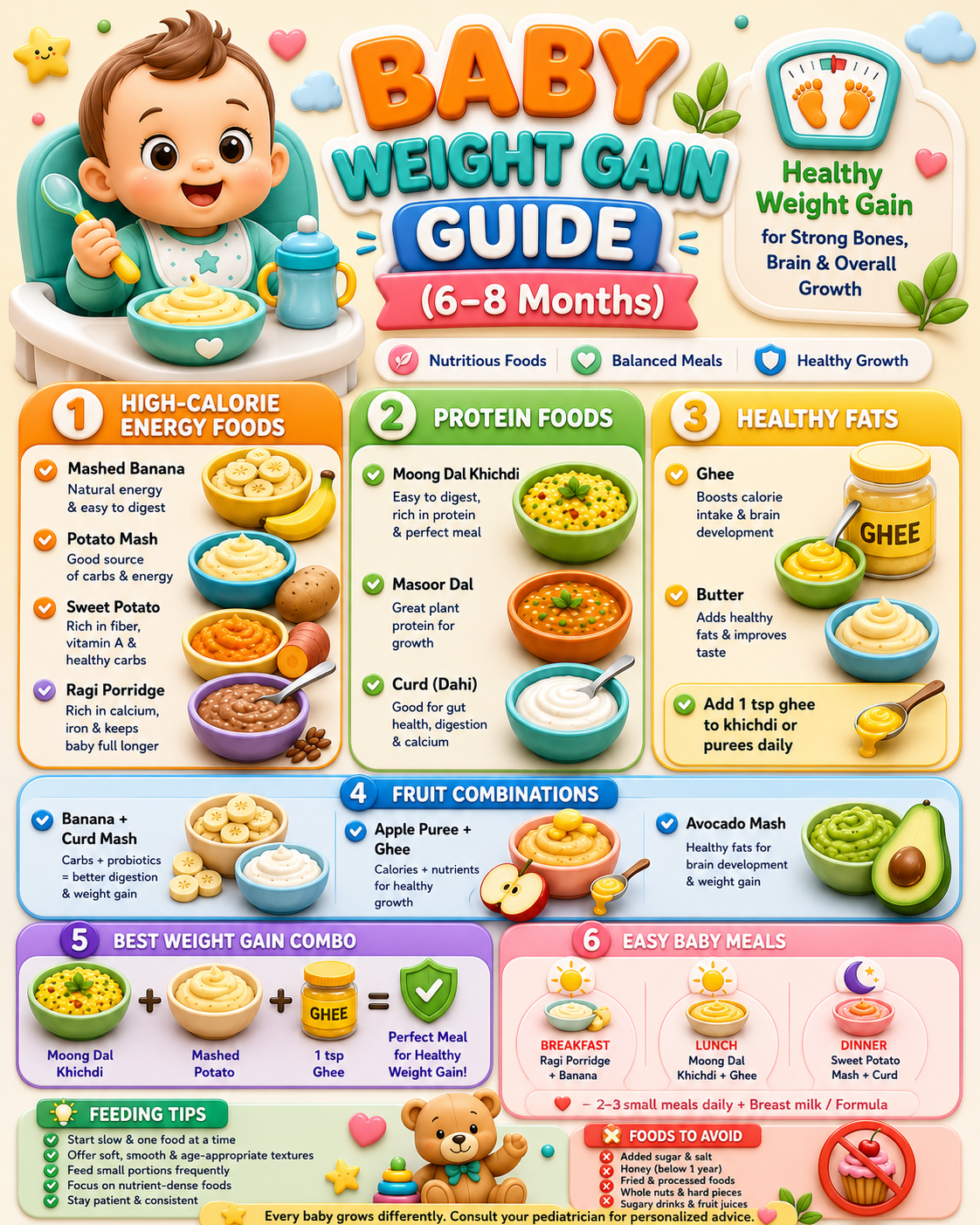
The period from 6 to 8 months is truly pivotal for your baby’s development. It’s the stage where they start their journey into the world of complementary feeding, moving beyond exclusive milk intake. During this time, providing the right nutrition is paramount. It doesn’t just support healthy weight gain; it’s crucial for their brain development, strengthening their immune system, aiding digestion, and promoting overall physical growth. Many parents understandably worry if their baby seems to be gaining weight slowly. It’s important to remember that healthy weight gain isn’t about force-feeding or stuffing your baby. Instead, it’s all about offering nutrient-dense foods that are packed with essential calories, proteins, vital vitamins, minerals, and beneficial healthy fats. This guide is your go-to resource for understanding the best foods, creative meal combinations, and effective nutrition strategies to naturally and safely support your baby’s weight gain between 6 and 8 months.
### Decoding Healthy Weight Gain for Your Little One
So, what exactly constitutes ‘healthy weight gain’ for an infant? It’s less about hitting a specific number on the scale every single day and more about consistent, gradual growth that aligns with established pediatric growth charts. Every baby is unique, and their growth trajectory is influenced by a fascinating mix of factors, including genetics, their individual metabolism, sleep patterns, overall health, and, of course, their feeding habits.
Instead of fixating on the quantity of food, parents should prioritize:
* **Nutrient Quality Over Quantity:** Focus on offering foods that pack a nutritional punch, even in small portions.
* **Balanced Feeding Schedules:** Establishing a regular, predictable feeding routine can help.
* **Age-Appropriate Textures:** As your baby develops, their ability to handle different food textures will evolve. Start smooth and gradually introduce thicker consistencies.
* **Easily Digestible Meals:** Opt for foods that are gentle on your baby’s developing digestive system.
* **Consistent Feeding Habits:** Regularity and predictability can make meal times smoother for both you and your baby.
### Are You Seeing These Signs? Potential Indicators for Nutritional Support
While every baby grows at their own pace, certain signs might suggest that your baby could benefit from some extra nutritional focus. If you notice any of the following, it’s a good idea to pay closer attention and perhaps discuss with your pediatrician:
* **Slower than expected weight increase:** A consistent lack of progression on the growth chart.
* **Reduced appetite:** Your baby seems less interested in feeding overall.
* **Low energy levels:** They appear lethargic or less active than usual.
* **Difficulty transitioning to solids:** Struggles with accepting or managing new food textures.
* **Frequent illnesses:** A weaker immune system might be a sign of nutritional gaps.
* **Poor feeding interest:** Lack of enthusiasm or engagement during mealtimes.
Remember, these are general indicators, and persistent concerns should always be discussed with your pediatrician. They are your best resource for personalized advice.
### Top High-Calorie Foods to Boost Your Baby’s Weight Gain
When aiming for healthy weight gain, focusing on calorie-dense, nutrient-rich foods is key. These foods provide the energy your baby needs to grow and develop without filling them up on empty calories. Let’s explore some powerhouses:
#### 🍌 Mashed Banana: Nature’s Sweet Treat
Bananas are often one of the first solid foods introduced to babies, and for good reason! They are naturally soft, wonderfully sweet, packed with energy, and incredibly easy to digest.
**Why Bananas are Great:**
* **Supports Natural Weight Gain:** Their carbohydrate content provides readily available energy.
* **Rich in Potassium:** An essential electrolyte important for fluid balance and muscle function.
* **Gentle on the Stomach:** Perfect for sensitive baby tummies.
* **Naturally Appealing:** Their sweetness makes them a hit with most babies.
**Serving Suggestion:** Simply mash a ripe banana until it’s completely smooth. You can serve it plain or mix it with a little bit of plain yogurt (curd) for added creaminess and probiotics.
#### 🥔 Potato Mash: A Simple Energy Source
Potatoes are a fantastic source of carbohydrates, offering a quick and efficient energy boost for your rapidly growing baby. They are also wonderfully versatile and easy to prepare.
**Benefits of Potato Mash:**
* **Energy-Dense:** Provides essential calories for growth.
* **Soft Texture:** Easy for babies to manage and swallow.
* **Increases Calorie Intake:** A simple way to add more energy to their diet.
**Preparation Tip:** Boil potatoes until they are very tender. Mash them thoroughly using a fork or a masher. You can add a little warm water, breast milk, or formula to achieve a smooth, lump-free consistency.
#### 🍠 Sweet Potato Mash: Nutrient Powerhouse
Sweet potatoes are a nutritional superstar, offering a delightful taste and a wealth of benefits. They are packed with fiber, antioxidants, essential vitamins (especially Vitamin A), and natural carbohydrates.
**Sweet Potato Advantages:**
* **Supports Healthy Digestion:** The fiber content aids in keeping things moving smoothly.
* **Promotes Healthy Weight Gain:** Provides complex carbohydrates for sustained energy.
* **Rich in Vitamin A:** Crucial for vision, immune function, and skin health.
* **Easily Digestible:** Another tummy-friendly option.
**Feeding Idea:** Steam or boil sweet potatoes until fork-tender. Once cooled slightly, blend them into a smooth puree. You can add a tiny bit of breast milk or formula if needed to reach the desired consistency.
#### 🌾 Ragi Porridge: The Calcium and Iron Champion
Ragi, also known as finger millet, is a highly nutritious grain that’s gaining popularity in baby-led weaning and traditional feeding practices. It’s incredibly filling and provides sustained energy.
**Why Ragi is Wonderful:**
* **Excellent Source of Calcium and Iron:** Vital for bone development and preventing anemia.
* **Supports Bone Development:** The high calcium content is a major plus.
* **Provides Sustained Energy:** Keeps your baby fueled for longer periods.
* **Promotes Fullness:** Helps your baby feel satisfied after meals.
**Preparation Tip:** Cook ragi flour with water, stirring constantly to prevent lumps, until it reaches a smooth, soft consistency. You can thin it out with breast milk or formula if desired. Ensure it’s cooked thoroughly.
### Protein-Packed Foods for Robust Baby Growth
Protein is the building block for your baby’s body. It’s essential for muscle development, repairing tissues, and supporting overall growth during these rapid developmental stages. Ensuring adequate protein intake is just as important as calories for healthy weight gain.
#### 🍲 Moong Dal Khichdi: The Weaning Staple
Moong dal khichdi is a universally recommended and beloved first food for babies. It’s a simple, wholesome dish made from rice and lentils, and it’s incredibly gentle on the digestive system.
**Khichdi’s Great Benefits:**
* **Highly Digestible:** Perfect for sensitive baby tummies.
* **Rich in Protein:** Essential for growth and repair.
* **Provides Energy:** A good source of carbohydrates from the rice.
* **Gentle on the Digestive System:** Minimizes the risk of discomfort.
**A Healthy Boost:** For extra healthy calories and a boost in fat content, add a small teaspoon of ghee (clarified butter) to the cooked khichdi. This is a fantastic way to increase the calorie density of the meal.
#### 🥣 Masoor Dal (Red Lentils): A Protein Powerhouse
Masoor dal, or red lentils, are another excellent source of plant-based protein, iron, and other vital nutrients. They cook down quickly, making them easy to prepare for babies.
**Why Masoor Dal is Beneficial:**
* **Supports Muscle Growth:** Provides the necessary amino acids for building muscle.
* **Great Source of Plant-Based Protein:** An important nutrient for vegetarian diets.
* **Quick and Easy to Prepare:** Cooks much faster than other lentils.
**Serving Suggestion:** Cook masoor dal thoroughly until very soft. You can then blend it or mash it well to create a smooth texture suitable for your baby. Ensure all skins are removed if blending.
#### 🥛 Curd (Dahi/Yogurt): Probiotics and Healthy Fats
Plain, unsweetened curd (yogurt) is a fantastic addition to your baby’s diet. It’s a source of probiotics, which are beneficial bacteria that support gut health, and also contains healthy fats.
**Curd’s Advantages:**
* **Supports Gut Health:** Probiotics help maintain a healthy balance of bacteria in the digestive tract.
* **Aids Digestion:** A healthy gut is crucial for nutrient absorption.
* **Adds Calories Naturally:** Provides a good source of healthy fats.
* **Rich in Calcium:** Important for strong bones and teeth.
**Important Note:** Always opt for fresh, homemade curd without any added sugar or artificial sweeteners. Full-fat yogurt is generally recommended for babies to ensure adequate fat intake.
### The Crucial Role of Healthy Fats for Better Weight Gain
Don’t shy away from fats! Healthy fats are not the enemy; in fact, they are absolutely vital for your baby’s development, particularly for their rapidly growing brain. They also help increase the calorie density of foods, making it easier for your baby to consume sufficient energy for weight gain.
#### 🧈 Ghee: The Traditional Fat Booster
Ghee, or clarified butter, is a traditional and highly respected source of healthy fat in many cultures. It’s commonly introduced during the complementary feeding stage as a way to add richness and calories to baby food.
**Ghee Benefits:**
* **Increases Calorie Density:** A small amount adds significant calories.
* **Supports Brain Development:** Essential fatty acids are crucial for cognitive function.
* **Aids Absorption of Fat-Soluble Vitamins:** Helps your baby utilize vitamins A, D, E, and K from their food.
**Recommended Amount:** Start by adding a very small amount, about half to one teaspoon, to your baby’s khichdi, vegetable purees, or porridge. You can gradually increase this as your baby gets used to it, always under guidance.
#### 🧈 Butter: Another Healthy Fat Option
Small amounts of unsalted, unsweetened butter can also contribute to healthy calorie intake. Like ghee, it provides beneficial fats that are important for energy and development.
**Butter’s Role:**
* **Adds Healthy Fats:** Contributes to the essential fatty acid intake.
* **Improves Taste and Texture:** Can make otherwise bland foods more appealing.
* **Supports Energy Needs:** Provides concentrated calories.
**Use With Caution:** Offer butter in moderation. A tiny dab (pea-sized amount) mixed into purees or porridges is usually sufficient. Always use unsalted varieties.
### Delicious Fruit Combinations for Healthy Baby Weight Gain
Fruits are wonderful sources of vitamins, minerals, and fiber. Pairing them with healthy fats or protein sources can transform them into more calorie-dense and balanced meals, aiding in weight gain.
#### 🍌 Banana + Curd Mash: A Creamy Delight
This is a match made in heaven! The natural sweetness and carbohydrates of banana combined with the protein and healthy fats from curd create a super satisfying and nutritious meal.
**Why This Combo Works:**
* **Easy to Digest:** Both ingredients are generally well-tolerated.
* **Supports Digestion:** Probiotics in curd aid gut health.
* **Helps Healthy Weight Gain:** Provides a good mix of carbs, fats, and protein.
**Preparation:** Mash a ripe banana thoroughly and mix it with plain, full-fat curd. Ensure the curd is fresh and unsweetened.
#### 🍎 Apple Puree + Ghee: Sweetness with a Healthy Kick
While apple puree is lovely, adding a touch of ghee makes it a more substantial meal for weight gain. The ghee boosts the calorie content significantly.
**Benefits of This Pairing:**
* **Improved Energy Intake:** The added fat increases the calorie count.
* **Provides Vitamins and Fiber:** Apples offer essential nutrients.
* **Smooth Texture:** Easy for babies to eat.
**Preparation:** Steam or boil apples until soft and then puree them. Stir in a tiny amount (about half a teaspoon) of ghee once the puree has cooled slightly.
#### 🥑 Avocado Mash: The Ultimate Healthy Fat Source
Avocados are nature’s perfect baby food! They are incredibly rich in healthy monounsaturated fats, essential for brain development, and packed with vitamins and minerals. Their naturally creamy texture makes them a favorite.
**Avocado Advantages:**
* **Excellent Healthy Fat Source:** Crucial for brain and nerve development.
* **Supports Brain Growth:** The fats are vital for cognitive function.
* **Soft and Creamy Texture:** Easy for babies to eat and digest.
**Serving Tip:** Mash a ripe avocado until it’s completely smooth and lump-free. You can serve it plain or mix it with a little breast milk or formula to adjust consistency. It also pairs well with banana or a tiny bit of lemon juice to prevent browning.
### The Ultimate Weight Gain Meal Combination for Babies
When you want to pack a serious nutritional punch into one meal, this combination is a winner. It balances macronutrients beautifully and is highly effective for supporting healthy infant weight gain:
⭐ **Moong Dal Khichdi + Ghee + Mashed Potato**
This power-packed meal provides:
* **Protein:** From the moong dal, essential for building and repairing tissues.
* **Healthy Fats:** From the added ghee, crucial for brain development and energy.
* **Complex Carbohydrates:** From the rice in the khichdi and the mashed potato, providing sustained energy.
* **Balanced Calories:** A good mix of all macronutrients ensures adequate energy intake for growth.
This combination is considered a highly effective and naturally balanced meal to support your baby’s healthy weight gain journey.
### Smart Feeding Tips for Your 6–8 Month Old
Introducing solids is a learning curve for both you and your baby. Here are some practical tips to make mealtimes successful and supportive of healthy weight gain:
#### Start Slowly and Observe
When introducing any new food, begin with a single ingredient. Offer it for 2-3 days before introducing another new food. This allows you to easily identify any potential allergies or digestive sensitivities your baby might have.
#### Maintain the Right Texture
At this stage, textures are crucial. Foods should be:
* **Soft:** Easily mashable with your fingers.
* **Smooth:** Free from lumps that could be a choking hazard.
* **Easy to Swallow:** The consistency should allow your baby to manage it comfortably.
Avoid anything hard, chunky, or sticky that could pose a choking risk. Gradually, as your baby gets more practice, you can introduce slightly thicker purees and mashed foods.
#### Feed Small Portions, Frequently
Babies have tiny tummies! It’s better to offer:
* **2-3 small meals per day:** Start with one meal and gradually increase as your baby shows interest and readiness.
* **Breast milk or formula alongside solids:** Solids are complementary at this stage; milk remains the primary source of nutrition.
As your baby gets older and shows more interest in food, you can gradually increase the frequency and portion sizes of their solid meals.
#### Prioritize Nutrient Density
When focusing on weight gain, the goal isn’t necessarily large quantities of food but rather nutrient-dense options. Focus on incorporating foods rich in:
* **Protein:** For growth and muscle development.
* **Healthy Fats:** For brain development and energy.
* **Iron:** Essential for preventing anemia and supporting cognitive function.
* **Calcium:** For strong bones and teeth.
* **Vitamins and Minerals:** For overall health and immunity.
### Foods to Steer Clear Of (For Now!)
While introducing new foods, it’s equally important to know what to avoid. These items can be detrimental to your baby’s health and digestion:
* **Added Sugar:** Unnecessary calories with no nutritional value. Can lead to unhealthy taste preferences.
* **Salt:** Babies’ kidneys cannot process excess salt. Avoid adding any salt to their food.
* **Honey:** Absolutely avoid honey before the age of one year due to the risk of infant botulism.
* **Processed Foods:** Often contain high levels of sodium, sugar, and unhealthy fats.
* **Fried Snacks:** Difficult to digest and unhealthy.
* **Whole Nuts:** A major choking hazard and can cause allergies.
* **Sugary Drinks:** Including fruit juices (even 100%) and sweetened beverages. These offer little nutrition and can contribute to tooth decay and unhealthy eating habits.
### Don’t Forget Hydration!
Even though your baby is starting solids, hydration remains incredibly important. Their primary source of fluids should still be:
* **Breast milk**
* **Formula**
Once your baby is regularly eating solids (usually around 7-8 months), you can offer small sips of plain water in an open cup or sippy cup with meals. Avoid fruit juices and any sweetened beverages, as they can interfere with appetite for nutrient-rich foods and contribute to dental issues.
### Common Pitfalls: Mistakes Parents Should Avoid
It’s easy to make mistakes when you’re learning. Here are a few common ones to watch out for:
#### Overfeeding or Force-Feeding
Pressuring your baby to eat more than they want can lead to negative associations with food, feeding resistance, and digestive discomfort. Trust your baby’s hunger and fullness cues.
#### Introducing Too Many Foods at Once
As mentioned earlier, this makes it impossible to pinpoint the cause if your baby has a reaction. Stick to introducing one new food at a time.
#### Ignoring Texture Progression
Sticking to only smooth purees for too long can hinder your baby’s oral motor development. Gradually introduce thicker textures, mashed foods, and soft finger foods as they grow and develop the necessary skills.
#### Relying Too Heavily on Processed Baby Foods
While convenient, many commercially prepared baby foods can be high in sodium, sugar, or preservatives, and may lack the fresh nutrient profile of homemade meals. Prioritize homemade options whenever possible.
### When to Seek Professional Guidance: Consulting Your Pediatrician
While this guide offers comprehensive information, there are times when professional medical advice is essential. You should consult your pediatrician if:
* **Weight gain remains consistently low** despite your best efforts.
* Your **baby frequently refuses feeds** or shows a significant decrease in appetite.
* You observe **regular vomiting or diarrhea**.
* There are concerns about **delayed developmental milestones**.
* You notice **potential allergic reactions** after feeding (e.g., rash, hives, breathing difficulties).
Your pediatrician can assess your baby’s individual growth, identify any underlying issues, and provide personalized guidance for nutrition and development.
### Final Thoughts: Nurturing Healthy Growth
Achieving healthy baby weight gain between 6 and 8 months is all about a balanced approach. It hinges on providing nutrient-rich foods, establishing consistent feeding routines, and offering a variety of healthy options. Powerhouse foods like bananas, potatoes, sweet potatoes, and ragi, combined with protein sources such as moong dal, masoor dal, and curd, along with beneficial healthy fats like ghee, can naturally support your baby’s growth and development.
Remember, the focus should always be on gradual progress, ensuring proper meal textures, and providing balanced nutrition, rather than striving for rapid weight gain. By laying a strong nutritional foundation during infancy, you’re setting your baby up for a healthier immune system, optimal development, and the establishment of lifelong healthy eating habits. With the right nutrition and a lot of love, your baby can thrive, grow steadily, and enjoy exploring a world of delicious and nourishing foods!
