In an era where health advice is just a scroll away, misinformation travels at lightning speed. It is incredibly easy to fall for wellness trends that sound logical but are actually rooted in outdated science or clever marketing. From the fear of carbohydrates to the obsession with hitting a specific daily water intake, many of us are unknowingly following habits that do more harm than good. If you are tired of the confusion and want to take control of your health journey, you have come to the right place.
This deep dive isn’t just about debunking falsehoods; it’s about empowering you with evidence-based knowledge. We are stripping away the noise to show you what actually works for your body. Whether you are looking to optimize your metabolism, boost your immunity, or simply build a more sustainable relationship with food and fitness, this guide is your go-to resource for practical, no-nonsense wellness.
Why Do Health Myths Go Viral?
Ever wonder why some questionable health tips stick around for decades? It’s simple: they are often easy to understand, fit into a ‘quick fix’ narrative, and are pushed by social media algorithms that prioritize engagement over accuracy. When a celebrity or an influencer shares a ‘secret’ to weight loss, it spreads like wildfire before scientists even have a chance to conduct a peer-reviewed study on it. We often want to believe in shortcuts, but true health is rarely about hacks—it’s about consistency.
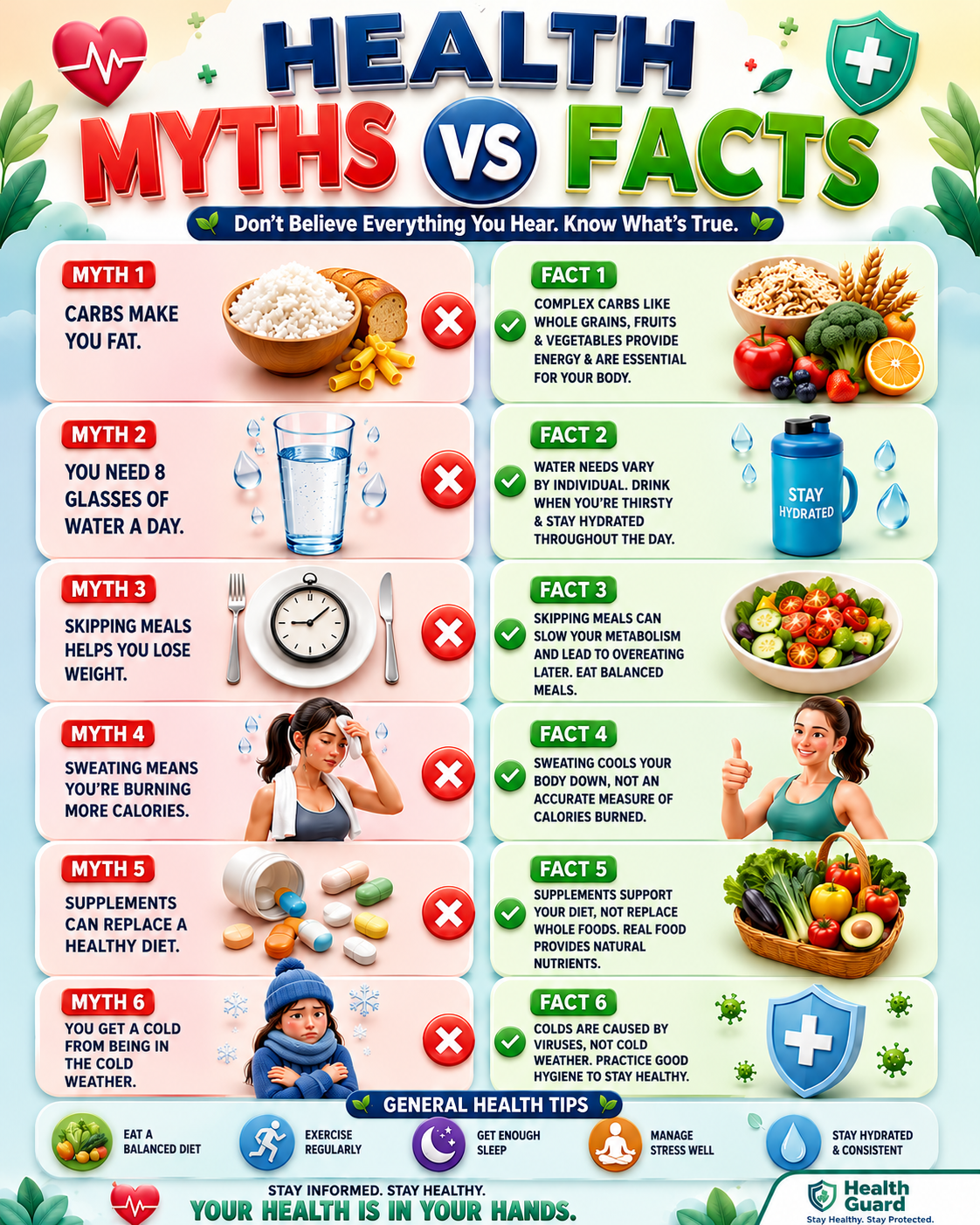
Myth 1: Carbohydrates Are the Enemy of Weight Loss
Let’s start by tackling the most misunderstood macronutrient: the carb. Many people treat carbs like they are inherently toxic, but the truth is far more nuanced. Carbohydrates are your body’s primary fuel source. Your brain and muscles thrive on them. The problem isn’t the carbohydrate itself; it’s the quality and quantity.
The Reality of Healthy Carbs
When we talk about carbs, we aren’t talking about processed white bread or sugary sodas. We are talking about complex carbohydrates that come packed with fiber, vitamins, and minerals. Think of quinoa, oats, sweet potatoes, and legumes. These foods provide a slow, steady release of energy that keeps you feeling satisfied and productive throughout the day.
- Fiber is your best friend: It aids digestion and helps regulate blood sugar.
- Energy levels: Cutting out carbs often leads to that ‘brain fog’ and intense fatigue that ruins your workout performance.
- Weight management: Weight loss is ultimately about energy balance. You can gain weight eating ‘healthy’ fats if you overconsume calories, just as you can lose weight while eating carbs.
Pro-tip: Focus on ‘whole’ sources of carbohydrates. If it grew from the ground and looks close to its natural state, it’s likely a great choice for your energy levels.
Myth 2: You Must Drink 8 Glasses of Water a Day
We have all heard the ‘8×8’ rule—eight glasses of eight ounces of water every single day. While drinking water is vital, this specific number is more of a myth than a medical mandate. Your actual hydration needs depend on a variety of personal factors, including your activity level, the climate you live in, your body composition, and even the types of food you eat.
How to Actually Gauge Hydration
Instead of carrying a measuring cup, listen to your body. Your thirst mechanism is a highly evolved tool designed to keep you hydrated. Here is how you can tell if you’re doing it right:
- Check the color: A light, pale yellow color in your urine is a great sign of hydration.
- Consider your diet: Fruits and vegetables like cucumbers, watermelons, and oranges are high in water content and contribute significantly to your daily total.
- Adjust for exercise: If you are sweating heavily in a gym, you need to replenish those fluids. Simple as that.
Don’t force-feed yourself water if you aren’t thirsty, and don’t obsess over a specific number. Your body is smart enough to tell you when it needs more fluid.
Myth 3: Skipping Meals Is a Shortcut to Slimming Down
It’s tempting to think that skipping breakfast or dinner will save you calories and result in faster weight loss. Unfortunately, for most people, this strategy backfires. When you skip meals, your body may enter a state of conservation, and your metabolism can actually slow down. More importantly, it sets you up for a ‘hunger crash’ later in the day.
The Dangers of the ‘Hunger Cycle’
When you ignore your hunger cues, you are significantly more likely to overeat or binge on high-calorie, ultra-processed foods later on. This leads to erratic blood sugar spikes and crashes, leaving you feeling moody, tired, and unmotivated. Instead of skipping meals, focus on ‘meal spacing’—eating nutritious, balanced meals at regular intervals. This keeps your energy stable and your cravings in check, making your health goals much easier to maintain over the long term.
Myth 4: If You Aren’t Sweating, You Aren’t Working Hard
We’ve all seen the gym goers who wear heavy layers to ‘sweat out the fat.’ It is time to retire this myth permanently. Sweat is your body’s internal air conditioning system. It’s a mechanism to cool you down, not a gauge of how much fat you are burning.
Focus on Intensity, Not Moisture
You can have a incredibly effective, high-intensity strength training session where you don’t break a heavy sweat, yet you are building muscle and burning calories efficiently. Conversely, you could sit in a sauna for an hour, sweat buckets, and not burn a significant amount of fat at all. The key to fat loss and fitness is muscle engagement, heart rate elevation, and consistency in your movement. Stop looking at the sweat and start tracking your performance metrics—like how much weight you can lift or how much faster you can run a mile.
Myth 5: Supplements Can Replace Real Food
The supplement industry is massive, and while vitamins and minerals can certainly fill gaps in your nutrition, they were never designed to replace a whole-food diet. Whole foods are ‘nutrient-dense’ for a reason: they contain a complex matrix of fiber, antioxidants, and phytochemicals that work synergistically in your body. You simply cannot get that same effect from a pill.
The Synergy of Real Food
When you eat an apple, you get more than just Vitamin C. You get fiber, natural sugars, and various polyphenols that interact to promote health. A multivitamin can’t replicate that. Supplements are exactly what the name suggests: they are meant to *supplement* a healthy, balanced diet, not act as a foundation for it. If your diet is poor, adding supplements is like trying to fix a leaky house by painting the roof—it’s not addressing the root issue.
Myth 6: Cold Weather Causes the Common Cold
How many times have you heard, ‘Put on a coat or you’ll catch a cold!’? While it’s good advice to stay warm, cold weather itself does not cause the common cold. Viruses do. The reason we see more illness in the winter isn’t because of the temperature outside, but because of human behavior.
Why We Get Sick in Winter
In colder months, we spend significantly more time indoors in poorly ventilated spaces. We are closer to other people, which makes it easier for viruses to jump from host to host. Furthermore, the lack of sunlight and drier air can slightly impact our immune defenses. The best way to stay healthy isn’t just avoiding the cold; it’s washing your hands, getting adequate sleep, maintaining a high-quality diet, and keeping stress levels low to keep your immune system fighting fit.
The Core Principles of a Healthy Life
Now that we have busted these myths, you might be wondering, ‘What *should* I be doing?’ The answer is simpler than you think. Building a healthy life is about focusing on the big rocks: nutrition, movement, sleep, and stress management.
1. Prioritize Whole Foods
Base your diet around vegetables, lean proteins, healthy fats, and complex carbohydrates. Keep the ultra-processed, high-sugar foods as occasional treats rather than daily staples.
2. Find Movement You Love
Exercise shouldn’t be a punishment. Whether it’s swimming, weightlifting, yoga, or just a brisk walk in the park, the best workout is the one you will actually do consistently. Aim for a mix of cardiovascular health and strength training.
3. Respect Your Sleep
Sleep is the foundation of recovery. It is when your brain cleanses itself and your muscles repair. Aim for 7 to 9 hours of quality, uninterrupted sleep. If you have trouble sleeping, look at your ‘sleep hygiene’—the environment in your bedroom, your screen time before bed, and your caffeine intake in the afternoon.
4. Master Your Stress
Chronic stress is a silent killer. It wreaks havoc on your digestion, your heart, and your immune system. Incorporate small, daily habits like deep breathing, meditation, or even just taking ten minutes to step outside and disconnect from technology. Your mental health is just as important as your physical health.
Conclusion: Trust Science, Not Trends
The wellness landscape is constantly changing, but the principles of human health remain relatively stable. By rejecting the ‘quick fix’ myths and embracing evidence-based habits, you can build a lifestyle that is sustainable, enjoyable, and effective. Don’t let the noise of the internet dictate your health journey. Listen to your body, rely on credible, expert-backed information, and remember that small, consistent changes are far more powerful than any extreme trend ever could be.
You have the power to curate your own health. Start today by choosing one habit to improve, and watch how your body rewards you with better energy, better mood, and a better quality of life.