🌱 Complete Guide to Foot Reflexology Points for Daily Wellness 🌱
In today’s fast-paced world, it’s easy for our physical health and energy levels to take a backseat. Long hours glued to our desks, endless screen time, and the constant pressure of deadlines often leave us searching for simple, effective ways to unwind and restore our natural balance. 🏃♂️ But what if we told you that your feet hold a powerful, hidden map that can help ease this daily strain?
Imagine dedicating just a few minutes each evening to focus on specific pressure zones on your feet. This simple act can completely transform how your body recovers from stress and fatigue. By understanding how different areas of your feet are intricately connected to your internal systems, you can build a personalized wellness routine that actively supports relaxation and boosts your overall vitality. 🎯 Let’s dive in and explore how simple, mindful pressure can profoundly enhance your physical wellbeing and bring a sense of calm to your busy life.
What are the health benefits of foot reflexology points?
Foot reflexology points are essentially a map of your entire body, with specific zones on your feet corresponding to different organs, glands, and bodily systems. Applying gentle, targeted pressure to these specific zones helps to stimulate relaxation throughout the body, improve mental focus and clarity, relieve common issues like eye strain, ease digestive discomfort, and support the body’s natural detoxification pathways. The cumulative effect is better overall daily wellness, a significant reduction in stress levels, and a greater sense of balance and well-being.

✨ The Sensory Map: Understanding Foot Reflexology Points ✨
At its core, reflexology operates on a fascinating principle: your feet act as a detailed, miniature map of your entire body. Think about it – hundreds of nerve endings terminate on the soles, sides, and even the tips of your toes, creating incredibly sensitive touch points. 👣 When you stimulate these specific areas with gentle pressure, you’re essentially sending signals through your nervous system, encouraging relaxation and promoting balance where your body needs it most.
By familiarizing yourself with these targeted pressure zones, you gain a practical, accessible toolkit for managing the physical fatigue and tension that accumulate throughout your day. 🛠️ Let’s break down how specific zones on your feet align with your body’s vital systems, turning your feet into a powerful wellness hub:
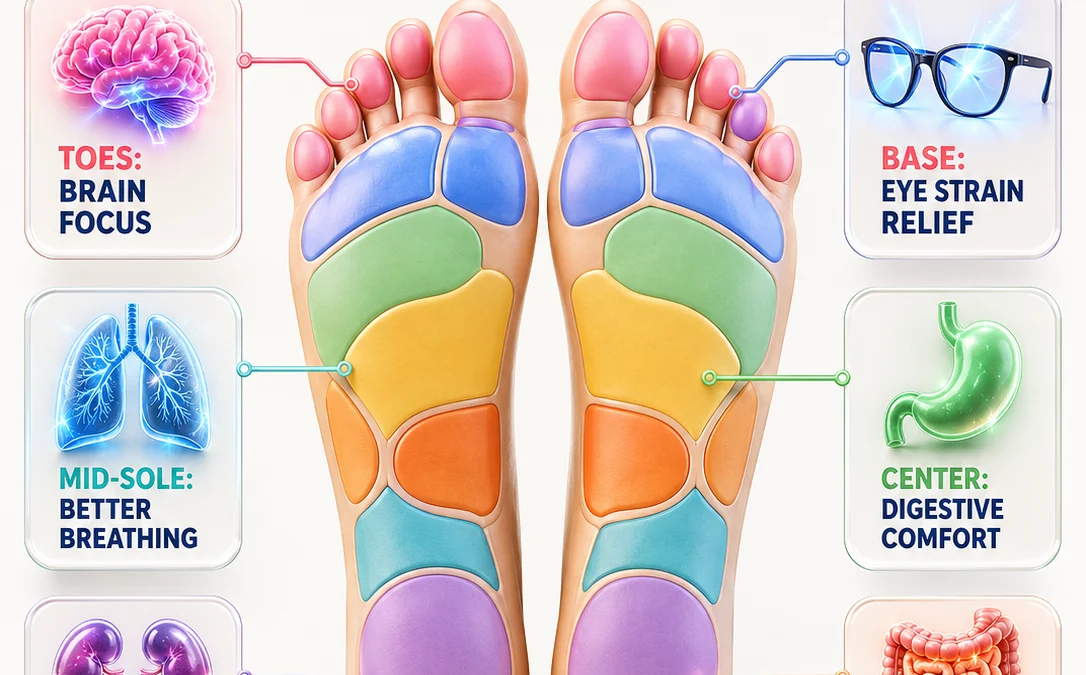
🧠 The Toes: Brain Powerhouse. Your toes are closely connected to your brain health. Regularly targeting this area can help improve mental focus, calm racing thoughts, and clear away that persistent mental fog that often accompanies demanding work or study. Think of it as a mini-brain boost!
🔍 Base of the Toes: Sensory Oasis. The area right where your toes meet the ball of your foot directly links to your eyes and ears. This makes it an absolutely essential spot to focus on after a long day spent staring at screens or listening to the hustle and bustle of daily life. It’s perfect for relieving that tired, achy feeling.
🌬️ Upper Mid-Foot: Respiratory Revitalizer. The broader cushion of your foot, just below the toes, corresponds to your lungs. Focusing on this area can help encourage deeper, more revitalizing breaths, promoting better oxygenation and a sense of calm and clarity. It’s like a breath of fresh air for your whole body.
Paying mindful attention to these connection zones empowers you to actively check in with your physical self. 🌟 Instead of just passively enduring the exhaustion that builds up over a long work week, you can systematically address tension and discomfort right at its source. It’s proactive self-care at its finest.
💡 Quick Tip
If you’re someone who experiences frequent headaches or persistent eye fatigue from prolonged computer use, make a point to pay extra attention to your big toes and the padded area directly underneath your smaller toes during your reflexology routine. You might be surprised at the relief!
🧭 Lower Foot Zones: Supporting Digestion and Internal Balance 🧭
Moving down the foot, the center and lower portions are deeply connected to your core metabolic and digestive organs. We all know that when stress hits, the digestive tract is often one of the first systems to feel the impact, leading to uncomfortable bloating, sluggishness, or general digestive upset. 📉 Gently massaging these deeper zones on your foot can encourage your body to shift into a more relaxed, restorative state, aiding your digestive system.
By easing physical constriction held in the midsection through foot work, you can promote smoother internal functioning. 🔋 Here are the key organ pathways located within the main arch and sole of your foot:
🎯 Central Foot Arch: Digestive Soother. This central area of your arch represents your stomach. Massaging this point can be incredibly helpful for easing mild indigestion, occasional stomach upset, and general tension in your abdominal area. It’s a direct line to your gut comfort.
📈 Outer Mid-Foot Side: Liver Support. The side of your foot, running along the arch, is linked directly to your liver. Working on this spot can help support your body’s natural metabolic processes, aid in energy filtration, and contribute to your overall sense of vitality. It’s a key area for internal cleansing support.
🌱 Lower Mid-Foot Base: Intestinal Relief. This broad area at the base of your arch, closer to the heel, aligns with your intestines. Stimulating this zone is highly effective for relieving discomfort, reducing bloating, and promoting smoother intestinal function. If you experience digestive irregularity, this is a must-try point.
🛡️ Lower Center Core: Kidney Vitality. The precise kidney points are located in the lower center of your foot’s arch. Targeting these points can act as a great support zone for maintaining overall fluid balance in your body and contributing to your general sense of vitality and well-being. It’s a crucial area for maintaining internal equilibrium.
By dedicating time to the arches and soles of your feet, you help to release internal tension that you might not even realize you are holding onto. 🌊 This simple yet profound physical maintenance routine helps your body process daily stress more efficiently, keeping your energy levels stable and your mood uplifted throughout the day. It’s a gentle way to support your body’s hard work.
🏆 Best Practice
To enhance the experience and effectiveness when working on the sensitive foot arch areas, use a small drop of natural oil, such as coconut or lavender oil. This not only reduces friction on the skin, allowing for smoother, more comfortable application of pressure, but the aromatherapy benefits can also deepen your relaxation. Aim for smooth, deep pressure along the natural curves of the foot bones for maximum benefit.
👣 Step-by-Step Guide: How to Apply Reflexology at Home 👣
The beauty of foot reflexology is that you don’t need specialized tools or complex training to practice effective techniques in the comfort of your own home. The most crucial element is creating a quiet, intentional environment where you can truly disconnect and tune in to your body’s responses. 🏡 Setting aside distractions is paramount to maximizing the relaxing and therapeutic benefits of your session.
Following a clear, steady, and simple routine ensures you get the most rejuvenating and relaxing experience possible. 📝 Let’s walk through the easy-to-follow execution blueprint for a basic, yet highly effective, home reflexology practice:
| Action Step | How to Execute It | Main Wellness Focus |
|---|---|---|
| 1. Gentle Pressure | Use your thumbs to apply firm but comfortable pressure to the targeted reflex point. The pressure should be noticeable but never painful. | Wakes up the nerve pathways safely and prepares them for deeper work. |
| 2. Steady Hold | Maintain steady, unmoving pressure on the specific point for a duration of 30 to 60 seconds. Breathe deeply during this hold. | Allows the underlying muscle layers and connected tissues to release built-up tension and signal the corresponding body part. |
| 3. Deep Breathing | Coordinate your pressure with your breath. Inhale slowly and deeply through your nose, and exhale fully as you press down on the reflex point. | This synchronized breathing calms your central nervous system, enhances relaxation, and amplifies the therapeutic effects of the pressure. |
Consistency is the key that transforms a simple foot massage into a truly transformative long-term wellness habit. ⏳ By repeating this short, intentional ritual daily – perhaps right before you drift off to sleep – you can drastically improve your sleep quality, reduce nighttime anxiety, and wake up feeling lighter, more refreshed, and ready to take on the day.
⚠️ Common Mistake
A common pitfall is pressing down too hard, driven by the desire to achieve faster or more potent results. It’s crucial to remember that reflexology should feel therapeutic and relaxing, not painful. If a point feels sharply painful, it’s a signal to ease up immediately. Listen to your body; mild tenderness can indicate tension, but sharp pain means you’ve gone too far and need to reduce the pressure.
🧠 Mindfulness and Safety: Balancing Holistic Care 🧠
Incorporating touch therapies like reflexology into your daily wellness routine is an incredible way to build deeper body awareness, reduce emotional fatigue, and foster a greater sense of self-connection. However, it’s vital to maintain a grounded perspective on any alternative wellness practice. 🛡️ These methods work beautifully as powerful complements to standard medical care and conventional treatments, but they are not intended as a replacement for professional medical advice or treatment.
Always prioritize listening carefully to your body’s natural signals and limits. This mindful approach prevents overstimulation and ensures that your home practice remains an enjoyable and beneficial part of your self-care regimen. 🌟 Let’s outline the best practices for keeping your home reflexology practice safe, effective, and consistently rewarding:
🔍 Respect Your Body’s Signals: While mild tenderness in a reflex point often indicates built-up muscle tension that is being released, sharp or intense pain is a clear sign that you need to stop, ease pressure, or move to a different area. Never push through sharp pain.
💧 Hydrate Adequately: After your reflexology session, drinking a warm glass of water is highly recommended. This helps your body naturally flush out any metabolic waste or toxins that may have been released during the session, supporting your body’s natural detoxification processes.
📖 Seek Professional Guidance When Needed: If you are dealing with chronic health conditions, have sustained an injury, or are experiencing severe or persistent pain, it is always best to consult with a qualified healthcare professional or a certified reflexologist before beginning or continuing a home practice. They can provide personalized advice and ensure your safety.
When you thoughtfully combine mindful self-care practices like reflexology with appropriate medical care, you build a truly resilient foundation for long-term health and well-being. 🌱 Taking proactive control of your relaxation and recovery habits empowers you to face professional challenges, daily stressors, and life’s demands with a calmer mind, a stronger body, and a greater sense of inner peace.
🧠 Expert Insight
Holistic and complementary practices, such as foot reflexology, are invaluable tools for lifestyle maintenance, effective stress relief, and promoting nervous system regulation. They serve as excellent companions to expert medical advice and should always be integrated responsibly, particularly when addressing specific health concerns or conditions.
📌 Key Takeaways for Your Daily Foot Reflexology Routine 📌
Keeping a brief, handy summary of the essential steps nearby can make it incredibly simple to stick with your new self-care ritual, even during the busiest weeks. 📝 Use these core principles to guide your practice tonight and make it a consistent part of your routine:
🚀 Target Specific Zones Mindfully: Remember the key connections: use your toes for mental clarity, the upper mid-foot for respiratory ease, and the arch for digestive support and internal balance.
🎯 Embrace the 30-60 Second Rule: Maintain a steady, comfortable thumb hold on each pressure point for approximately 30 to 60 seconds. This allows for deeper release and connection.
💎 Synchronize with Your Breath: Coordinate slow, deep belly breathing with every press. Inhale as you prepare, exhale as you apply pressure. This amplifies relaxation and nervous system calming.
🧠 Commit to Daily Practice: Aim to practice right before going to sleep. This creates a reliable, calming transition into deep, restorative rest, setting the stage for a better day tomorrow.
🔮 Final Thoughts on Designing an Intentional Lifestyle 🔮
Your journey toward lasting physical wellness and a more balanced life is fundamentally built on the small, consistent self-care choices you make every single day. 🌟 By carving out just a few quiet moments to consciously release tension from your feet, you can effectively quiet your central nervous system, reset your focus, and proactively protect your mind and body from the cumulative effects of professional exhaustion and daily stressors.
Why not try spending just five minutes exploring these powerful reflexology pressure zones tonight, immediately after you close your laptop for the day? 🚀 Treat this brief window as an unbreakable appointment with your personal well-being. Protect this quiet time fiercely, and savor the profound physical relief and mental calm it brings. For more practical lifestyle systems, insightful wellness reviews, and evidence-based health tracking resources, we invite you to explore our expert archives here at Top Best Rated. Invest in yourself – your feet (and your whole body) will thank you!