🌱 Ready to unlock your absolute best self? In today’s fast-paced world, continuous personal growth isn’t just a nice-to-have; it’s a must-have for staying ahead. This isn’t about drastic, overwhelming changes. Instead, we’re diving deep into the power of micro-habits—the secret sauce to becoming just 1% better every single day. This approach is your golden ticket to sustainable transformation, preventing burnout and cognitive overload. Think of this as your definitive, actionable blueprint for personal growth, packed with practical, data-driven strategies designed to skyrocket your productivity, boost your physical health, and sharpen your mental clarity. Whether you’re aiming for professional mastery or personal optimization, this guide is your essential framework for building rock-solid discipline, elevating your daily focus, and turning everyday routines into compounding success stories. Let’s get started on building a better you, one tiny step at a time! 📈

🚀 The Undeniable Power of Daily Personal Growth: Building Your Unshakeable Foundation
In today’s rapidly evolving world, where change is the only constant and demands are always on the rise, simply keeping up isn’t enough. To truly thrive, personal excellence has become an absolute necessity, not just an optional pursuit. At the heart of sustainable personal development, achieving peak performance, and leading with strategic vision lies the continuous practice of self-improvement. It’s the operational core that drives lasting change. But how do you transform fleeting intentions into consistent, scalable progress? It’s not about sporadic bursts of motivation; it’s about adopting a systematic methodology. True, profound transformation operates on the principle of compound growth. This means consistently executing small, manageable micro-habits that, over time, evolve into significant, long-term behavioral shifts. By focusing on these incremental updates, you sidestep the dreaded cognitive fatigue that often comes with trying to overhaul everything at once. This allows those small, consistent adjustments to compound, leading to major advancements you might not have thought possible. Embracing an objective, strategic framework empowers you to methodically design your environment and your daily actions to support and accelerate sustainable success. This comprehensive blueprint is your roadmap, offering ten highly effective, actionable strategies specifically designed to accelerate your performance, optimize your daily routines, and establish a robust foundational framework for achieving true self-mastery.
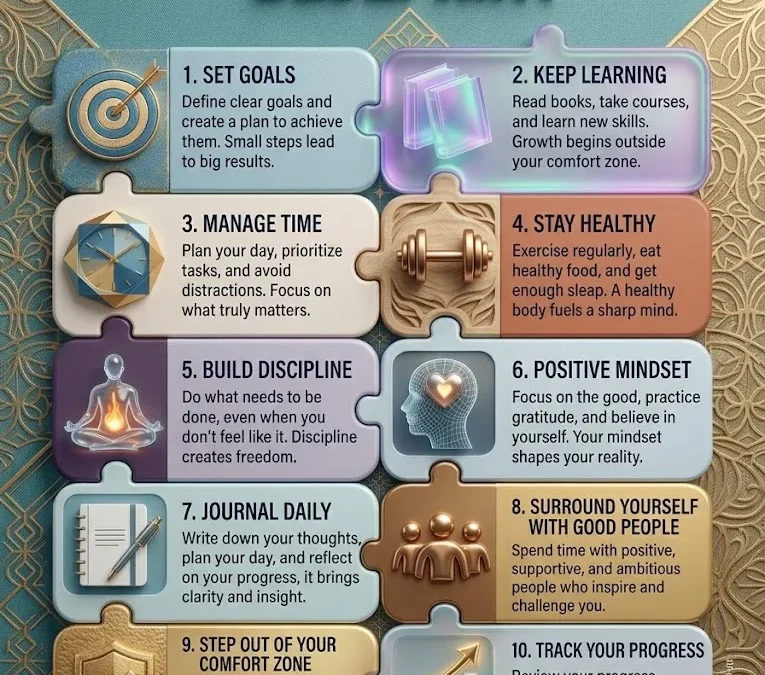
📊 Ten Actionable Pillars for Sustainable Self-Improvement: Your Daily Growth Engine
🎯 1. Set Strategic Goals with Crystal-Clear Actionable Plans
Imagine trying to navigate without a map – that’s what setting goals without clear, actionable plans feels like. Precise, metrics-driven benchmarks are the compass and map that give your daily execution direction. Without them, your efforts risk becoming scattered, unfocused, and ultimately, inefficient. True success hinges on your ability to structure your primary objectives into bite-sized, manageable daily tasks. This ensures that every action you take is directly aligned with your overarching vision, keeping you on track and building momentum. When you define clear, measurable objectives, you eliminate ambiguity and create a direct path forward. This isn’t just about dreaming big; it’s about strategizing smart. Formulate a realistic, phased roadmap that meticulously details the specific daily actions required for execution. Think of it as breaking down a mountain climb into manageable steps. And crucially, break down those large, potentially intimidating goals into small, achievable milestones. Each small victory triggers consistent positive reinforcement, fueling your motivation and making the journey feel less daunting and more rewarding.
📚 2. Commit to Continuous Lifelong Learning: Never Stop Growing
Formal education is a fantastic starting point, but in today’s dynamic professional landscape, the learning journey should never truly end. Intellectual evolution is the cornerstone of staying relevant and adaptable. The modern economic environment, in particular, rewards those who actively prioritize knowledge acquisition and skills expansion. Dedicating consistent time to learning keeps your mind agile, sharp, and ready to tackle the complexities of any professional challenge. Make it a non-negotiable part of your routine: dedicate consistent daily time to diving into books, exploring insightful industry case studies, or analyzing technical papers that expand your expertise. Don’t just stick to what you know; complete certified online programs to enhance your technical capabilities and significantly boost your market value. To truly accelerate your growth, consciously step out of your comfortable routines. Challenge your existing knowledge, seek out new perspectives, and build cross-disciplinary expertise. This continuous learning habit is your superpower in a world that never stops changing.
⏱️ 3. Master Time Optimization and Strategic Management: Your Most Valuable Asset
Time is the ultimate non-renewable resource. How you allocate it dictates your productivity and your progress. Strategic time management is the critical skill that separates highly productive execution from mere busywork. It’s about making conscious choices to prioritize what truly matters. By focusing your energy on high-impact tasks, you minimize distractions, reduce context switching, and maximize your cognitive output. Start your day with clarity: plan your daily schedules the evening before. This simple habit significantly reduces decision fatigue when you begin your workday, allowing you to hit the ground running. Employ proven frameworks like the Eisenhower Matrix to meticulously separate high-impact, urgent tasks from superficial noise that drains your energy. And here’s a key to unlocking deep focus: maintain concentration on a single major item at a time. Resisting the urge to multitask is crucial, as multitasking comes with significant cognitive costs that hinder deep work and efficiency.
🏋️ 4. Prioritize Physical Wellness and Health Architecture: Fueling Your Success
It’s a truth universally acknowledged: high-level cognitive output is inextricably linked to a well-maintained physical foundation. Neglecting your bodily health isn’t just detrimental to your well-being; it actively limits your long-term professional sustainability and potential. Think of your body as the high-performance vehicle for your mind. Proper rest, consistent movement, and balanced nutrition are the essential fuels that directly power sustained focus, sharp analytical performance, and overall resilience. Make physical wellness a non-negotiable pillar. Incorporate regular physical exercise into your routine – it’s proven to optimize neurological function, enhance your stress response, and boost your mood. Choose balanced, nutrient-dense nutrition to sustain your energy levels throughout the day, avoiding those dreaded mid-day slumps that kill productivity. And crucially, prioritize sleep. Aim to secure seven to eight hours of restorative sleep each night. This is when your brain performs vital recovery and memory consolidation, setting you up for optimal performance the next day.
🧘 5. Cultivate Tactical Discipline and Behavioral Freedom: The Power of Habit
Discipline is the bridge that connects your intentions to tangible results. Relying solely on fleeting motivation is a recipe for unpredictable performance. True discipline means consistently executing the tasks that are required for your success, regardless of your fluctuating emotional states or how you *feel* on any given day. It’s about showing up, even when you don’t feel like it. Make it a practice to complete your required assignments systematically, neutralizing any emotional friction or the urge to procrastinate before it takes hold. Establish non-negotiable daily routines that transform critical tasks into automatic habits. The more you automate the essential actions, the less mental energy you expend. And here’s a profound insight: strict personal discipline doesn’t lead to rigidity; it actually builds long-term professional independence and flexibility. By mastering your actions, you gain control over your outcomes and unlock greater freedom.
🧠 6. Foster a Resilient, Positive Mindset: Your Internal Compass
The way you frame challenges directly shapes your reality and your ability to overcome them. A positive mindset isn’t about ignoring difficulties or pretending problems don’t exist. Instead, it’s about actively shifting your focus from dwelling on obstacles to identifying and implementing solutions. This mental resilience is what ensures your long-term persistence, especially when faced with inevitable setbacks. Make it a habit to reframe setbacks not as definitive failures, but as valuable educational feedback loops. Analyze what happened, learn from it, and adjust your approach. Practice daily reflection on your operational wins, no matter how small, to reinforce your workplace confidence and build momentum. During challenging times, consciously focus your internal dialogue on actionable solutions. This maintains high team and personal morale, ensuring you and your colleagues stay motivated and solution-oriented.
📝 7. Implement Daily Reflective Journaling: Sharpening Your Insights
Documenting your daily thoughts, experiences, and insights is a powerful tool for sharpening your analytical clarity. Journaling acts as a mental decluttering tool, helping you clear cognitive fog, track important behavior patterns, and objectively evaluate your choices and their outcomes. Regular written reflection transforms your daily experiences into valuable, structured data that you can learn from. Make it a habit to write down your daily ideas, analytical insights, and behavioral observations every evening. This practice solidifies learning and brings clarity. Take time to review your regular decisions – this is where you’ll spot repeating inefficiencies or identify structural bottlenecks in your workflow or thinking. Use structured writing not only to clear mental clutter but also to organize your immediate priorities, ensuring you know exactly what needs your attention.
👥 8. Curate a High-Value Professional Network: Your Growth Circle
It’s often said that you become the average of the five people you spend the most time with. Human behavior naturally aligns with the influences of your surrounding social circles. Cultivating a network of ambitious, values-driven peers isn’t just about networking; it’s about immersing yourself in a masterclass of ongoing professional development. Surrounding yourself with excellence naturally pushes your own benchmarks higher. Make it a point to spend time with forward-thinking individuals who challenge your existing performance levels and inspire you to reach new heights. Simultaneously, be mindful of your environment: limit your exposure to negative influences or environments that drain your cognitive energy. Actively participate in collaborative focus groups that are centered on mutual growth, shared learning, and accountability. This strategic curation of your network is a powerful catalyst for personal and professional advancement.
🛡️ 9. Strategically Step Beyond Comfort Zones: Where Growth Happens
The most significant growth rarely, if ever, happens within the confines of your comfort zone. Staying within familiar routines can easily lead to professional stagnation, where skills become outdated and opportunities are missed. Voluntarily taking calculated risks is essential. It’s how you test your capabilities, uncover hidden competitive advantages, and expand your personal and professional boundaries. Actively seek out demanding, unfamiliar assignments that require you to develop new skills and push your current limits. Embrace calculated operational risks – these aren’t reckless gambles, but thoughtful steps into the unknown that build confidence and expand your personal limits. Crucially, learn to view temporary discomfort not as a sign of failure, but as a clear and positive indicator of active professional growth. It means you’re learning, adapting, and evolving.
📈 10. Implement Quantitative Progress Tracking: Measure What Matters
What gets measured, gets managed – and more importantly, what gets measured can be optimized. Trying to manage your personal growth without tracking data is like navigating without a compass; it relies heavily on guesswork rather than clear, objective evidence. Keeping regular performance logs provides an objective view of your behavioral evolution and helps you understand what’s working and what isn’t. Conduct objective weekly performance evaluations against your defined key benchmarks. This regular check-in keeps you accountable and provides valuable data. Make sure to notice and celebrate even minor metric improvements. These small wins reinforce consistent execution and build positive momentum. Use accurate historical data to intelligently tweak your routines and systematically enhance your operational output. Data-driven decisions lead to predictable, sustainable progress.
⚖️ The Undeniable Philosophy of Continuous Incremental Evolution
At its core, true self-improvement isn’t about achieving flawless execution overnight. It’s about embracing a philosophy of sustainable progress. Demanding immediate perfection from yourself often leads to early paralysis, heightened stress, and ultimately, demotivation. The real, sustainable key to long-term success lies in focusing on small, compounding gains. This means striving to become just 1% better every single day. This strategic approach prioritizes consistency over occasional, unsustainable intensity, ensuring that your changes don’t just happen, but they stick, turning into lasting habits. By wholeheartedly embracing this incremental development framework, any individual, regardless of their starting point, can steadily navigate their unique path toward lasting excellence and profound personal transformation. It’s a journey, not a destination, and every small step counts.
❓ Frequently Asked Questions (FAQ): Your Growth Guide
Q1: What does it truly mean to get 1% better every day?
Getting 1% better every day is all about making small, consistent, and deliberate improvements in your habits, skills, knowledge, or mindset. It’s not about massive overhauls, but about tiny, sustainable steps. Over time, these minor adjustments compound exponentially, leading to significant and lasting personal and professional development that feels achievable and sustainable.
Q2: How can I set goals that I will actually achieve, rather than just dream about?
The secret to setting achievable goals lies in breaking them down. Start by defining clear, measurable objectives. Then, create a detailed step-by-step plan that outlines the exact daily tasks required to reach those milestones. This shifts your focus from abstract desires to concrete, actionable execution, making your goals feel much more attainable.
Q3: Why is effective time management so critical for self-improvement?
Effective time management is crucial because it allows you to consciously allocate your limited energy and attention toward high-impact priorities while actively minimizing distractions and time-wasters. It transforms chaotic, overwhelming days into structured, productive sessions, protecting your valuable time for meaningful growth activities.
Q4: How exactly does physical health impact cognitive performance and productivity?
Your physical health forms the foundational fuel for your mental acuity and overall productivity. Regular exercise, balanced nutrition, and sufficient, quality sleep are not luxuries; they are essential for optimizing neurological functions, enhancing focus, boosting creativity, and providing the sustained energy required for demanding cognitive tasks.
Q5: What is the fastest and most reliable way to build discipline?
The most reliable and effective way to build discipline is through establishing consistent, non-negotiable daily routines. By committing to executing essential tasks regularly—regardless of your emotional state or motivation levels—you gradually shift from relying on fleeting motivation to building automatic, ingrained habits.
Q6: How does the practice of journaling contribute to personal development and self-awareness?
Journaling serves as a powerful, structured tool for deep self-reflection and insight generation. Writing down your thoughts, decisions, observations, and progress brings mental clarity, helps uncover hidden behavioral bottlenecks or patterns, and effectively translates your daily experiences into actionable insights for growth.
Q7: Why is it so important to strategically step outside of my comfort zone?
Remaining consistently within your comfort zone inevitably leads to stagnation and limits your potential. Intentionally taking on new, challenging tasks forces you to learn rapidly, test your capabilities under pressure, build resilience, and discover hidden competitive advantages you never knew you possessed.
Q8: How often should I be tracking my self-improvement progress to stay on course?
It is highly effective to conduct a review of your progress on a weekly basis. This regular, quantitative tracking provides an objective view of your growth, highlights areas of success, identifies areas needing adjustment, and allows you to make data-driven, informed decisions to refine your strategies.
Q9: What role does my professional network play in my individual growth journey?
Your network significantly influences your baseline standard for behavior and achievement. Surrounding yourself with ambitious, forward-thinking peers and mentors challenges you to consistently raise your own performance levels, provides invaluable support, and offers crucial accountability.
Q10: How can I maintain a positive and resilient mindset even when facing failures or setbacks?
Maintaining a resilient mindset involves a fundamental shift in perspective: treat setbacks not as permanent defeats, but as valuable data points for learning and adjustment. Analyzing what went wrong allows you to refine your strategy, improve your execution, and build the resilience needed for long-term success.