Hey there, money-savvy folks! Let’s talk about something super important: building long-term financial growth. It might seem like a huge mountain to climb, but honestly, it often boils down to steering clear of a few common financial traps. Most of the stress people feel about money isn’t from one giant disaster, but from those little, everyday habits that quietly chip away at your bank account. 📉 Sound familiar? Understanding these common money pitfalls is your express ticket to taking charge of your finances and securing your family’s future. 🛡️
Think of it this way: managing your money doesn’t have to be rocket science. It’s about making smart, consistent choices. This guide is packed with insights and actionable tips to help you avoid those costly mistakes and pave the way for genuine financial security. Ready to level up your financial game? Let’s dive in!
Stop Making These Costly Money Mistakes Today! 🚨
So, what exactly are these common financial blunders, and more importantly, how can you dodge them? Let’s break it down:
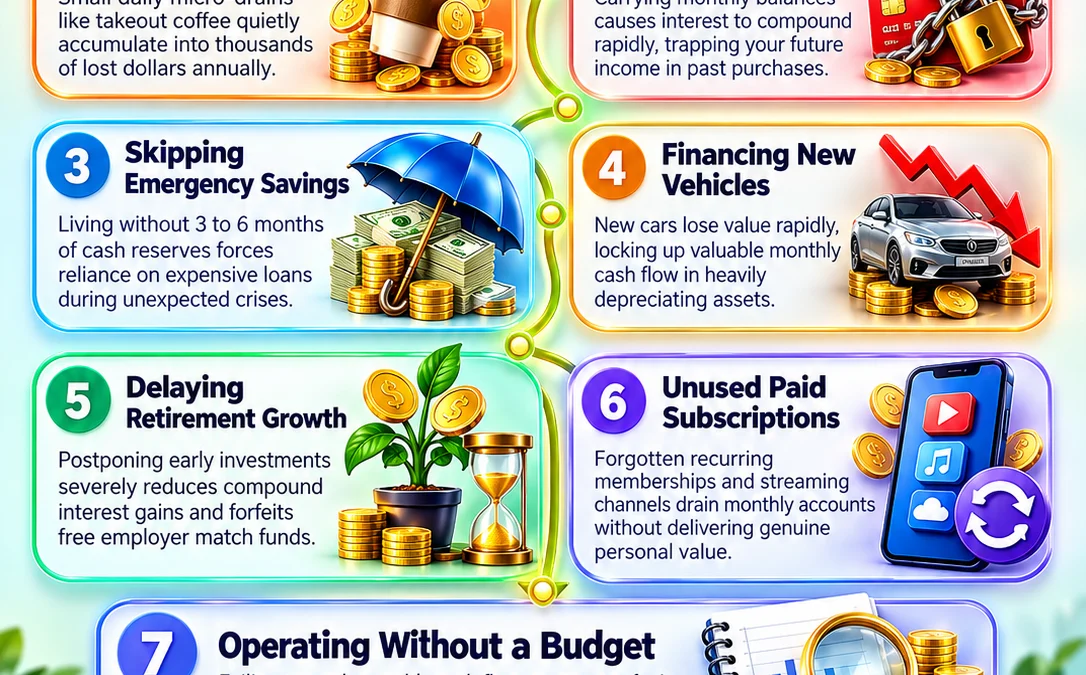
The usual suspects include spending too much on daily indulgences, getting caught in the high-interest credit card cycle, living without a safety net (aka an emergency fund), saddling yourself with expensive car loans, putting off retirement savings, and letting unused subscriptions drain your account. The good news? You can avoid these by creating a realistic budget, automating your savings, tackling debt head-on, and keeping a close eye on where your money is actually going.

🛍️ Mistake #1: Unchecked Daily Spending & Those Little “Treats” ☕
We’re all pretty good at keeping tabs on the big stuff, right? Rent, mortgage, car payments – they’re hard to miss. But what about those smaller, everyday purchases? That daily latte, the occasional food delivery when you’re too tired to cook, or that impulse buy while scrolling online? 📱 They seem insignificant, but trust me, these little spending habits can add up to thousands of dollars vanishing from your account each year. These are what we call ‘micro-drains,’ and they’re financial saboteurs because they rarely trigger any red flags. You don’t feel the pinch of a $10 purchase, but do that twice a day, and suddenly you’re looking at a significant chunk of change gone over time. 📊 Recognizing where your hard-earned money is actually going is the very first, crucial step toward achieving financial freedom.
To really get a handle on this, try this:
- Track Everything: For about 30 days, diligently log every single purchase. Use a budgeting app or even a simple notepad. This will shine a light on those hidden leaks you didn’t even know existed.
- Brew Smarter: That daily $6 latte from the fancy coffee shop? Making it at home could save you hundreds of dollars monthly. Think about it: $6 a day, 5 days a week, 50 weeks a year is over $1,500 saved! ☕
- Delivery Delights (Sparingly): Reserve food delivery apps for special occasions rather than making them your go-to for convenience. Those fees and markups add up faster than you think. 🍕
Let’s break down how these seemingly small daily choices can impact your bank balance over the long haul:
-
☕ Daily Coffee Runs
Grabbing that $6 artisanal coffee on your commute might feel like a small treat. 🚶♂️
Estimated Annual Cost: ~$2,190
-
🛵 Frequent Food Delivery
Ordering takeout twice a week, complete with delivery fees and service charges. 🍟
Estimated Annual Cost: ~$1,800
-
📺 Forgotten Subscriptions
Those streaming services, gym memberships, or app subscriptions you forgot you signed up for, auto-renewing every month. 🎬
Estimated Annual Cost: ~$600+
See how quickly those small amounts add up? It’s like a leaky faucet – a few drips here and there don’t seem like much, but over time, they can drain your entire reservoir.
💳 Mistake #2: Drowning in High-Interest Debt & Minimum Payments 📈
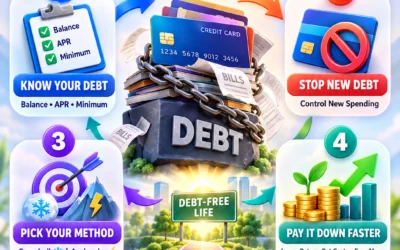
Credit cards are incredibly convenient, and those rewards points can be tempting. But here’s the harsh reality: carrying a balance from month to month is one of the most financially damaging mistakes you can make. 📈 Those sky-high interest rates, often well over 20% APR, mean your debt grows exponentially. What started as a small purchase can balloon into a massive burden. And if you’re only making the minimum payment? You could be stuck in that debt cycle for decades, paying far more in interest than you ever spent on the original items. ⛓️
When you’re carrying high-interest debt, a huge chunk of your income isn’t going towards building your future; it’s going towards paying for past spending. ⏳ That’s why eliminating high-interest credit card debt needs to be your absolute top financial priority, even before you think about aggressive investing.
🏆 Best Practice: The Debt Avalanche Method
Want to conquer that credit card debt efficiently? Try the ‘Debt Avalanche’ method. Focus on paying off the card with the highest interest rate first, while making only the minimum payments on your other debts. Once the highest-interest card is paid off, roll that payment amount onto the card with the next highest interest rate. This strategy saves you the most money on interest and gets you debt-free much faster. 🚀
🚨 Mistake #3: Living Without an Emergency Fund ☔
Life is unpredictable. Things happen. Your car breaks down, you have an unexpected medical bill, or maybe you face a job loss. Without a financial safety net – an emergency fund – these surprises can quickly derail your finances, forcing you to rely on costly loans or credit cards. 💔 An emergency fund is your financial armor, protecting you when the unexpected strikes.
Many people think they can’t afford to save for emergencies, especially if they’re already struggling. But here’s the truth: starting small is infinitely better than not starting at all. 🌿 Even having just $500 or $1,000 set aside can provide immense peace of mind and prevent minor setbacks from turning into major financial crises. The goal is to build up to 3 to 6 months of essential living expenses, but the first step is just to start saving something.
Here’s how to build that crucial safety net:
- Set a Target: Aim to save enough to cover 3 to 6 months of your basic living expenses. Keep this money in a separate, easily accessible high-yield savings account.
- Automate Savings: Set up automatic transfers from your checking to your savings account every payday. Even $25 or $50 per paycheck adds up significantly over time. 🤖
- Keep it Separate: Having your emergency fund in a dedicated account prevents you from dipping into it for non-emergencies. Out of sight, out of mind! 🔒
“True wealth isn’t just about how much you earn, but how much you manage to keep and how effectively you put it to work over time.” ⏳
🚗 Mistake #4: Buying New Cars & Financing Rapidly Depreciating Assets 📉
Let’s talk about cars. Buying a brand-new car is often one of the worst financial decisions you can make. Why? Because cars are rapidly depreciating assets. The moment you drive that shiny new vehicle off the dealership lot, it loses a significant chunk of its value. 🚘 Then, you’re stuck financing an expensive car with a long-term loan, meaning hundreds of dollars each month go towards an asset that’s constantly losing worth. 📉
Those hefty monthly payments, combined with higher insurance premiums and registration fees for newer cars, can tie up a substantial portion of your income. Income that could be better used for investing in your retirement, saving for a down payment on a house, or paying off higher-interest debt. 🏡 A much smarter financial move is to consider a reliable, certified pre-owned vehicle. This way, the first owner absorbs the biggest depreciation hit, and you get a great car for a much lower price and with lower ongoing costs. 🚙
⚠️ Watch Out For This Common Trap
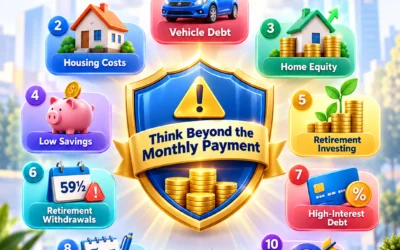
It’s easy to get fixated on just the monthly payment. But always consider the total cost of the vehicle, including interest over the life of the loan, increased insurance costs, and potential maintenance. Longer loan terms might mean lower monthly payments, but they drastically increase the total amount of interest you’ll pay! 💸 Always calculate the total cost before signing.
📊 Comparing Financial Traps vs. Smart Alternatives ⚖️
Making smarter financial decisions is all about replacing those detrimental habits with constructive, long-term strategies. Let’s put some common mistakes side-by-side with their smarter alternatives to see the impact:
| Common Financial Mistake ❌ | Smart Financial Alternative 🟢 | Long-Term Wealth Impact 🏆 |
|---|---|---|
| Ignoring monthly budgets 🙈 | Tracking cash flow weekly 📝 | Prevents overspending & identifies extra savings. |
| Paying minimum card balances 💳 | Clearing full balances monthly 🎯 | Saves thousands in high interest costs. |
| Delaying retirement savings ⏳ | Investing early for compound growth 📈 | Builds a larger retirement nest egg effortlessly. |
| Financing expensive new cars 🚘 | Buying reliable used vehicles 🚙 | Frees up monthly income for wealth creation. |
🌱 Mistake #5: Delaying Retirement Investing & Missing Compound Growth ⏳
Retirement might seem like a lifetime away, especially when you’re younger. It’s easy to push off saving for those future years. But here’s the secret weapon you’re missing out on: the incredible power of compound interest. This is where your investment earnings start earning their own returns, creating a snowball effect. 📈 Simply put, time in the market is far more valuable than trying to perfectly time the market. The earlier you start, the more time your money has to grow exponentially.
Even small, consistent contributions made early on can grow into a substantial nest egg over thirty or forty years. 🌳 And if your employer offers a retirement plan with a matching contribution? Not contributing enough to get the full match is like leaving free money on the table. It’s a guaranteed return on investment that you’re simply walking away from. 🎁
💡 Quick Tip for Retirement Savings: Grab That Match!
If your employer offers a retirement match (e.g., they match 50% of your contributions up to 6% of your salary), make sure you contribute at least enough to get the full match. This is an instant, guaranteed return on your investment that significantly boosts your long-term wealth growth! 📈 Don’t miss out on free money!
❓ Frequently Asked Questions About Common Money Mistakes 💬
-
What’s the single biggest financial mistake most people make?
Hands down, it’s failing to track monthly cash flow. Without a budget, it’s easy to overspend on small conveniences and completely miss opportunities to save and invest for the future. Knowledge is power when it comes to your money! 📊
-
Should I pay off debt or build an emergency fund first?
It’s generally recommended to build a small starter emergency fund ($500-$1,000) first. This small cushion prevents you from going further into debt with credit cards when unexpected expenses pop up while you’re aggressively paying down existing debts. Think of it as essential protection. 🛡️
📌 Key Takeaways for Building Solid Financial Health 📌
Audit Your Spending: Commit to tracking every dollar for at least 30 days to identify and eliminate unnecessary daily cash leaks.
Crush High-Interest Debt: Make paying off credit card balances a top priority to stop losing money to compounding interest.
Build Your Safety Net: Aim to save 3-6 months of essential living expenses in an easily accessible savings account.
Invest Early & Consistently: Maximize employer retirement matches and harness the power of compound growth as soon as possible.
🔮 Final Thoughts on Achieving True Financial Freedom 🔮
Transforming your financial life doesn’t mean you need a massive income or to make drastic, unsustainable changes overnight. 🌟 By simply identifying those small spending leaks, diligently paying down high-interest debt, and establishing an automated emergency fund, you’re building a robust financial foundation. This foundation provides security and peace of mind, and it grows stronger every month. Take the reins of your financial journey today. Start by reviewing your bank statements, pinpointing one habit you want to improve, and taking that first step. For more in-depth money management guides, honest product reviews, and proven personal finance strategies, keep exploring TopBestRated!