Feeling on top of the world in your 20s and 30s? That’s fantastic! You’re likely staying active, crushing your career goals, and maybe even thinking, “Why would I need a doctor’s visit when I feel perfectly fine?” It’s a common thought, especially when we associate serious health issues with older generations. 🏃⏳ But here’s a little secret: your body might be sending out subtle signals that something’s up, long before you feel any actual discomfort. We’re talking about sneaky shifts in blood pressure, metabolic markers, and organ function that often develop silently beneath the surface. 🩺 Getting a handle on these early health baselines is your superpower for maintaining long-term energy, crystal-clear mental focus, and a life full of vitality. 💡 Think of taking charge of your preventive health not as a chore, but as an empowering strategy for peak performance in every aspect of your life. 🌟
Why Are Regular Health Checkups Crucial in Your 20s and 30s?
So, why should you, a young, vibrant adult, even bother with regular health checkups? It’s all about catching those silent metabolic shifts, that creeping blood pressure, or those early cholesterol imbalances before they become big problems. Regular preventive screenings are your secret weapon for establishing your personal health baseline. This baseline is what helps you optimize your daily energy levels, manage the inevitable chronic stress of modern life, and, most importantly, prevent the onset of long-term cardiovascular and metabolic diseases. 🩺

Let’s dive deeper into why being proactive about your health right now is so important and how to tune into those subtle signals your body might be sending. 🧭
🔍 Why “Feeling Healthy” Isn’t Always the Full Picture 🚨
You’ve probably heard terms like “silent killer” thrown around when discussing high blood pressure, elevated blood sugar, and high cholesterol. They’ve earned this nickname for a very good reason: in their earliest, most treatable stages, these conditions rarely cause any obvious pain or discomfort. 🩺📈 It’s like a slow leak in a pipe – you might not notice it until there’s significant damage.
💡 Your blood pressure can creep up gradually without triggering noticeable headaches or other dramatic symptoms.
💡 Early signs of insulin resistance can develop quietly, masked by what feels like normal daily energy levels.
💡 Elevated cholesterol and triglyceride levels can silently deposit plaque along your artery walls without any physical warning signs.
💡 Subtle vitamin and mineral deficiencies can easily be mistaken for the everyday fatigue that comes with a busy lifestyle.
Relying solely on how you feel on any given Tuesday morning is like driving a car without a dashboard. You might be cruising along, but you have no idea about your actual engine status, fuel level, or tire pressure. 🗓️ A routine blood panel, on the other hand, offers an accurate, objective look under the hood. 🧪
The real magic of getting these baseline numbers recorded early in your life is that it gives your doctor a personalized standard of health. This standard becomes your benchmark, allowing for accurate comparisons in future years and highlighting any deviations that might need attention. 📊
📌 Key Takeaway
Preventive health isn’t about constantly searching for illness; it’s a proactive strategy focused on establishing your personal baseline health metrics while you’re feeling great, so you can continue to feel that way for years to come.
Recognizing the subtle signs that suggest your body might be asking for a quick checkup is key to staying ahead of the curve. 🚨
🚨 5 Subtle Warning Signs Young Adults Should Never Ignore 🧠
In today’s fast-paced world, the demands of modern work and life can often mask genuine physical strain under the guise of the everyday hustle. 💻 We push through, telling ourselves it’s just part of being busy. But paying close attention to persistent, subtle shifts in how you feel can be your early warning system, helping you catch underlying issues before they escalate. 🩺
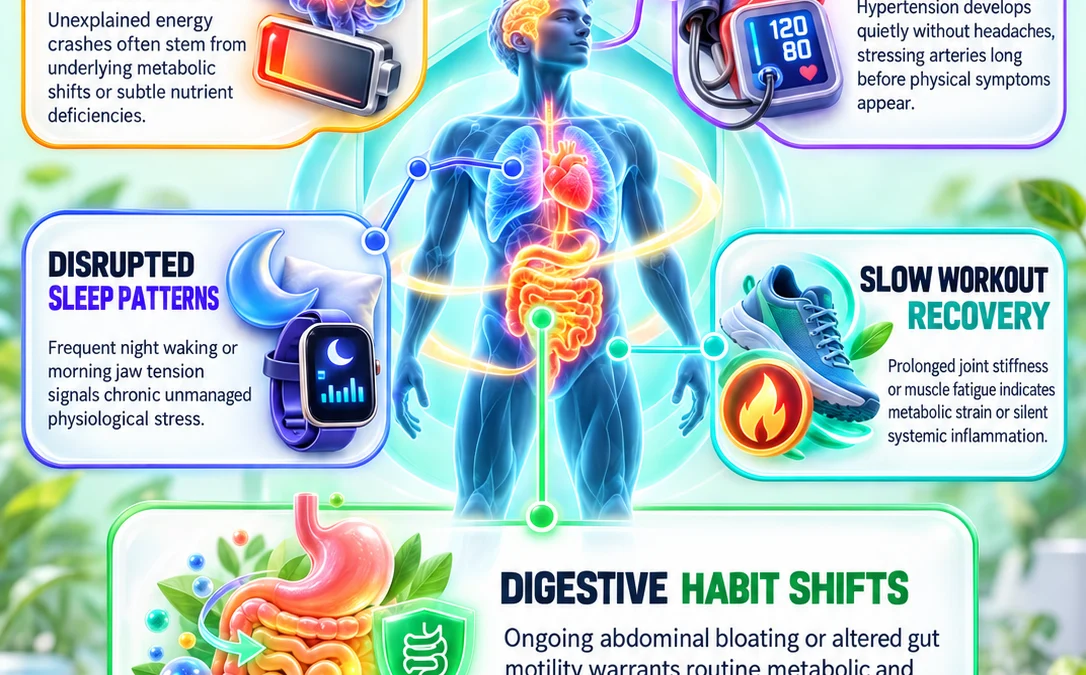
📌 Persistent Afternoon Brain Fog or Sudden Energy Crashes: Do you find yourself hitting a wall every afternoon, even after a full night’s sleep? Or perhaps experiencing unexpected energy slumps that leave you feeling drained and unfocused? This isn’t just the “afternoon slump” we often joke about. It could be a sign of underlying issues like blood sugar dysregulation, nutrient deficiencies, or even chronic stress impacting your adrenal function.
📌 Unexplained Sleep Disruptions, Night Wakes, or Morning Jaw Tension: Are you tossing and turning more than usual? Waking up multiple times a night without a clear reason? Or perhaps experiencing persistent jaw clenching or tension in the mornings? These can be indicators of stress, sleep apnea, or even hormonal imbalances that are disrupting your restorative sleep cycles. Poor sleep quality can have a cascading negative effect on your overall health.
📌 Digestive Changes, Frequent Bloating, or Irregular Gut Patterns: Have you noticed a persistent change in your bowel habits? Experiencing more frequent bloating, gas, or discomfort after meals? Or perhaps dealing with an “irritable gut” that feels unpredictable? Your gut health is intricately linked to your overall well-being, and persistent digestive issues can signal inflammation, food sensitivities, or imbalances in your gut microbiome.
📌 Unusually Slow Recovery from Workouts or Persistent Joint Stiffness: Even if you’re hitting the gym regularly, are you finding that your muscles take much longer to recover than they used to? Or are you experiencing persistent joint stiffness and aches that don’t seem to go away? This could indicate underlying inflammation, nutrient deficiencies (like magnesium or Vitamin D), or even the early stages of conditions like arthritis.
📌 Frequent Mild Headaches or Vision Strain During Screen Work: Do you find yourself getting frequent, mild headaches, especially during or after long periods of screen time? Or perhaps experiencing eye strain, dry eyes, or blurry vision? While often attributed to screen fatigue, these could also be subtle signs of uncorrected vision issues, dehydration, or even early hypertension.
Dismissing persistent fatigue, discomfort, or subtle changes as simply an unavoidable part of adulthood is a massive missed opportunity to optimize your vitality and well-being. 🔋 So many of these issues can be addressed with simple lifestyle adjustments or targeted nutrient support that you can discover during a routine checkup, helping you restore your full daily drive and energy. ⚡
⚠️ Common Mistake
A really common pitfall is assuming that a high level of physical fitness or a visible six-pack automatically guarantees perfect internal health. While fitness is amazing, it doesn’t always protect you from genetic predispositions like familial hypercholesterolemia (high cholesterol that runs in families) or silent hypertension (high blood pressure that shows no symptoms).
Knowing exactly which lab markers to discuss with your doctor can make your annual visit incredibly efficient and targeted. 📋
📊 Essential Health Numbers Every 20 and 30-Something Should Know 📋
When you schedule that all-important routine preventive checkup, going in with a clear understanding of the fundamental baseline tests you should be asking about will make your visit much more focused and productive. 🩺 These aren’t just random numbers; they are key indicators of your current health status and future risk factors.
| Screening Test | Recommended Frequency | Why It Matters |
|---|---|---|
| Blood Pressure Check | Annually | Crucial for spotting early signs of arterial stress and cardiovascular strain, often before symptoms appear. |
| Lipid Profile (Cholesterol Panel) | Every 3–5 Years (or more often if indicated) | Tracks key markers like LDL (“bad” cholesterol), HDL (“good” cholesterol), triglycerides, and importantly, ApoB levels, which provide a more accurate picture of heart disease risk. |
| Fasting Blood Glucose / HbA1c | Every 1–3 Years (or more often if indicated) | Essential for detecting early insulin resistance and metabolic shifts, which are precursors to type 2 diabetes. |
| Vitamin D & B12 Levels | As Recommended by your Doctor | These vitamins play vital roles in immune function, mood regulation, energy production, and nerve health. Deficiencies are surprisingly common. |
| Thyroid Panel (TSH) | As Recommended by your Doctor | Helps identify thyroid imbalances that can affect energy levels, metabolism, mood, and weight. |
| Complete Blood Count (CBC) | As Recommended by your Doctor | Provides a snapshot of your red blood cells, white blood cells, and platelets, helping to detect anemia, infection, or other blood-related issues. |
Reviewing these core figures with your physician is more than just collecting data; it’s about empowering yourself to make small, informed lifestyle adjustments. These adjustments can be made long before minor deviations in your numbers turn into major health concerns. 🎯 Think of it as fine-tuning your body’s engine with regular maintenance. A brief, twenty-minute conversation once a year with your doctor about these results can provide massive compounding returns for your long-term energy, cognitive function, and overall well-being. 🌟
🧠 Expert Insight
Your family medical history often starts to reveal itself more clearly in your late 20s and 30s. Understanding whether your parents or grandparents experienced early-onset heart disease, diabetes, or other chronic conditions can give you a significant head start on implementing targeted preventive strategies. Don’t hesitate to ask your family about their health history!
Now, let’s consolidate the essential points to keep top of mind as you navigate your health journey. 📌
📌 Key Takeaways for Your Proactive Health Plan 📌
📌 Feeling invincible doesn’t mean you are. Even when you feel completely healthy, silent shifts in blood pressure, cholesterol, or metabolic markers can be occurring.
📌 Establish your baseline. Early lab checks create a personalized health standard, giving you and your doctor a crucial reference point for future care and identifying subtle changes over time.
📌 Listen to your body’s whispers. Persistent brain fog, unexplained sleep disruptions, or noticeable digestive shifts are not just “normal” and warrant a quick checkup to rule out underlying issues.
📌 Fitness isn’t a foolproof shield. High physical fitness or a lean physique does not automatically eliminate genetic risks like elevated cholesterol or the potential for developing hypertension.
📌 Annual visits are your annual tune-up. Your yearly checkup provides a dedicated, structured opportunity to assess your health, discuss concerns, and align your lifestyle habits with your long-term wellness goals.
🏁 Final Thoughts: Investing in Your Future Self is the Smartest Move You Can Make 🌿
Prioritizing your health during your 20s and 30s is arguably the most impactful long-term investment you can make in your life quality, your career drive, and your personal freedom. 🌿 It’s about building a robust foundation that supports you through all of life’s challenges and opportunities. Don’t put it off! Schedule that routine physical, get to know your baseline numbers, and embrace the profound peace of mind that comes with taking proactive control of your well-being. 🎯
Take charge of your wellness journey today by booking your annual wellness exam. Your future self will undoubtedly thank you for making this wise decision now! 🌟