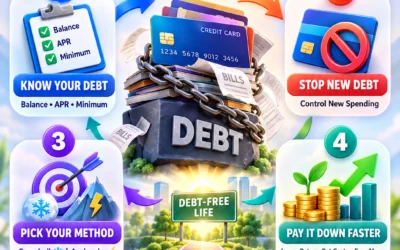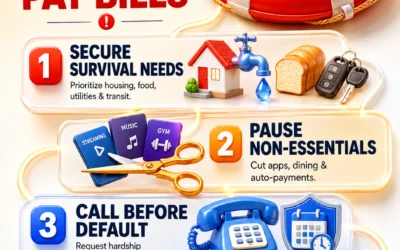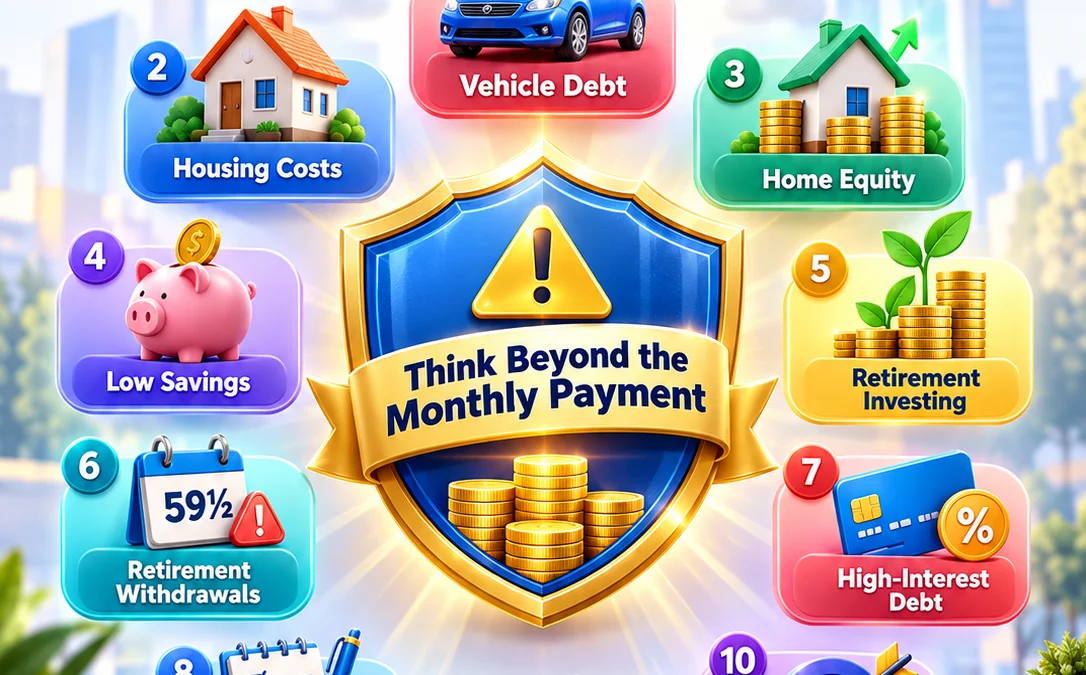
Hey there, savvy savers and aspiring wealth builders! Let’s talk about something super important – our money. We all want to make smart financial decisions, right? But sometimes, those everyday choices, the ones we don’t even think twice about, can sneakily lead us down a path of financial trouble. It’s rarely one big, dramatic oopsie; it’s usually a series of smaller, everyday decisions about things like debt, our homes, our cars, how much we save, how we invest, and planning for that golden retirement. 🚗🏠
Think of it like this: a tiny leak in a boat might not seem like a big deal at first, but over time, it can lead to serious problems. The same goes for our finances! This guide is all about shining a spotlight on those common money mistakes that can really drain your bank account and your peace of mind. We’re diving deep into things like buying a car that’s just too expensive, going overboard on housing costs, tapping into your home equity unwisely, not building up a solid savings cushion, putting off investing for retirement, and even worse, dipping into retirement funds to pay off debt. 📊
We’ll also unpack why high-interest credit can quickly become a financial monster you can’t tame, how to *really* figure out if a house is affordable beyond just the monthly mortgage payment, and why having a crystal-clear financial plan is your absolute best friend for making those big, life-changing decisions. 🛡️ Get ready to arm yourself with practical, actionable tips to get a better grip on your expenses, build a fortress around your savings, get your debt under control, and make sure your hard-earned money is working towards your most important financial dreams. 💼 Whether you’re eyeing a big purchase like a new home or car, or just want to tighten up your daily money habits, understanding these pitfalls is your first and most crucial step toward a more disciplined, secure, and sustainable financial future.

💡 What Are the Top Financial Mistakes We Need to Dodge?
Let’s get real: making good money isn’t the only key to financial success. True financial well-being comes down to how we handle our money day in and day out. It’s about smart spending, diligent saving, wise investing, responsible borrowing, and protecting what we’ve worked so hard for. What might seem like a perfectly fine purchase today could end up costing you a fortune down the line when you factor in things like interest, ongoing maintenance, taxes, the sneaky rise of inflation, or even just the growth you missed out on by not investing that money elsewhere.
The financial roadmap we’re looking at today highlights some seriously costly errors people make, especially when it comes to those big-ticket items like cars and homes, managing debt, building up savings, planning for retirement, and just having a solid overall financial strategy. By understanding these common traps, you can become a financial detective, spotting the risks before they balloon into long-term headaches.
Quick Heads-Up: Some of the examples we’ll touch on, like the 28/36 housing rule and the age 59½ rule for retirement withdrawals, are pretty specific to the U.S. financial system. Remember, taxes, pension rules, lending laws, and retirement regulations can differ quite a bit from country to country, so always check what applies to your local situation.
🚗 Mistake #1: Saying ‘Yes’ to Overly Expensive Vehicle Purchases
Look, having a car can be a lifesaver, a necessity for getting to work, school, or just living your life. But here’s where things can go sideways: choosing a car based solely on whether the monthly payment *feels* manageable. That monthly payment can be super deceiving and doesn’t tell the whole story of a vehicle’s true cost.
🔸 Financing Isn’t the Same as True Affordability. Just because a bank or dealership says you’re approved for a loan doesn’t mean that loan is actually good for your budget. You might get approved for a payment that still puts a massive strain on your household finances, leaving you with little wiggle room for anything else.
🔹 Interest: The Hidden Price Tag. When you finance a car, especially one that’s rapidly depreciating (losing value the moment you drive it off the lot), you’re not just paying for the car itself. You’re paying interest on top of the price, meaning you’re often paying more for something that’s worth less over time. It’s like paying extra for a coupon that’s expiring!
🟠 Watch Out for Trade-Ins Masking Losses. It’s a common trick: rolling the outstanding balance from your old car loan into the financing for your new car. Sounds convenient, right? But it often means you’re borrowing even more money, extending your debt cycle, and potentially starting your new car payments with negative equity (owing more than the car is worth).
🟢 Think About the *Entire* Ownership Experience. The sticker price or the monthly payment is just the tip of the iceberg. You’ve got to factor in the ongoing costs: fuel (which can fluctuate wildly!), insurance premiums (which can be hefty for certain models), regular maintenance, registration fees, unexpected repairs (they *always* happen!), and that relentless depreciation. All these add up to the *real* cost of owning that vehicle.
So, the financially savvy way to approach buying a car? Look at the total cost of ownership, not just whether you can swing the monthly payment. Ask yourself: “Can I truly afford this car, all things considered, for the next few years?”
🏠 Mistake #2: Going All Out on Housing Costs
It’s tempting, isn’t it? That bigger house, the one in the fancier neighborhood, or the one with all the latest upgrades. But bigger and pricier doesn’t automatically equate to a better financial decision. Your home is often the single biggest purchase you’ll make, and if you overspend, it can gobble up a huge chunk of your income, not just for the mortgage, but for everything else that comes with it.
🔸 Don’t Just Look at the Mortgage Payment. This is huge! That monthly mortgage payment is just one piece of the housing puzzle. You also have to budget for property taxes (which can be substantial and tend to rise), homeowners insurance, regular maintenance (things break!), potential repairs (especially in older homes), and if you’re in a condo or certain neighborhoods, those pesky homeowners association (HOA) fees.
🔹 Calculate Your True Carrying Costs. The purchase price is one thing, but the total cost of *carrying* that home month after month, year after year, is what truly determines affordability. Don’t get caught out by focusing only on the initial sale price.
🟠 Evaluate Your Priorities (and Be Honest!). That extra-large yard you’ll spend hours maintaining? The prime location that comes with a premium price tag? Those extra bedrooms you might not even need right now? The fancy community pool or gym? These features might seem desirable, but they often come with significantly higher costs – in purchase price, taxes, maintenance, and utilities – without necessarily adding equivalent financial value to your life or your long-term financial goals.
To really know if a home is affordable, you need to create a comprehensive housing budget that includes *all* the associated expenses, not just the loan payment. It’s about understanding the full financial picture.
📌 The 28/36 Rule: A Helpful Guideline (But Not Gospel!)
In the U.S., lenders often use a guideline called the 28/36 rule to assess mortgage affordability. It’s a good starting point for your own calculations:
🟢 The 28% Rule: Your total monthly housing costs (including mortgage principal and interest, property taxes, homeowners insurance, and any HOA fees – often called PITI) should ideally be no more than 28% of your gross monthly income (that’s your income before taxes are taken out).
🔵 The 36% Rule: Your total monthly debt obligations (including your housing costs from above, *plus* all other debts like car loans, student loans, minimum credit card payments, and personal loans) should ideally be no more than 36% of your gross monthly income.
Now, these are just guidelines, not strict laws. Your personal situation matters most! Factors like the stability of your income, how much savings you have, current interest rates, your other essential household expenses, where you live (cost of living varies wildly!), and any other financial commitments you have will all influence what’s truly affordable for *you*.
🏡 Mistake #3: Misusing Your Home Equity
Your home equity is like a built-in savings account, representing the part of your home’s value that you actually own after paying off your mortgage. It can be a fantastic financial asset, providing access to funds for important things like renovations or consolidating debt. However, treating it like an endless piggy bank for discretionary spending can be a recipe for disaster.
🔸 Cash-Out Refinancing Can Shrink Your Ownership. When you refinance your mortgage and take out cash based on your home’s equity, you’re essentially borrowing against your home again. This increases your total debt secured by your property, meaning you own less of it, and your monthly payments might go up.
🔹 A HELOC Can Feel Like a Credit Card (But It’s Riskier!). A Home Equity Line of Credit (HELOC) gives you a revolving credit line secured by your home. It can be convenient, allowing you to draw funds as needed. But this ease of access can be deceptive. It can feel like you’re just swiping a credit card, making it easy to overspend and rack up debt without fully appreciating the long-term implications.
🟠 More Borrowing = More Interest (and Risk!). Using your home’s equity for things you don’t absolutely need – like vacations, luxury goods, or other forms of consumption – can be a dangerous game. You’re essentially converting a valuable asset (your home equity) into debt that accrues interest. This can put your home at risk if you’re unable to make payments.
Think of your home equity as a powerful financial tool, best used for investments that increase your net worth (like home improvements that add value) or to strategically pay down *high-interest* debt. It’s not a license for unlimited spending.
💰 Mistake #4: Not Building Up Enough Savings
Saving money is the bedrock of financial security. It’s your first line of defense against life’s inevitable curveballs. Without a decent savings cushion, any unexpected expense – a car repair, a medical bill, a job loss – can quickly spiral into a borrowing problem.
🔸 Low Savings Puts You on the Paycheck-to-Paycheck Treadmill. If almost all your income is already spoken for by regular bills and expenses, even a minor financial hiccup can force you to rely on credit cards or loans, starting a potentially vicious debt cycle.
🔹 Build That Emergency Fund! This is non-negotiable. A good rule of thumb is to have an emergency fund covering 3 to 6 months of *essential* living expenses. The exact amount depends on how stable your income is and your personal circumstances. If you have a variable income or dependents, you might aim for even more.
🟠 Your Shield Against the Unexpected. Medical emergencies, sudden home repairs, unexpected job loss, a family crisis – these things happen. Having readily accessible cash reserves makes these situations stressful, yes, but manageable. Without them, they can become financially devastating.
🟢 Break the Debt Cycle. If your go-to solution for any unexpected bill is to whip out a credit card, you’re likely accumulating interest and making those bills harder and harder to pay off. A robust emergency fund helps you avoid this trap altogether.
The goal isn’t just to save whatever’s left over at the end of the month (spoiler: there’s usually nothing left!). Saving needs to be a *planned* expense, a priority right alongside your rent or mortgage. Treat it like any other bill you *must* pay.
📈 Mistake #5: Putting Off Investing for Retirement
Saving cash and investing for the long haul are two different, but equally important, financial activities. Your savings account is great for immediate needs and emergencies – it’s liquid and safe. But for long-term goals like retirement, investing is where the real growth potential lies, thanks to the magic of compounding.
🔸 Delaying Retirement Investing Means Missing Out on Compounding. This is the biggest killer of retirement wealth. The earlier you start investing, the more time your money has to grow. Compounding means your earnings start earning their own earnings, and this effect is exponential over decades. Starting late means you have to save *way* more later to catch up.
🔹 Consistency is Key. Investing a set amount regularly (like every paycheck) is a powerful strategy. It takes the guesswork out of timing the market and ensures steady progress towards your retirement goals.
🟠 Leverage Retirement Accounts and Employer Plans. Take full advantage of employer-sponsored plans like 401(k)s or similar programs in your country. They often come with employer matching contributions (free money!) and offer tax advantages. Understand the different types of retirement accounts available to you and how they’re taxed.
🟢 Match Investment Risk to Your Time Horizon. If you’re investing for retirement, which is likely decades away, you can generally afford to take on a bit more investment risk (e.g., through stocks) for potentially higher returns. If you’re saving for a down payment in two years, you’ll want a much more conservative, low-risk approach.
Retirement might seem like a distant dream, but the decisions you make (or don’t make) about investing today will profoundly impact your financial reality then. Start planning and investing *now*.
💳 Mistake #6: Raiding Your Retirement Savings to Pay Off Debt
Your retirement accounts – the 401(k)s, IRAs, pensions – represent years, sometimes decades, of hard-earned savings and investment growth. The idea of using that nest egg to wipe out credit card debt or other loans might seem incredibly tempting, especially if you’re feeling overwhelmed. But this move can come with some serious long-term financial whammy.
🔸 Early Withdrawal Penalties and Taxes Can Be Brutal. In many countries, including the U.S., withdrawing money from retirement accounts before a certain age (like 59½ in the U.S.) often triggers not just your regular income tax but also a hefty early withdrawal penalty (often 10%). While there are some exceptions, for most people, this is a significant financial hit.
🔹 You Kill the Power of Compounding. When you pull money out of your investment accounts, you’re not just losing that principal amount; you’re also losing all the future growth that money *would* have generated through compounding. This can be a far greater long-term cost than the interest you were paying on the debt.
🟠 Rebuilding Lost Retirement Momentum is Tough. Imagine you withdraw $20,000 from your retirement account. Not only do you pay taxes and penalties, but that $20,000 is no longer invested. If it was on track to grow significantly over 20 years, you’ve just set your retirement plans back considerably. Catching up often requires saving much larger amounts later in life, which can be difficult.
Before you even consider tapping into your retirement funds, do a thorough cost-benefit analysis. Compare the interest rates on your debt against the potential investment returns you’re giving up, factor in all the taxes and penalties, and explore *every* other possible debt repayment strategy first.
💳 Why High-Interest Credit Can Become a Financial Black Hole
Credit cards, payday loans, certain personal loans – they can be useful tools when managed with extreme care. But when interest rates are sky-high, they can quickly become a financial trap that’s incredibly difficult to escape. The cost of borrowing can snowball, consuming your income and hindering your progress towards your goals.
🔸 Interest Just Keeps Adding Up. If you’re only making minimum payments on high-interest debt, a huge portion of that payment goes straight to interest. The principal balance barely shrinks, meaning you’ll be paying interest on that same balance for a very, very long time, dramatically increasing the total amount you repay.
🔹 The Debt Snowball Effect. As your required payments grow (due to accumulating interest), less and less of your income is available for things like saving for emergencies, investing for the future, or even enjoying life. Your financial flexibility shrinks.
🟠 Financial Stress Can Become Chronic. Constantly worrying about debt, juggling payments, and feeling like you’re never getting ahead can take a massive toll on your mental and emotional well-being. This persistent stress can make it even harder to make rational financial decisions, perpetuating the cycle.
The best defense? Before you take on any new credit, understand exactly what the interest rate (APR) is, what the minimum payment will be, how long it will take to repay if you only make minimum payments, and crucially, the *total* estimated cost of borrowing that money. Knowledge is power when it comes to credit.
📊 Mistake #7: Failing to Create a Solid Financial Plan
Think of a budget as your spending GPS – it tells your money where to go *right now*. But a comprehensive financial plan is like your overall travel itinerary. It connects your daily spending decisions to your bigger, long-term life ambitions. Without a plan, you’re just driving around aimlessly.
🔸 Regular Financial Check-ups are Crucial. Your income, your expenses, your debts, your savings, your investments – they aren’t static. Life happens! You need to review your financial situation regularly (at least quarterly, if not monthly) to see where you stand and make necessary adjustments.
🔹 Set Clear, Measurable Goals. What do you want your money to do for you? Build an emergency fund? Pay off that high-interest debt? Save for a down payment on a house? Invest for retirement? Travel the world? Define your goals clearly, make them specific, and set timelines.
🟠 Your Financial Roadmap. A good plan acts as a roadmap, showing you how much income needs to be allocated to immediate spending, how much to savings, how much to debt repayment, and how much to long-term investments to reach your goals. It brings structure and intention to your finances.
🟢 Say Goodbye to Uncertainty (Mostly!). When you have a plan, you reduce the guesswork and reactive decision-making. You know what needs to happen next, which makes it easier to stay on track and make deliberate choices rather than impulsive ones.
Don’t be intimidated! A financial plan doesn’t need to be a complex, multi-page document. Even a simple framework outlining your income, major expenses, savings goals, and debt repayment strategy can provide invaluable direction and make tracking your progress so much easier.
🧭 How Can We Sidestep These Costly Financial Mistakes?
Avoiding financial blunders isn’t just about slashing your spending (though that can help!). It’s about building a smart, holistic financial system that balances your needs today with your aspirations for tomorrow. It’s about making conscious choices that work *for* you, not against you.
🔵 Do the Total Cost Math Before Big Purchases. Whether it’s a car, a major appliance, or even a vacation, always look beyond the initial price tag or monthly payment. Factor in financing costs, ongoing maintenance, insurance, taxes, and any other recurring expenses. Understand the true, long-term financial commitment.
🟣 Keep That Emergency Savings Fund Topped Up. Having a readily accessible stash of cash is your best defense against unexpected expenses. It prevents small emergencies from turning into big debt problems and gives you peace of mind.
🟢 Tackle High-Interest Debt Head-On. Understand which of your debts are costing you the most in interest. Create a realistic, prioritized plan to pay them down aggressively. The sooner you can eliminate this expensive debt, the more money you’ll have for other goals.
🟡 Invest Consistently for Your Future. Don’t let fear or inertia stop you from investing for long-term goals like retirement. Regular, disciplined contributions, combined with the power of compounding over time, are a proven path to wealth accumulation.
🟠 Guard Your Retirement Nest Egg. Your retirement savings are for your future self. Unless it’s an absolute dire emergency *and* you’ve thoroughly evaluated all the financial consequences (taxes, penalties, lost growth), avoid treating your long-term retirement assets as a readily accessible emergency fund.
🔷 Review and Adjust Your Financial Plan Regularly. Life changes! Your income might increase or decrease, your expenses might shift, your family situation could evolve, or your financial goals might change. Make it a habit to revisit your financial plan at least once or twice a year to ensure it still aligns with your current reality and future aspirations.
💡 A Super Simple Framework for Smarter Financial Decisions
Before you swipe that card, sign that contract, or commit to a major financial move, take a deep breath and ask yourself these four crucial questions:
What will this *really* cost me in the long run?
Dig deeper than the advertised price or the monthly payment. Think about interest, fees, maintenance, and how long you’ll be paying for it.
Can this fit comfortably within my *entire* financial picture?
Affordability isn’t just about covering the immediate payment. Does it leave room for your essential bills, your savings goals, debt repayment, and other important financial objectives? Or will it force you to cut back elsewhere?
What am I giving up by making this choice (Opportunity Cost)?
Every dollar spent or withdrawn today is a dollar that cannot be saved, invested, or used for another important purpose later. What is the true opportunity cost of this decision?
What happens if my circumstances change?
Could you still manage this financial commitment if you lost your job, faced a major unexpected expense, or if interest rates went up? Building in a buffer for the unexpected is key to long-term stability.
Using these questions can help you shift your mindset from making quick, reactive financial decisions to making thoughtful, strategic choices that align with your long-term goals.
🛡️ Build Your Financial Future, One Smart Decision at a Time
Achieving lasting financial stability isn’t usually the result of one single, perfect decision. It’s the cumulative effect of consistent, smart choices that protect your cash flow, keep debt in check, build up your savings, and actively support your long-term aspirations. By understanding and avoiding these common pitfalls, you’re laying a much stronger foundation for your financial well-being.
🚗 Remember, major purchases like vehicles should always be evaluated based on their *total* ownership cost, not just the monthly payment.
🏠 When it comes to housing, don’t forget to budget for taxes, ongoing maintenance, utilities, insurance, and all those other carrying expenses that go beyond the mortgage.
💳 High-interest debt is a major wealth drainer. Get a handle on it by understanding the true cost of borrowing and creating a solid repayment strategy.
💰 A healthy emergency savings fund acts as a crucial buffer, protecting you from unexpected financial shocks and preventing small problems from becoming major crises.
📈 For retirement, consistency in investing and giving your money enough time to grow through compounding are your most powerful allies.
🧭 And finally, a clear, well-thought-out financial plan acts as your compass, guiding your everyday money decisions towards your bigger life milestones.
The most fundamental principle to live by? Affordability isn’t just about whether you can make the *next* payment. It’s about understanding the impact a decision has on your *entire* financial picture, both now and in the future. Make choices that empower your long-term financial health!