Hey there, health enthusiasts! Ever feel like you’re missing a secret ingredient to boost your daily diet? Well, get ready to be amazed because we’re diving deep into the tiny-but-mighty world of seeds! These little powerhouses are often overlooked, but trust us, they pack a serious nutritional punch. Forget superfoods with complicated names; we’re talking about humble seeds that can revolutionize your health from the inside out. In this comprehensive guide, we’ll explore the top 9 healthiest seeds on Earth, uncovering the unique nutritional benefits each one brings to your plate. Get ready to sprinkle, blend, and snack your way to a healthier you!
The Ultimate Guide to the Top 9 Healthiest Seeds for Your Diet
Seeds might be small, but oh boy, are they nutrient-dense! We’ve put together a guide that highlights nine incredible seeds and the specific, powerful nutritional benefits they offer. Think of this as your go-to resource for understanding how to best incorporate these nutritional gems into your everyday meals. From the ever-popular chia and flax to the savory pumpkin and sesame, seeds are an incredibly simple yet effective way to add a spectrum of essential nutrients to your diet. What’s truly fascinating is that different varieties shine for different nutritional qualities. This means variety isn’t just the spice of life; it’s a key strategy for maximizing your nutritional intake!
Some seeds are celebrated for their heart-healthy fats, while others are powerhouses of vital minerals, essential vitamins, muscle-building protein, potent antioxidants, or nutrients specifically linked to certain areas of your well-being. Instead of treating all seeds as interchangeable, it’s far more beneficial to understand what makes each one distinct. This knowledge empowers you to make informed choices and truly harness the unique power of each seed. So, let’s get started on this exciting journey to discover the nine nutrient-dense seeds that are making waves in the health and wellness world, and uncover the primary benefit that makes each one a star!
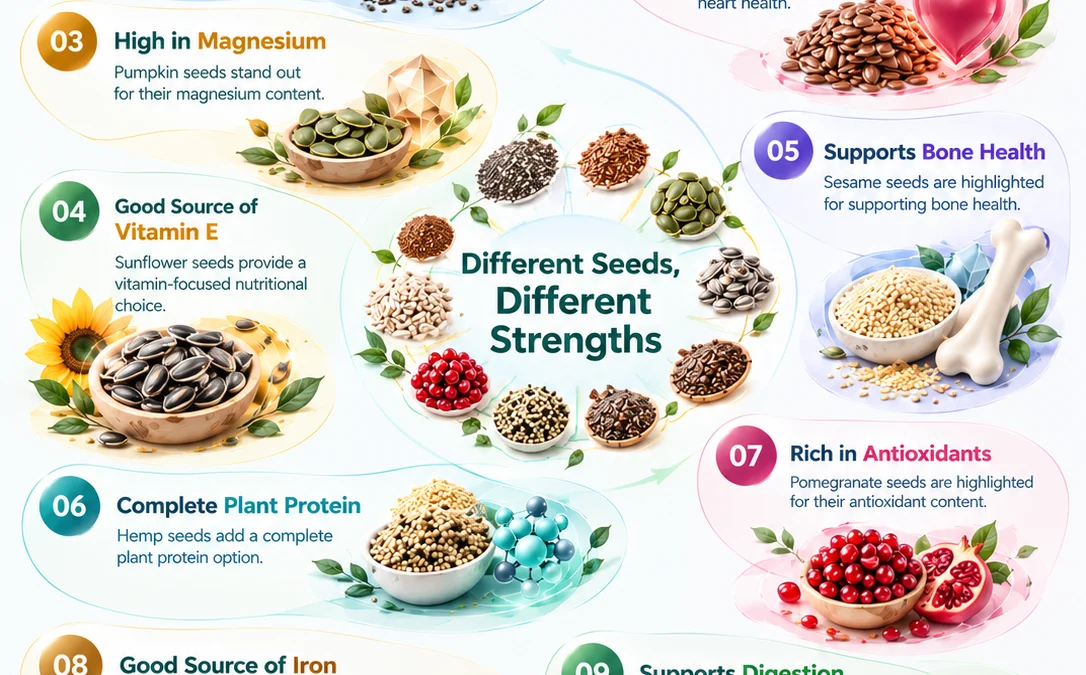
Here are nine nutrient-dense seeds featured in our guide, along with the primary benefit highlighted for each. Prepare to be inspired!

The Central Idea: No Single Seed Does It All
It’s crucial to understand that no single seed is a magic bullet for all your health needs. Each one brings a unique nutritional strength to the table, and embracing this diversity is key to unlocking their full potential.
01. Chia Seeds: The Omega-3 Superstar
Let’s kick things off with chia seeds, the tiny marvels that are making huge waves in the health community. These little seeds are particularly celebrated for being incredibly rich in omega-3 fatty acids, specifically alpha-linolenic acid (ALA). ALA is an essential fat, meaning our bodies can’t produce it, so we need to get it from our diet. Omega-3s are renowned for their anti-inflammatory properties and are vital for brain health, heart function, and overall cellular well-being. The gel-forming ability of chia seeds when mixed with liquid also makes them a fantastic source of soluble fiber, aiding digestion and promoting a feeling of fullness. Their place at the top of our list reflects their exceptional nutritional value, especially concerning these crucial essential fats. Sprinkle them on your yogurt, blend them into smoothies, or make a delicious chia pudding – the possibilities are endless!
02. Flax Seeds: Your Heart’s Best Friend
Next up, we have flax seeds, also known as linseeds. These small, nutty seeds have been recognized for centuries for their health benefits, and modern science continues to back this up. Flax seeds are particularly featured for their strong connection with heart health. They are another excellent plant-based source of omega-3 fatty acids (ALA), similar to chia seeds, contributing to cardiovascular wellness. But that’s not all! Flax seeds are also packed with lignans, which are powerful plant compounds with antioxidant properties that may help protect against certain types of cancer. Plus, they are a great source of both soluble and insoluble fiber, supporting digestive health and helping to regulate blood sugar levels. To get the most out of flax seeds, it’s best to consume them ground, as whole seeds can pass through the digestive system undigested. Add ground flax to your oatmeal, baked goods, or even as an egg substitute in vegan recipes!
03. Pumpkin Seeds (Pepitas): The Magnesium Powerhouse
Moving on, let’s talk about pumpkin seeds, also commonly known as pepitas. These vibrant green seeds, often found roasted and salted, are more than just a tasty snack; they are nutritional champions. Pumpkin seeds truly stand out for their impressive magnesium content. Magnesium is a mineral that plays a critical role in over 300 biochemical reactions in the body, including energy production, muscle and nerve function, blood glucose control, and blood pressure regulation. Many people don’t get enough magnesium, making pumpkin seeds a particularly valuable addition to the diet. They are also a fantastic source of zinc, important for immune function and wound healing, as well as antioxidants like carotenoids and vitamin E. Enjoy them raw, roasted, or sprinkled on salads and soups for an added crunch and a boost of essential minerals.
A Different Kind of Nutritional Strength: Seeds Complement Each Other
The first three seeds we’ve discussed already beautifully illustrate why variety matters so much. Chia seeds are highlighted for their omega-3s, flax seeds for their heart health benefits, and pumpkin seeds for their magnesium punch. Their nutritional strengths are distinct rather than redundant, meaning they each offer something unique. This diversity is precisely why incorporating a range of seeds into your diet is so powerful. Instead of relying on just one type, you can create a synergistic effect, ensuring you’re getting a wider array of vitamins, minerals, healthy fats, and fiber. Think of it like building a balanced nutritional profile – each seed plays a vital role in completing the picture.
04. Sunflower Seeds: Vitamin E Champions
Sunflower seeds, derived from the cheerful sunflower, are not just a delightful snack but also nutritional powerhouses. In our guide, they are recognized primarily as an excellent source of vitamin E. Vitamin E is a fat-soluble antioxidant that plays a crucial role in protecting your cells from damage caused by free radicals. This protection is vital for maintaining healthy skin, supporting immune function, and potentially reducing the risk of chronic diseases. Beyond vitamin E, sunflower seeds also offer a good dose of magnesium, selenium, and healthy unsaturated fats. They are incredibly versatile; enjoy them in their shells as a fun snack, add shelled seeds to salads, trail mixes, or use them in baking for a nutty flavor and satisfying crunch. Remember to opt for unsalted varieties when possible to manage sodium intake.
05. Sesame Seeds: Building Strong Bones
Sesame seeds, often sprinkled on bread or used in tahini, are another ancient food with impressive health credentials. These tiny seeds are highlighted in our guide for their significant contribution to bone health. Sesame seeds are a good source of essential minerals like calcium, magnesium, and phosphorus, all of which are critical components of healthy bones. They also contain compounds called sesamin and sesamolin, which are lignans that have antioxidant and anti-inflammatory properties and may contribute to bone health by influencing mineral absorption and bone metabolism. Furthermore, sesame seeds provide healthy fats, protein, and fiber, making them a well-rounded addition to your diet. Whether you use whole or ground sesame seeds, or enjoy tahini, you’re adding valuable nutrients that support strong, healthy bones and overall well-being.
06. Hemp Seeds: The Complete Plant Protein Source
Complete plant protein is the standout nutritional feature highlighted for hemp seeds, often referred to as hemp hearts. For vegetarians, vegans, or anyone looking to increase their plant-based protein intake, hemp seeds are a true game-changer. What makes them ‘complete’? They contain all nine essential amino acids that our bodies cannot produce on their own. This is a rare and highly valuable characteristic for a plant-based food source. Beyond protein, hemp seeds are also rich in healthy fats, including a beneficial balance of omega-3 and omega-6 fatty acids, which are important for reducing inflammation and supporting cardiovascular health. They also provide fiber, magnesium, iron, and zinc. Their mild, nutty flavor makes them incredibly easy to incorporate into smoothies, cereals, salads, or yogurt bowls. They add a protein boost without altering the taste significantly.
07. Pomegranate Seeds (Arils): Antioxidant Powerhouses
Get ready for a burst of flavor and health with pomegranate seeds, also known as arils. These jewel-like seeds are not only visually stunning but are also incredibly beneficial for your health. Pomegranate seeds are highlighted as being exceptionally rich in antioxidants. They contain potent compounds like punicalagins and anthocyanins, which give them their vibrant color and provide powerful antioxidant effects. Antioxidants help combat oxidative stress in the body, which is linked to aging and various chronic diseases. Studies suggest that pomegranate’s antioxidants may have anti-inflammatory effects and could support heart health by improving blood flow and reducing blood pressure. Beyond antioxidants, they offer a good dose of vitamin C and fiber. Enjoy them fresh as a snack, add them to salads, desserts, or savory dishes for a delightful sweet-tart flavor and a significant health upgrade.
08. Watermelon Seeds: A Surprising Source of Iron
Don’t toss those watermelon seeds! While often discarded, watermelon seeds are actually a nutritional treasure trove. In this guide, they are identified as a good source of iron. Iron is a vital mineral essential for transporting oxygen throughout the body and is crucial for energy production and preventing anemia. For many people, especially women and vegetarians, ensuring adequate iron intake can be a challenge, making watermelon seeds a valuable dietary addition. Beyond iron, watermelon seeds also provide magnesium, zinc, and healthy fats. They are best consumed when sprouted or roasted, as this process makes their nutrients more bioavailable and improves their digestibility. You can roast them like pumpkin seeds for a crunchy, healthy snack. This familiar fruit seed earns a distinct nutritional role on our list, proving that good things come in unexpected packages!
09. Cumin Seeds: Supporting Digestive Health
Rounding out our list of the top 9 healthiest seeds are cumin seeds. While most commonly known as a popular spice in culinary traditions worldwide, cumin seeds also offer distinct health benefits. They complete our list with a focus on supporting digestion. Cumin seeds contain compounds that can stimulate the secretion of digestive enzymes, bile, and acids, which help to break down food efficiently. They are also known for their carminative properties, meaning they can help relieve gas and bloating. Furthermore, cumin seeds possess antioxidant and anti-inflammatory properties, thanks to compounds like cuminaldehyde. Their inclusion adds a familiar culinary seed to our list, offering a different nutritional emphasis compared to the other seeds, particularly for those seeking to improve their digestive wellness. Add them to your cooking – they’re fantastic in curries, stews, and roasted vegetables!
A Quick Seed Nutrition Snapshot
To make things even easier, here’s a handy summary of the seeds and their primary highlighted benefits:
- Chia Seeds: Rich in omega-3s
- Flax Seeds: Supports heart health
- Pumpkin Seeds: High in magnesium
- Sunflower Seeds: Good source of vitamin E
- Sesame Seeds: Supports bone health
- Hemp Seeds: Complete plant protein
- Pomegranate Seeds: Rich in antioxidants
- Watermelon Seeds: Good source of iron
- Cumin Seeds: Supports digestion
Key Takeaways for Your Healthy Seed Journey
Let’s recap the most important points from our deep dive into the world of healthy seeds:
- Chia seeds are true powerhouses, particularly celebrated for their impressive omega-3 fatty acid content, crucial for overall health.
- Flax seeds are strongly associated with cardiovascular benefits, making them a heart-healthy choice for your diet.
- When it comes to minerals, pumpkin seeds stand out as an exceptional source of magnesium, vital for numerous bodily functions.
- Looking for specific vitamins and minerals? Sunflower seeds are highlighted for their vitamin E content, while watermelon seeds are a notable source of iron.
- For those seeking plant-based protein, hemp seeds are a standout option, offering a complete profile of essential amino acids.
- Rounding out our list, sesame seeds contribute significantly to bone health, pomegranate seeds deliver a potent dose of antioxidants, and cumin seeds offer benefits for digestive wellness.
Final Perspective: Small Foods, Different Nutritional Strengths
The nine seeds featured in this guide are a fantastic illustration of the incredible nutritional variety packed into small, unassuming foods. Each seed shines for a different health-promoting strength, from the essential omega-3s in chia and flax, the crucial magnesium in pumpkin seeds, the plant-based complete protein in hemp seeds, the antioxidant power of pomegranate, the vital iron in watermelon seeds, and the vitamin E found abundantly in sunflower seeds. Even the humble cumin seed offers unique digestive benefits!
The most practical takeaway from this exploration is beautifully simple: seeds are an accessible and delicious way to add significant nutritional diversity to a balanced diet. By understanding the distinct qualities and benefits of different seeds, you can make more informed and targeted choices to complement your personal eating habits and health goals. So, go ahead, experiment with these tiny nutritional titans, and watch your well-being flourish!