🌱 Discover the Ultimate Guide to Natural Wellness and Herbal Relief Solutions 🍃
Living with chronic pain is more than just a physical burden; it’s an emotional weight that colors your entire day. If you’ve been searching for a way to break free from the cycle of constant discomfort without relying solely on synthetic pharmaceuticals, you’ve come to the right place. At Health Guard, we believe nature provides a sophisticated, time-tested pharmacy that works in harmony with your body. In this guide, we’ll explore the most effective herbs for natural pain relief, how they combat inflammation, and how you can safely integrate them into your daily life.
When we talk about natural pain management, we aren’t just looking for quick fixes. We are focusing on long-term, sustainable wellness. By targeting the root causes of discomfort—like systemic inflammation and oxidative stress—these plant-based allies help your body recover, repair, and thrive. Whether you are dealing with stiff joints, muscle soreness, or tension headaches, there is a botanical solution waiting for you.

🔥 The Power of Golden Roots: Why Turmeric and Ginger are Game Changers
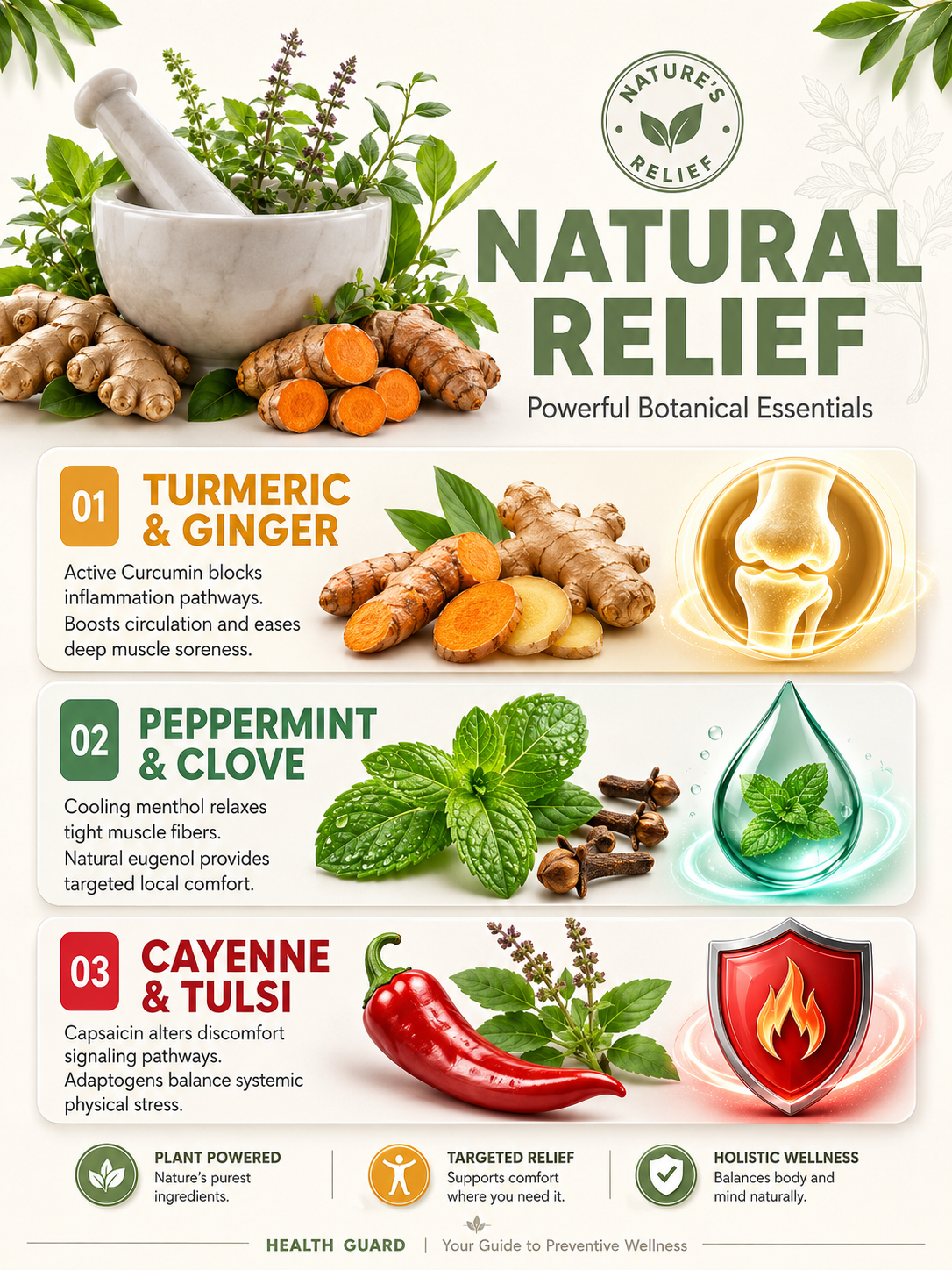
If you want to reduce systemic inflammation, start with the roots. Turmeric and ginger are perhaps the most studied herbs in the world of natural pain relief. Turmeric, specifically the active compound curcumin, acts as a powerful antioxidant that helps modulate inflammatory pathways in the body. It’s not just for curries; it’s a foundational supplement for anyone struggling with joint mobility issues.
Ginger, on the other hand, is excellent for muscle soreness and digestive health. It improves circulation, which helps flush out metabolic waste from your tissues, effectively reducing that “stiff” feeling after a workout or a long day at the desk. When paired with Boswellia serrata—a resin that has been used for centuries to support joint structural health—you have a trifecta of anti-inflammatory power that rivals many over-the-counter options.
Willow bark is another hidden gem. Often referred to as “nature’s aspirin,” it contains salicin, which can help dampen the intensity of dull aches and pains. By incorporating these into your daily diet, you’re creating an internal environment that is far less susceptible to the chronic, low-grade inflammation that causes most of our daily discomfort.
🍃 Cooling and Calming: Using Aromatic Herbs to Soothe Tension
Sometimes the best way to deal with pain is to address the nervous system’s response to it. Aromatic herbs like peppermint, clove, and rosemary are not just pleasant-smelling; they are functional tools for muscle relaxation. Peppermint, rich in menthol, creates a cooling sensation when applied topically, which can act as a natural analgesic for tension-related headaches or tight shoulders.
Cloves contain eugenol, a compound famous for its numbing properties. If you’ve ever experienced localized pain, a clove-infused oil or balm can provide almost immediate, targeted comfort. Then there’s Chamomile, which does more than just help you sleep. It is a powerful antispasmodic, meaning it helps relax the muscles that tighten up during periods of high stress. When your body is constantly in a state of “fight or flight,” your muscles stay contracted. Chamomile helps tell your nervous system that it’s safe to let go.
🌶️ Spicy Relief and Adaptogenic Resilience: Cayenne, Tulsi, and Arnica
For deep, persistent pain, sometimes you need to turn up the heat. Cayenne pepper contains capsaicin, which is a fascinating compound. When applied topically, it depletes the “substance P” in your nerves—the chemical responsible for sending pain signals to the brain. It’s a bold, effective way to manage joint and nerve pain.
On the flip side, we have adaptogens like Holy Basil (Tulsi). These herbs don’t just target a specific ache; they help your body adapt to stress in general. By lowering your overall cortisol levels, Tulsi prevents the body from overreacting to physical stimuli, which in turn reduces the amount of inflammation produced by the body. Finally, no natural medicine cabinet is complete without Arnica. It is the gold standard for bruises, swelling, and acute muscle trauma. Keeping an arnica gel on hand after a strenuous hike or a heavy workout is a pro-tip for faster recovery.
🛠️ Designing Your Personal Herbal Wellness Routine
Transitioning to natural pain relief isn’t about throwing everything at the wall to see what sticks. It’s about building a routine. Here is how to start:
- Morning: Start your day with a turmeric-ginger tonic or a golden milk latte to kickstart your anti-inflammatory defenses.
- Afternoon: If you feel tension building, use a topical peppermint or arnica balm on your neck or joints.
- Evening: Wind down with a cup of chamomile tea to signal to your body that it’s time to repair and relax.
Always remember that consistency is your best friend. Unlike synthetic medications that work instantly but often come with a laundry list of side effects, herbs work by supporting your body’s inherent functions. This means it may take a few weeks to feel the full effects, but the benefits are much deeper and safer for long-term use.
🌟 The Holistic Perspective: You Are More Than Your Symptoms
While herbs are powerful, they work best when supported by a healthy lifestyle. Hydration is key; your joints need water to stay lubricated. Movement is medicine; even a gentle 15-minute walk can keep your tissues supple and prevent the buildup of stiffness. Pair these habits with a diet rich in antioxidants—think colorful berries, leafy greens, and omega-3 fatty acids—and you’ll find that your reliance on pain relievers drops significantly.
We encourage you to experiment, listen to your body, and consult with a professional if you have existing health conditions. Your journey to a pain-free life is unique, and we are here to provide the insights you need to make informed, empowered choices. Nature has been perfecting these remedies for millions of years; it’s time we started using them to their fullest potential.
Are you ready to take the next step? Join our community at Health Guard for more deep dives into the world of botanical wellness. Sign up for our newsletter, share this guide with a friend who needs a little extra comfort, and let’s walk this path toward vibrant health together. Your body will thank you for it.