Hey there, skin enthusiasts! Ever catch yourself wondering why your complexion seems to be having a bad day, even when you’re following your usual skincare routine? Well, get ready for a revelation: what you put *in* your body can be just as, if not more, impactful than what you put *on* it. That’s right, your daily diet is a secret agent in the story of your skin’s health. Some everyday eats might be working against you, secretly causing issues like acne, puffiness, and that unwelcome dullness. But the good news? There are also delicious, nutrient-packed foods that can totally transform your skin, making it radiant and healthy from the inside out. Let’s dive into the delicious details of which foods are skin villains and which are skin heroes!
Think about it: your skin is your body’s largest organ, and it’s constantly working to protect you. It needs the right fuel to do its best work. When we feed it a steady diet of processed junk, sugary treats, and dehydrating drinks, it’s like trying to run a marathon on an empty stomach – it just won’t perform optimally. On the flip side, loading up on vibrant fruits, veggies, healthy fats, and lean proteins provides the essential vitamins, minerals, and antioxidants your skin craves to stay hydrated, supple, and clear. This guide is your ultimate roadmap to understanding the powerful link between what’s on your plate and the glow on your face. We’ll uncover the dietary culprits behind common skin woes and highlight the superfoods that can help you achieve that coveted, natural radiance. Get ready to make some delicious and smart food choices for skin that truly shines!

Your Diet: The Unsung Hero (or Villain!) of Skin Health
Let’s be real: your skincare routine, no matter how elaborate with cleansers, serums, and moisturizers, is only part of the equation for beautiful skin. What you’re munching on day in and day out plays a HUGE role in how your skin looks and feels. Yep, those delicious (or sometimes not-so-delicious) foods you consume can either be your skin’s best friend or its worst enemy. Certain foods have a sneaky way of triggering all sorts of skin drama – think inflammation that leads to redness, dehydration that makes your skin feel tight and look dull, those dreaded acne breakouts, and even accelerating the signs of aging. On the flip side, a diet rich in nourishing, whole foods can be like a spa treatment from the inside, helping to keep your skin hydrated, plump, elastic, and oh-so-glowing. It’s all about making informed choices!
The science is pretty clear on this: what you eat significantly impacts your skin’s health. Modern research continues to shine a light on the intricate connection between our diet and our complexion. We’re talking about how those high-sugar, ultra-processed snacks and unhealthy fats can kickstart oxidative stress and inflammation deep within your body, leading to visible skin issues. Conversely, the vibrant antioxidants found in colorful fruits and vegetables, along with the beneficial compounds in healthy fats, work tirelessly to protect your skin’s natural barrier and promote long-term wellness. It’s a powerful, ongoing dialogue between your gut and your skin.
So, are you ready to unlock the secrets to a clearer, brighter, and more youthful-looking complexion? This guide is here to break it all down. We’ll explore the specific foods that might be causing your skin to act up and, more importantly, highlight the incredible ingredients that can naturally help your skin look and feel its absolute best. Get ready to transform your plate into a powerful tool for achieving the healthy, radiant skin you deserve!
Why Your Plate is Your Skin’s Best Friend (or Foe)
Think of your skin as your body’s ultimate protective shield. It’s a complex organ that requires a constant supply of essential nutrients to function optimally. We’re talking about a full spectrum of vitamins, minerals, powerful antioxidants, healthy fats, and, of course, plenty of water. When your diet falls short, or leans heavily towards less nutritious options, it can leave your skin vulnerable and prone to a host of problems. These can manifest in ways that are frustratingly visible, impacting your confidence and comfort.
When your internal system isn’t getting the right building blocks, your skin is often the first place to show it. This can lead to a cascade of unwelcome skin conditions that are difficult to manage with topical treatments alone. Addressing the root cause through nutrition is key. Conversely, when you consistently nourish your body with a balanced diet, you’re providing your skin with the resources it needs to thrive. This means supporting the natural processes of collagen synthesis (keeping skin firm and elastic), cellular repair (healing and regeneration), maintaining optimal hydration levels, and building a robust defense against environmental aggressors like pollution and UV rays. It’s a holistic approach to skin health that pays dividends.
Here’s a closer look at how a less-than-ideal diet can sabotage your skin:
- Acne and Persistent Breakouts: Often linked to high-glycemic foods and inflammatory ingredients.
- Dry, Dehydrated Skin: A result of insufficient water intake and diets lacking essential fatty acids.
- Increased Oil Production: Sometimes triggered by hormonal imbalances influenced by diet.
- Premature Wrinkles and Fine Lines: Can be accelerated by sugar damage (glycation) and oxidative stress.
- Loss of Skin Elasticity: When collagen and elastin fibers are compromised by poor nutrition.
- Dull, Lackluster Complexion: Often a sign of poor circulation and nutrient deficiencies.
- Inflammation and Redness: Fueled by pro-inflammatory foods and gut imbalances.
But don’t despair! The good news is that embracing a diet rich in the right nutrients can actively combat these issues, promoting a clearer, smoother, and more vibrant complexion. It’s about making the switch from foods that harm to foods that heal.
The Skin Saboteurs: Foods That Can Secretly Harm Your Complexion
Let’s get down to business and identify some common culprits in our diets that might be working against our skin goals. Understanding these foods is the first step toward making smarter choices and giving your skin the support it deserves. While occasional indulgence is fine, a consistent diet high in these items can lead to noticeable skin issues.
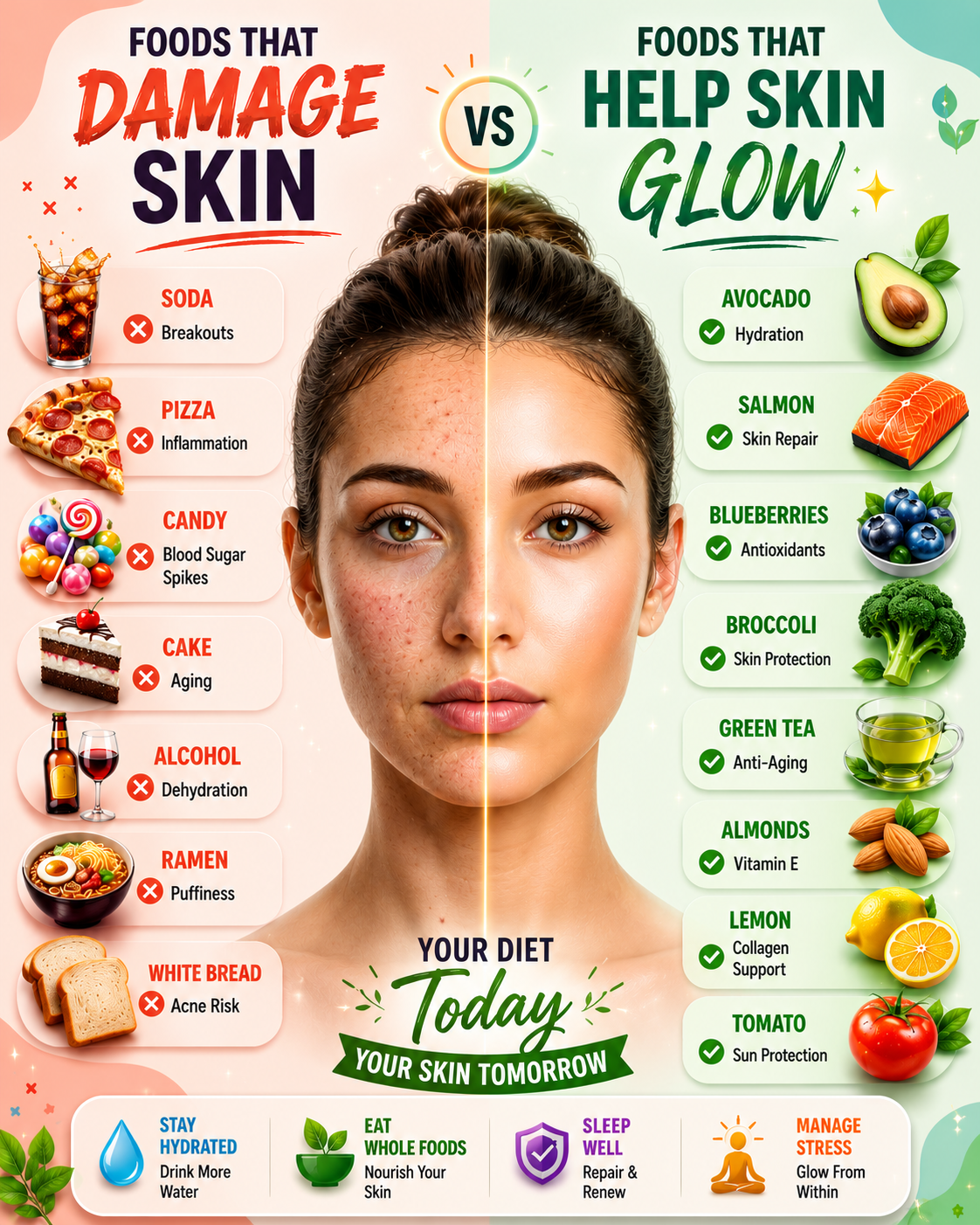
🍜 Ramen and Other Ultra-Processed Instant Foods
How They Mess With Your Skin
Those convenient instant noodles and a whole category of ultra-processed meals often come loaded with a cocktail of high sodium, artificial preservatives, and unhealthy fats. That excessive sodium? It’s a major player in dehydration, leaving your skin feeling parched and contributing to that puffy, tired look, especially around the eyes. And those processed oils? They can be a breeding ground for inflammation throughout your body, which often shows up on your skin as redness, irritation, and even breakouts. It’s a double whammy of skin distress!
Watch Out For These Skin Concerns
- Skin Dryness: Sodium pulls moisture away from your skin cells.
- Puffiness and Water Retention: Especially noticeable in the face and under-eye area.
- Increased Inflammation: Leading to redness and sensitivity.
- Dull Appearance: Dehydrated and inflamed skin naturally looks less vibrant.
Your Savvy Swap
Instead of reaching for the instant packet, why not whip up a nourishing bowl of whole-grain noodles or a homemade soup? Load it up with fresh, colorful vegetables and a lean protein source like chicken, tofu, or beans. You get all the comforting satisfaction without the skin-damaging baggage.
🍺 Alcohol: The Dehydration Disaster
How It Messes With Your Skin
We all know alcohol can be fun, but it’s notoriously dehydrating for your entire body, and your skin is no exception. When you drink alcohol, it essentially tells your body to shed more water than it takes in, leading to a significant drop in skin moisture levels. Beyond dehydration, alcohol can disrupt your precious sleep cycle (and we all know how crucial sleep is for skin repair!) and crank up inflammation. That flushed, tired look after a night out? That’s your skin crying out for hydration and calm.
Watch Out For These Skin Concerns
- Dry, Flaky Skin: Lack of moisture makes skin feel tight and look dull.
- Redness and Rosacea Flare-ups: Alcohol can dilate blood vessels.
- Puffy Face: Dehydration can actually cause your body to retain water.
- Premature Aging: Chronic dehydration and inflammation break down collagen and elastin over time.
Your Savvy Swap
The best defense against alcohol’s skin-damaging effects is to stay exceptionally hydrated. Alternate alcoholic drinks with water, and before bed, drink a large glass of water. During the day, load up on hydrating beverages like refreshing infused water, soothing herbal teas, or even a hydrating coconut water. Your skin will thank you!
🥩 Processed Meats: A Saturated Fat Surprise
How They Mess With Your Skin
Bacon, sausages, deli meats – they might be delicious, but they often come packed with preservatives, high levels of sodium, and a hefty dose of saturated fats. These components can contribute to increased oxidative stress within your body. Oxidative stress is like a rust on your cells, damaging them and accelerating the aging process. For your skin, this translates to a breakdown of its vital structures, leading to a loss of firmness and an increased propensity for inflammation.
Watch Out For These Skin Concerns
- Premature Aging: Due to increased oxidative stress damaging skin cells.
- Loss of Elasticity: When collagen and elastin fibers are weakened.
- Inflammation: Contributing to redness and potential breakouts.
Your Savvy Swap
Opt for lean protein sources that are packed with nutrients and far less likely to cause inflammation. Think flaky salmon, grilled chicken breast, plant-based powerhouses like lentils and beans, or even a perfectly cooked egg. These provide the protein your skin needs for repair and structure without the inflammatory side effects.
🍰 Cake, Cookies, and That Sugar Rush
How They Mess With Your Skin
Ah, sugar. It tastes so good, but it can wreak havoc on your skin through a process called glycation. Essentially, when you consume a lot of sugar, those sugar molecules in your bloodstream start to latch onto your skin’s essential proteins, like collagen and elastin. This damages these fibers, making them stiff and less functional. The result? Skin that loses its bounce, becomes more prone to wrinkles, and can even start to sag. Plus, sugar is a major trigger for inflammation, which we know is a direct pathway to acne.
Watch Out For These Skin Concerns
- Acne Breakouts: Sugar spikes can trigger inflammation and excess oil.
- Wrinkles and Fine Lines: Glycation damages collagen, leading to less elasticity.
- Skin Sagging: Loss of collagen and elastin support can cause skin to lose its firmness.
- Uneven Texture: Inflammation and collagen damage lead to a rougher skin surface.
Your Savvy Swap
Satisfy your sweet tooth with nature’s candy! Opt for whole fruits, which provide natural sweetness along with fiber and antioxidants. If you’re craving something richer, a small piece of dark chocolate (the higher the cocoa content, the better!) can be a good choice. Naturally sweet snacks like a handful of dates or a baked apple are also fantastic alternatives.
🍕 Pizza and Greasy Fast Foods: The Oil Overload
How They Mess With Your Skin
That greasy slice of pizza or a deep-fried fast-food favorite might hit the spot, but for your skin, it can be a recipe for disaster. These types of foods are often high in unhealthy fats, which can disrupt your skin’s natural oil balance. This disruption can lead to an overproduction of sebum (your skin’s natural oil), clogging pores and creating a perfect environment for acne to thrive. Furthermore, the high inflammatory load in many fast foods can exacerbate existing skin conditions or trigger new ones.
Watch Out For These Skin Concerns
- Oily Skin: Unhealthy fats can signal your skin to produce more oil.
- Acne and Breakouts: Clogged pores are a direct result of excess oil and inflammation.
- Congested Pores: Leading to blackheads and whiteheads.
Your Savvy Swap
Craving pizza? Make it at home! Use a whole-wheat crust, load it up with plenty of colorful vegetables like bell peppers, onions, and spinach, and opt for a lighter cheese or even a dairy-free alternative. For other fast-food cravings, look for grilled options, baked fries, or salads with lean protein.
🍞 White Bread and Refined Carbohydrates: The Blood Sugar Rollercoaster
How They Mess With Your Skin
White bread, pastries, sugary cereals – these refined carbohydrates are quickly digested and cause a rapid spike in your blood sugar levels. Think of it like a rollercoaster for your hormones and your skin. This sharp increase in blood sugar can trigger a surge in insulin and other hormones, which, in turn, can stimulate your sebaceous glands to produce more oil. More oil often means more clogged pores and a higher likelihood of acne flare-ups. Plus, the inflammatory response triggered by these blood sugar spikes isn’t doing your skin any favors either.
Watch Out For These Skin Concerns
- Acne Flare-ups: Especially hormonal acne, linked to blood sugar fluctuations.
- Increased Oiliness: Your skin starts working overtime to manage the hormonal shifts.
- Inflammation: A general increase in inflammation can worsen existing skin conditions.
Your Savvy Swap
Embrace the power of whole grains! Swap white bread for hearty whole-grain options, opt for oatmeal for breakfast, and incorporate nutrient-dense grains like quinoa and brown rice into your meals. These complex carbohydrates release energy slowly, preventing those dramatic blood sugar spikes and keeping your skin calmer.
🍬 Candy and Other Sugary Snacks: Empty Calories, Full Problems
How They Mess With Your Skin
Those colorful candies and sugary snacks might offer a quick burst of energy, but nutritionally, they’re pretty much empty. They lack the essential vitamins, minerals, and antioxidants your skin needs to stay healthy and vibrant. Instead, they contribute to the inflammatory load in your body and can lead to that dreaded dullness. When your skin isn’t getting the nutrients it needs and is instead dealing with inflammation, it starts to look tired, lackluster, and can even become more prone to breakouts.
Watch Out For These Skin Concerns
- Tired-Looking Skin: Lack of nutrients and excess sugar can sap your skin’s vitality.
- Acne: Sugar’s inflammatory effects can trigger breakouts.
- Uneven Complexion: Inflammation and poor skin health lead to a less uniform skin tone.
Your Savvy Swap
Reach for nature’s sweet treats! Fresh fruits are bursting with vitamins, antioxidants, and natural sugars that come packaged with fiber, making them a much healthier choice. Berries, apples, oranges – they all offer a satisfying sweetness along with skin-loving nutrients.
🍫 Processed Chocolate: More Sugar Than Cacao
How They Mess With Your Skin
While dark chocolate can have some benefits, many popular chocolate bars and treats are heavily processed and loaded with added sugar and often dairy. This combination can be a double whammy for your skin. The high sugar content contributes to glycation and inflammation, while the dairy in some products can be a trigger for breakouts in sensitive individuals. It’s the sugar and dairy, not necessarily the cacao itself, that often cause the problems.
Watch Out For These Skin Concerns
- Breakouts: Especially if dairy or high sugar content is involved.
- Increased Oil Production: Sugar can influence hormonal responses.
Your Savvy Swap
If you’re craving chocolate, go for quality over quantity. Choose dark chocolate with a high cocoa content (70% or more) and minimal added sugar. This way, you get the antioxidant benefits of cacao without overloading your system with sugar or dairy.
🧀 Dairy Products: A Potential Trigger for Some
How They Mess With Your Skin
This one can be a bit controversial, as not everyone reacts to dairy. However, some research and anecdotal evidence suggest that dairy consumption, particularly milk, may influence hormonal pathways in the body that are linked to acne. Hormonal fluctuations are a common trigger for breakouts, especially in women. For individuals sensitive to dairy, it can lead to increased inflammation and irritation on the skin.
Watch Out For These Skin Concerns
- Hormonal Acne: Particularly on the chin and jawline.
- Skin Irritation and Redness: In individuals sensitive to dairy components.
Your Savvy Swap
If you suspect dairy is affecting your skin, consider trying dairy alternatives. Unsweetened almond milk, oat milk, or soy milk can be great replacements in your coffee or cereal. You could also try reducing your overall dairy intake and see if your skin improves. Some people find that moderation is key.
🥤 Soda and Sugary Drinks: The Hydration Hoax
How They Mess With Your Skin
Sugary sodas, sweetened iced teas, and many fruit juices (even those labeled “100% juice” if consumed in large quantities) are packed with sugar. These drinks offer a massive sugar hit without any of the beneficial fiber or nutrients found in whole fruits. This leads to significant sugar exposure and can contribute to dehydration as your body works to process the sugar. The high sugar intake can accelerate collagen breakdown, leading to premature aging and a duller complexion over time.
Watch Out For These Skin Concerns
- Collagen Damage: Sugar accelerates the aging process by damaging collagen.
- Premature Aging: Fine lines and wrinkles can appear sooner.
- Dull Complexion: Dehydration and inflammation rob skin of its natural radiance.
Your Savvy Swap
Hydration is king! Make water your best friend. If you want something more exciting, try naturally flavored sparkling water, unsweetened herbal teas, coconut water for electrolytes, or freshly squeezed juices diluted with water. The key is to avoid added sugars.
The Skin Superstars: Foods That Naturally Boost Your Glow
Now for the exciting part! Let’s flip the script and talk about the incredible foods that can actively help your skin look and feel its absolute best. These nutrient powerhouses are packed with everything your skin needs to repair, protect, and radiate health. Incorporating them into your daily meals is one of the most delicious ways to invest in your skin’s future.
🥑 Avocado: The Creamy Skin Savior
Skin Benefits
Avocado isn’t just delicious on toast; it’s a skin-loving superstar! It’s brimming with healthy monounsaturated fats, which are crucial for keeping your skin supple and moisturized from the inside out. Plus, it’s a fantastic source of Vitamin E, a powerful antioxidant that helps protect your skin from damage, and other antioxidants that fight free radicals. Together, these nutrients help maintain your skin’s hydration levels and improve its elasticity, leaving it feeling soft and looking plump.
Key Nutrients for Skin
- Healthy Monounsaturated Fats: Essential for skin barrier function and moisture.
- Vitamin E: A potent antioxidant that protects against oxidative stress.
- Antioxidants: Including lutein and zeaxanthin, which support skin health.
Potential Benefits for Your Complexion
- Softer, Smoother Skin: Thanks to deep hydration.
- Improved Moisture Balance: Prevents both dryness and excessive oiliness.
- A Natural, Healthy Glow: Skin looks more radiant and vibrant.
🍣 Salmon: The Omega-3 Powerhouse
Skin Benefits
Fatty fish like salmon are a goldmine of omega-3 fatty acids. These essential fats are incredibly important for your skin’s health because they help reduce inflammation throughout the body – and inflammation is a major contributor to redness, acne, and premature aging. Omega-3s also play a vital role in keeping your skin barrier strong and resilient, helping to retain moisture and protect against environmental aggressors. They are key players in skin repair and maintaining overall skin integrity.
Key Nutrients for Skin
- Omega-3 Fatty Acids: Anti-inflammatory powerhouses that support skin barrier function.
- Protein: Essential for building and repairing skin tissues.
- Selenium: A mineral antioxidant that helps protect skin from sun damage.
- Vitamin D: Important for skin cell turnover and immune function.
Potential Benefits for Your Complexion
- Reduced Redness and Irritation: Thanks to potent anti-inflammatory effects.
- Improved Elasticity: Supporting collagen and elastin.
- Stronger Skin Barrier: Helping to lock in moisture and keep irritants out.
🫐 Blueberries: Antioxidant Berry Bombs
Skin Benefits
These little blue gems are tiny but mighty when it comes to antioxidants! Blueberries are absolutely packed with them, particularly anthocyanins and Vitamin C. Antioxidants are your skin’s defense squad, fighting off damaging free radicals caused by things like UV exposure and pollution. By neutralizing these harmful molecules, blueberries help protect your skin cells from damage, which can slow down the aging process and contribute to a brighter, more even complexion. They’re like a shield for your skin!
Key Nutrients for Skin
- Vitamin C: A vital antioxidant that also supports collagen production.
- Anthocyanins: Powerful antioxidants giving blueberries their vibrant color.
- Other Antioxidants: Including quercetin and kaempferol.
Potential Benefits for Your Complexion
- Anti-aging Support: By combating free radical damage.
- Brighter, More Radiant Skin: Helping to fade dark spots and even skin tone.
- Reduced Skin Damage: Protecting against environmental stressors.
🥬 Cabbage: The Detoxifying Green
Skin Benefits
Don’t underestimate the humble cabbage! This cruciferous vegetable is a fantastic source of Vitamin C and fiber, both of which are great for your skin. The Vitamin C aids in collagen production, keeping skin firm, while the fiber supports healthy digestion – and a happy gut often means clearer skin. Cabbage also contains beneficial compounds that can help your body’s natural detoxification processes, which can contribute to clearer skin and reduced inflammation. It’s a great way to support your skin from the inside out.
Key Nutrients for Skin
- Vitamin C: Essential for collagen synthesis and antioxidant protection.
- Fiber: Promotes gut health, which is linked to skin clarity.
- Antioxidants: Including sulforaphane (especially in broccoli, but cabbage has related compounds).
Potential Benefits for Your Complexion
- Improved Skin Clarity: By supporting detoxification and gut health.
- Reduced Inflammation: Contributing to a calmer complexion.
🍵 Green Tea: The Soothing Elixir
Skin Benefits
Sipping on green tea is like giving your skin a soothing internal bath. It’s loaded with powerful antioxidants called catechins, particularly EGCG (epigallocatechin gallate). These compounds have potent anti-inflammatory and antioxidant properties that can help protect your skin from UV damage and environmental stressors. Green tea may also help reduce redness and improve your skin’s overall tone and texture, making it a fantastic beverage for promoting a calm, clear, and youthful-looking complexion.
Key Nutrients for Skin
- Catechins (like EGCG): Powerful antioxidants with anti-inflammatory benefits.
- Polyphenols: Fight free radicals and protect skin cells.
Potential Benefits for Your Complexion
- Anti-aging Support: By protecting against oxidative damage.
- Reduced Redness: Calming inflammation for a more even tone.
- Improved Skin Tone and Texture: Leading to a smoother appearance.
🥦 Broccoli: The Collagen-Boosting Veggie
Skin Benefits
Broccoli is a nutritional powerhouse that offers significant benefits for your skin. It’s an excellent source of Vitamin C, which is absolutely critical for the production of collagen – the protein that gives your skin its structure and firmness. Broccoli also contains sulforaphane, a compound known for its antioxidant and anti-inflammatory properties, which can help protect your skin from sun damage and promote a healthier texture. Plus, its fiber content supports gut health, indirectly benefiting your skin.
Key Nutrients for Skin
- Vitamin C: The ultimate collagen booster and antioxidant.
- Sulforaphane: A potent compound that helps protect skin from damage.
- Fiber: Supports digestive health, linked to clearer skin.
- Vitamins A and K: Important for skin cell turnover and repair.
Potential Benefits for Your Complexion
- Skin Protection: Especially from UV-induced damage.
- Healthier, Smoother Texture: By supporting collagen and cell turnover.
- Collagen Support: For firmer, more elastic skin.
🍎 Apples: The Hydrating Crunch
Skin Benefits
An apple a day might just keep the dull skin away! Apples are naturally hydrating due to their high water content, which is essential for keeping your skin plump and moisturized. They also contain Vitamin C and various antioxidants that contribute to overall skin wellness. The fiber in apples aids digestion, and their gentle exfoliating properties (when consumed) can contribute to a brighter complexion. They’re a simple, accessible way to add moisture and nutrients to your diet.
Key Nutrients for Skin
- Water: Essential for internal hydration.
- Fiber: Supports gut health and skin regularity.
- Vitamin C: An antioxidant that aids in skin repair.
- Antioxidants: Such as quercetin, which can protect skin cells.
Potential Benefits for Your Complexion
- A More Hydrated Appearance: Skin looks dewy and plump.
- Brighter Skin: Due to antioxidants and improved circulation.
🍋 Lemon: The Vitamin C Zinger
Skin Benefits
Lemons are a powerhouse of Vitamin C, a nutrient that plays a starring role in collagen production. Collagen is the protein responsible for your skin’s firmness and elasticity, so boosting its production is key to maintaining a youthful appearance. Vitamin C is also a potent antioxidant that helps protect your skin from free radical damage and can contribute to a brighter, more even complexion by helping to fade hyperpigmentation. Squeeze some lemon into your water or salad dressing for a zesty skin boost!
Key Nutrients for Skin
- Vitamin C: Crucial for collagen synthesis and a powerful antioxidant.
- Antioxidants: Help fight cellular damage.
- Citric Acid: May have mild exfoliating properties.
Potential Benefits for Your Complexion
- Improved Skin Clarity: By supporting cell turnover and reducing inflammation.
- Brighter, More Even Complexion: Helping to fade dark spots and boost radiance.
🌰 Almonds: The Skin Barrier Booster
Skin Benefits
Almonds are a fantastic snack for promoting healthy skin. They are rich in Vitamin E, a fat-soluble antioxidant that’s vital for protecting your skin cells from oxidative damage and supporting the skin’s barrier function. This means it helps your skin retain moisture and stay protected from environmental irritants. The healthy fats in almonds also contribute to skin suppleness and hydration, while magnesium can help reduce stress, which often reflects on the skin.
Key Nutrients for Skin
- Vitamin E: Protects skin from damage and supports barrier function.
- Healthy Fats: Monounsaturated and polyunsaturated fats nourish the skin.
- Magnesium: May help reduce stress-related skin issues.
- Fiber: Supports overall health.
Potential Benefits for Your Complexion
- Reduced Dryness: By enhancing moisture retention.
- Smoother, Softer Skin: Thanks to nourishment from healthy fats and Vitamin E.
🍅 Tomatoes: The Lycopene Shield
Skin Benefits
Tomatoes are famous for their lycopene content, a powerful antioxidant that gives them their vibrant red color. Lycopene has been studied for its ability to help protect the skin from sun damage, particularly from UV radiation. While it’s not a substitute for sunscreen, consuming tomatoes regularly can contribute to your skin’s overall resilience against environmental stressors. They also provide Vitamin C, further supporting collagen production and skin texture.
Key Nutrients for Skin
- Lycopene: A potent antioxidant known for UV protection properties.
- Vitamin C: Supports collagen and fights free radicals.
- Potassium: Important for fluid balance.
Potential Benefits for Your Complexion
- Support Against Sun-Related Damage: Helping to mitigate the effects of UV exposure.
- Improved Skin Texture: Contributing to a smoother, more even appearance.
Simple Daily Habits for Skin That Shines
Beyond specific foods, adopting a few simple daily habits can make a world of difference for your skin’s health and appearance. Think of these as the foundational pillars that support all the great work your diet is doing.
💧 Stay Hydrated, Inside and Out
Water is the lifeblood of your skin! Drinking enough water throughout the day is absolutely crucial for maintaining skin elasticity, flushing out toxins, and keeping your complexion plump and dewy. Aim for at least 8 glasses a day, and more if you’re active or in a hot climate. Your skin will thank you for it!
🥗 Embrace Whole Foods, Every Day
Make whole, unprocessed foods the star of your plate. This means prioritizing an abundance of colorful fruits and vegetables, lean proteins, healthy fats (like those found in avocados and nuts), and whole grains. These foods provide the essential vitamins, minerals, and antioxidants your skin craves to look and feel its best.
😴 Prioritize Quality Sleep for Skin Repair
Sleep is when your body (and your skin!) does its most important repair work. Skimping on sleep can lead to increased inflammation, dullness, and even exacerbate skin conditions like acne and eczema. Aim for 7-9 hours of quality sleep per night to allow your skin to regenerate and recover.
🚶 Get Moving: Exercise for Circulation and Glow
Regular physical activity is fantastic for your skin! Exercise boosts blood circulation, delivering vital oxygen and nutrients to your skin cells. It also helps to reduce stress and promote detoxification through sweat. Just remember to cleanse your skin after a workout to prevent pore-clogging.
☀️ Protect Your Skin from the Sun, Always
Sun damage is one of the leading causes of premature aging, dark spots, and increased risk of skin cancer. Make sunscreen a non-negotiable part of your daily routine, even on cloudy days. Look for broad-spectrum protection with an SPF of 30 or higher.
Final Thoughts: Your Skin’s Future is on Your Plate!
It’s clear that achieving and maintaining healthy, glowing skin is a journey that starts from within. While your external skincare products play a role in supporting your skin’s health, the real magic often happens thanks to the nutrients you consume daily. Your diet has a profound impact on your skin’s hydration levels, its ability to manage inflammation, the production of vital collagen, and its overall clarity and radiance.
By consciously reducing your intake of ultra-processed foods, sugary snacks, and dehydrating beverages – those sneaky skin saboteurs – and making a concerted effort to increase your consumption of antioxidant-rich whole foods, you are setting yourself up for a significant improvement in your skin’s appearance over time. It’s about making sustainable, nourishing choices that benefit your entire body, with your skin being a beautiful outward reflection.
Ultimately, a balanced diet that is abundant in essential vitamins, beneficial healthy fats, adequate hydration, and nutrient-dense ingredients is one of the most powerful, effective, and enjoyable long-term strategies for supporting consistently healthy, vibrant, and naturally glowing skin. So, go ahead, savor those skin-loving foods and watch your complexion transform!