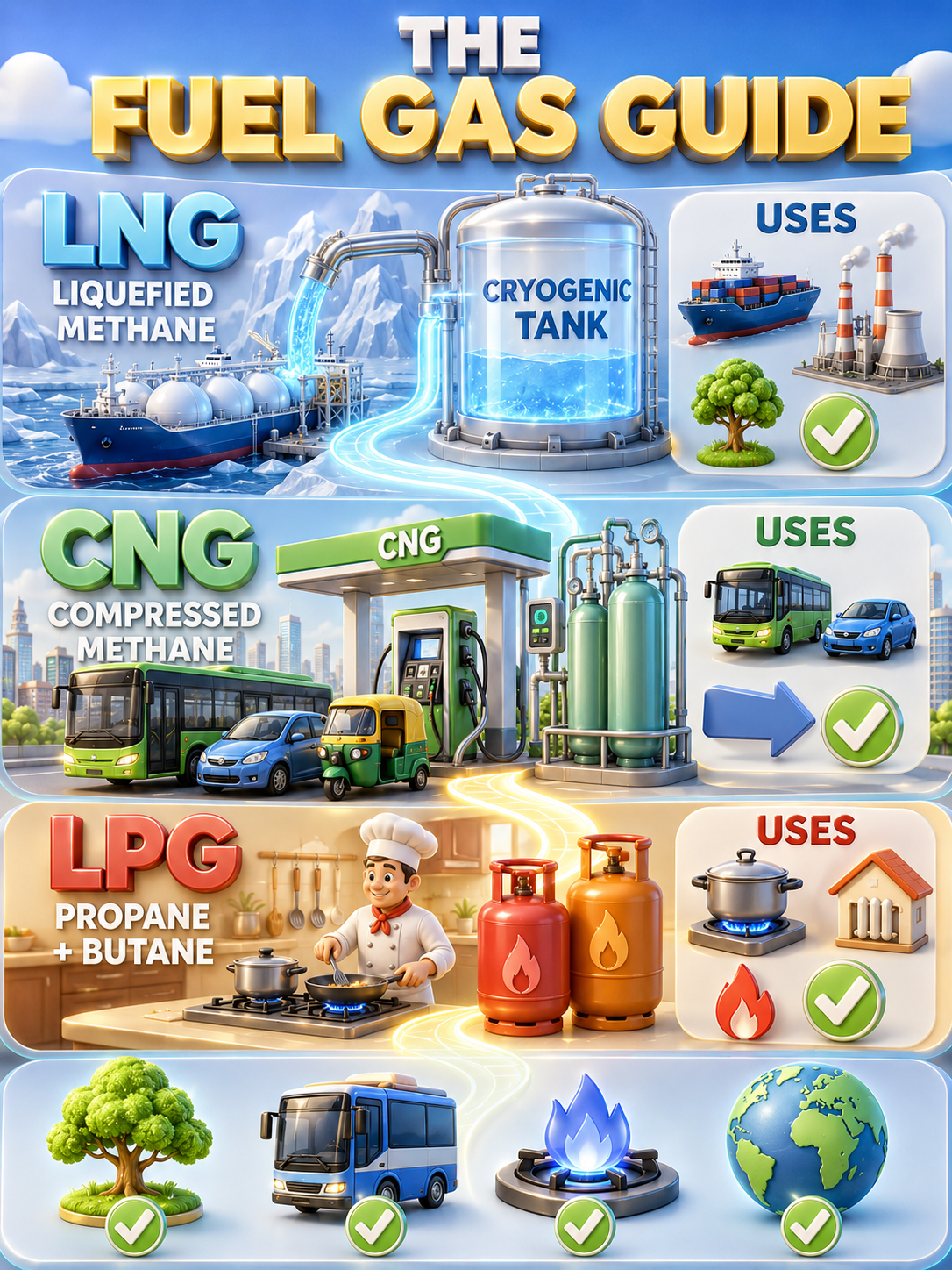
In today’s world, where clean energy and efficient transportation are more critical than ever, you’ve probably heard terms like LNG, CNG, and LPG tossed around. They might sound like just another set of technical acronyms, but understanding the differences between these fuel gases is actually key to grasping the future of energy, from how your stove works to how massive cargo ships navigate the oceans. Whether you’re a curious homeowner, a business owner looking for sustainable solutions, or just someone who wants to be in the know about global energy trends, this guide is for you. Let’s demystify the “Big Three” of the fuel gas world in plain English!
At their core, these gases are all forms of fuel, but their composition, how they’re stored, and where they’re best utilized create significant distinctions. Think of them as cousins in the energy family – related, but with very different personalities and jobs.

What Exactly is LNG? Diving into Liquefied Natural Gas
First up, let’s talk about LNG, which stands for Liquefied Natural Gas. This is essentially natural gas, primarily composed of methane (CH₄), that has been transformed into a liquid state. But how do we get it there? It’s not by simply putting it in the fridge!
The “Magic” of LNG Storage: Extreme Cold is Key
The transformation of natural gas into LNG involves cooling it down to an astonishingly low temperature: -162°C (-260°F). This extreme chilling process causes the gas to condense into a liquid. Why go through all this trouble? The main reason is volume reduction. In its liquid form, natural gas takes up about 600 times less space than it does as a gas. This dramatic shrinkage is what makes it feasible to transport natural gas across vast distances, especially over oceans where laying pipelines is impractical or impossible. These super-cooled liquids are then transported in specialized, heavily insulated vessels known as Cryogenic Tanks, ensuring the gas remains liquid throughout its journey.
Where Does LNG Power Our World? Common Applications
Because of its high energy density when liquefied and its transportability, LNG has become a crucial fuel for some of the world’s largest industries and transportation sectors:
- Maritime Shipping: LNG is increasingly powering massive cargo ships, container vessels, and even cruise liners. It offers a cleaner alternative to traditional heavy fuel oil, significantly reducing sulfur oxide (SOx) and nitrogen oxide (NOx) emissions at sea. This is a game-changer for international trade and environmental regulations.
- Long-Haul Trucking: The trucking industry is also embracing LNG for long-distance freight. While still less common than diesel, LNG-powered trucks offer lower operating costs and reduced emissions, making them an attractive option for logistics companies aiming for sustainability.
- Power Generation: Many power plants now utilize LNG to generate electricity. It’s cleaner than coal and offers more flexibility than some other fossil fuels, allowing for quicker ramp-up and ramp-down to meet fluctuating energy demands. This helps cities maintain a stable power supply while improving air quality.
So, when you hear about massive tankers carrying fuel across the sea or a new generation of eco-friendly cargo ships, chances are they’re powered by LNG.
Understanding CNG: The Power of Compressed Natural Gas
Next on our list is CNG, or Compressed Natural Gas. Like LNG, CNG is also primarily methane (CH₄). The fundamental difference between LNG and CNG isn’t in their chemical makeup but in how they are stored. While LNG is a super-cooled liquid, CNG is kept in its gaseous state.
CNG Storage: High Pressure is the Name of the Game
Instead of extreme cold, CNG relies on high pressure to achieve a usable energy density. The natural gas is compressed and stored in specially designed, robust tanks at pressures typically ranging from 200 to 250 bar (which is about 3,000 to 3,600 psi). Imagine trying to fit a huge amount of air into a small, sturdy container – that’s the principle behind CNG storage. These tanks are built to withstand immense pressure, making them safe for use in vehicles.
Where You’ll Find CNG: Everyday Transportation Solutions
CNG has carved out a significant niche in the transportation sector, particularly for vehicles that operate on predictable routes or within urban environments. Its advantages include lower fuel costs and reduced emissions compared to gasoline and diesel:
- Public Transportation: Buses and taxis are major users of CNG. Many cities worldwide have fleets of CNG-powered buses that help reduce urban air pollution and operating expenses. This makes city commutes cleaner and quieter.
- Personal Vehicles: While not as widespread as gasoline-powered cars, many vehicles are manufactured to run on CNG, and conversion kits are available for existing gasoline cars. This offers drivers a more affordable and environmentally friendly option for daily driving.
- Three-Wheelers and Light Commercial Vehicles: In many parts of Asia and other regions, auto-rickshaws and smaller commercial vehicles are commonly powered by CNG, providing an economical and accessible mode of transport for millions.
CNG is a fantastic option for localized transport, offering a cleaner footprint for the vehicles we see on our streets every day.
Exploring LPG: The Versatility of Liquefied Petroleum Gas
Finally, we have LPG, which stands for Liquefied Petroleum Gas. This is where things start to differ significantly from LNG and CNG. While both LNG and CNG are primarily methane, LPG is a mixture of hydrocarbons, most commonly propane and butane. These gases are typically byproducts of either natural gas processing or crude oil refining.
LPG Storage: Moderate Pressure and Portability
LPG is unique in its storage requirements. It can be liquefied under moderate pressure at ambient temperatures. This means it doesn’t need the extreme cold of LNG or the very high pressure of CNG. This ease of liquefaction and storage is why LPG is so common in portable cylinders. You’ll recognize these as the familiar “gas bottles” used for barbecues, camping stoves, and in many homes.
The Many Hats of LPG: Everyday Uses
LPG’s convenience and accessibility make it one of the most widely used fuel gases globally, especially for domestic and smaller-scale commercial applications:
- Residential Cooking: This is perhaps the most common use of LPG. Millions of households worldwide rely on LPG for their stovetops, ovens, and grills. It provides a reliable and controllable heat source for culinary needs.
- Home Heating: In areas not connected to natural gas pipelines, LPG is a vital source for heating homes. It can be used in furnaces and boilers to keep living spaces warm during colder months.
- Commercial Kitchens: Restaurants and catering businesses often prefer LPG for its consistent heat output and precise temperature control, which are essential for professional cooking.
- Portable Applications: From camping stoves and portable heaters to powering forklifts in warehouses, LPG’s portability makes it incredibly versatile for a wide range of on-the-go applications.
LPG is the workhorse of everyday energy needs for many, offering a clean and efficient way to power homes and businesses.
LNG vs. CNG vs. LPG: A Clear Side-by-Side Comparison
To help solidify the differences, let’s put them head-to-head in a simple comparison table. This will highlight the key distinctions in their composition, storage, and primary applications, making it easy to see which gas is best suited for which purpose.
FeatureLNG (Liquefied Natural Gas)CNG (Compressed Natural Gas)LPG (Liquefied Petroleum Gas)Full Name
Liquefied Natural Gas
Compressed Natural Gas
Liquefied Petroleum Gas
Primary Gas Component
Methane (CH₄)
Methane (CH₄)
Propane & Butane
Storage Method
Liquefied by extreme cooling (approx. -162°C)
Compressed to high pressure (200-250 bar)
Liquefied by moderate pressure (ambient temperature)
Energy Density (Volume)
Very high (600x gas volume reduction)
High (significantly less than LNG, more than gaseous natural gas)
High (significantly more than gaseous natural gas)
Primary Applications
Long-distance shipping, heavy-duty transport (trucks), power generation
Vehicles (cars, buses, taxis), localized transport
Domestic cooking, home heating, portable applications, some vehicles
Transportation Method
Specialized cryogenic tankers (ships, trucks)
Pressurized tanks on vehicles, pipelines
Pressurized cylinders/tanks (portable, stationary)
Environmental Profile
Lower emissions than coal/diesel; methane slip is a concern
Lower emissions than gasoline/diesel; similar to LNG
Cleaner than wood/charcoal; lower CO2 than natural gas per unit energy
Why Does This Matter? The Importance of These Gases for Our Future
You might be thinking, “Why do we need three different types of fuel gas?” The answer lies in the multifaceted challenges of modern energy: energy security, economic viability, and environmental responsibility. Each of these gases plays a unique and important role in building a more sustainable and resilient energy landscape.
1. A Cleaner Bridge Away from Fossil Fuels
Natural gas (which forms the basis of LNG and CNG) burns much cleaner than traditional fossil fuels like coal and diesel. It produces significantly fewer greenhouse gas emissions and harmful air pollutants. By transitioning heavy industries and transportation to LNG and CNG, we can make substantial strides in improving air quality in our cities and reducing our overall carbon footprint. This shift is a critical step in combating climate change.
2. Unlocking Transportation Versatility
The availability of both liquefied (LNG) and compressed (CNG) forms of natural gas provides incredible flexibility for the transportation sector. LNG’s high energy density makes it ideal for the long hauls and heavy loads of shipping and trucking, while CNG’s more manageable pressure requirements suit everyday vehicles like cars and buses. This versatility allows us to reduce our reliance on volatile crude oil markets and diversify our energy sources for movement.
3. Powering Homes and Communities Reliably
LPG remains an indispensable energy source, particularly for millions of people living in rural or remote areas without access to natural gas pipelines. It offers a clean, efficient, and portable alternative to burning wood, charcoal, or kerosene for cooking and heating. This improves health outcomes by reducing indoor air pollution and provides a more reliable and convenient energy supply.
4. Enhancing Global Energy Security and Stability
The ability to liquefy natural gas (LNG) transforms it into a globally tradable commodity. This means countries can import natural gas from diverse sources, reducing geopolitical risks and ensuring a more stable energy supply. Diversification of energy sources is paramount for economic stability and preventing disruptions in power to homes and industries.
Key Takeaways: What You Need to Know as a Savvy Consumer
To wrap it all up and make it easy to remember, here’s a quick cheat sheet for understanding these fuel gases:
- LNG (Liquefied Natural Gas): Think “Big Stuff.” It’s super-cooled methane used for massive transport like cargo ships, long-haul trucks, and large-scale power generation because it takes up less space when liquid.
- CNG (Compressed Natural Gas): Think “Daily Drive.” It’s high-pressure methane perfect for everyday vehicles like cars, buses, and taxis, offering a cleaner and often cheaper alternative to gasoline and diesel.
- LPG (Liquefied Petroleum Gas): Think “Home Comfort.” It’s propane and butane, stored in manageable cylinders, powering your kitchen stove, home heating system, and countless portable devices.
Embracing Energy Diversity for a Brighter Tomorrow
Ultimately, there isn’t a single “best” fuel gas among LNG, CNG, and LPG. Instead, they function as a complementary team, each excelling in different applications. By strategically using the right gas for the right job, we can move towards a world that is not only more energy-efficient and less polluted but also more secure and stable in its energy supply. Understanding these distinctions is your first step towards engaging in the vital global conversation about sustainable energy solutions.
So, remember: LNG is the liquid giant powering global trade routes, CNG is the high-pressure hero making our local commutes cleaner, and LPG is the reliable flame that keeps our homes running. Each plays a crucial role in shaping our energy future.
Ready to Optimize Your Energy Use? Whether you’re looking for the most efficient home appliances, the best strategies for sustainable transport, or insights into industrial energy solutions, exploring comprehensive guides is your next step. Visit bestrated.top today to discover top-rated products and energy-saving tips that can benefit your wallet and our planet! ✅ ★