Hey there, fellow learners! Are you finding it tough to keep your brain dialed in when it’s time to hit the books, especially when exams are looming or you’re wading through complex study material? Don’t sweat it! In today’s world, with endless pings and notifications, maintaining that laser-like focus can feel like a superpower. But guess what? It’s a skill, not a secret gift, and one that can be honed with the right strategies. This comprehensive guide is your roadmap to silencing the noise, boosting your concentration, and making every study session count. We’re diving deep into scientifically-backed methods that transform passive reading into active learning and long-term knowledge retention. Get ready to supercharge your cognitive endurance!
We’ll explore how setting crystal-clear goals, using smart time-management techniques like the renowned Pomodoro Technique, and employing active learning strategies can revolutionize your study habits. Plus, we’ll uncover the often-overlooked but crucial impact of physical health, smart review cycles, and creating the perfect study environment on your brain’s ability to stay sharp. From taming digital distractions with focus apps to leveraging active recall with flashcards, this guide packs an evidence-based punch. It’s time to master your routine, elevate your focus, and build a study sanctuary designed for sustainable peak mental performance. Let’s get started on unlocking your full academic potential!

🌐 Welcome to the Age of Cognitive Endurance
Let’s be real: in our hyper-connected world, where notifications are a constant barrage and digital distractions are just a click away, maintaining deep focus while studying feels like an uphill battle. It’s not just you; students and professionals everywhere are grappling with this. The good news? Your ability to concentrate isn’t some fixed trait you’re born with or without. It’s a skill, a muscle that gets stronger with the right kind of training. When we struggle to manage our attention, our productivity tanks, and that dreaded cognitive fatigue hits us like a ton of bricks. Sound familiar?
To truly excel academically and ensure that knowledge sticks, we need to ditch the passive study methods that often leave us feeling like we’ve just skimmed the surface. Instead, it’s time to embrace structured, evidence-based workflows that actually work. This in-depth guide is all about unlocking the seven core pillars that build academic focus. We’re talking about practical, actionable frameworks to sharpen your mental clarity, manage your energy levels throughout the day, and consistently hit your peak cognitive performance. Ready to level up your learning game?
🎯 1. Set Goals That Are Crystal Clear and Actionable
Ever notice how vague study goals are a one-way ticket to procrastination city? When you sit down with the intention to simply ‘study biology,’ your brain has to do a lot of heavy lifting just to figure out *what* to do next. This ambiguity creates friction, slowing you down before you even begin. Let’s fix that.
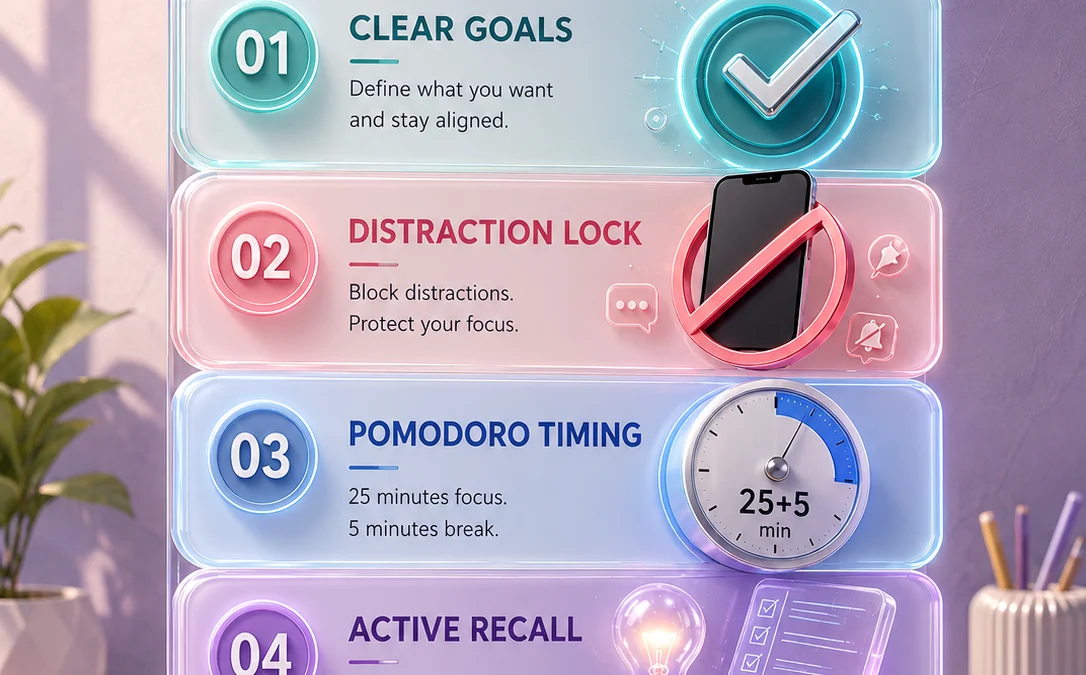
🔷 Pinpoint Exact Benchmarks: Before you dive in, clearly define what success looks like for this session. Which specific chapters need to be covered? What concepts must you understand? Which problem sets absolutely have to be completed? Having precise targets eliminates guesswork and allows your brain to focus on execution, not on planning.
🔶 Make it Tangible: There’s power in the physical act of writing. Grab a notebook or a whiteboard and jot down your academic objectives for the session *before* you crack open a book. This physical commitment creates a psychological contract with yourself, making you more likely to follow through.
🔷 Break It Down (Micro-Tasks are Key): Don’t get overwhelmed by big topics. Instead of planning to ‘review the entire module on photosynthesis,’ break it down into smaller, manageable steps. Aim to ‘analyze three specific diagrams illustrating the Calvin cycle’ or ‘summarize the four core definitions related to light-dependent reactions.’ These micro-tasks make progress feel more achievable and keep momentum going.
🔇 2. Ruthlessly Eliminate Environmental Distractions
Our brains are hardwired to notice new things. That’s why a buzzing phone or a sudden noise can instantly pull us out of our deep work state. To achieve true focus, we need to proactively design our environment to be a sanctuary, free from interruptions.
🔴 Digital Detox Zone: The ultimate distraction is often right in our pocket. Put your smartphone completely out of sight – ideally, in another room. If that’s not feasible, consider using app blockers or ‘focus modes’ that limit access to distracting apps. Simply removing the visual cue of your phone can dramatically reduce the urge to check it mindlessly.
🔵 Leverage Tech for Focus: Don’t fight technology with willpower alone! There are fantastic apps and browser extensions designed specifically to block distracting websites and applications during your study times. Set them up and let them do the heavy lifting of keeping tempting sites at bay.
🔴 Craft Your Study Haven: Designate a specific space solely for studying. Keep it clean, clutter-free, and well-lit. A tidy workspace minimizes visual distractions and signals to your brain that it’s time to get serious. Make it a place you *want* to be productive in.
⏱️ 3. Master the Pomodoro Technique
Let’s face it, our brains aren’t built for marathon focus sessions. Sustaining peak concentration for hours on end is simply not how our neurobiology works. This is where time-blocking techniques, like the famous Pomodoro Technique, come to the rescue. They work by strategically alternating intense work intervals with well-deserved rest periods, protecting your mental stamina.
🕒 The 25-Minute Power Sprint: This is the core of the Pomodoro. Dedicate exactly twenty-five minutes to a single, focused task. During this sprint, commit to zero interruptions. No checking emails, no glancing at your phone, just pure, unadulterated work.
💪 The 5-Minute Reset: When that timer rings, *immediately* stop what you’re doing and step away from your workspace. Use the next five minutes for a genuine break. Stretch, walk around, grab some water – do something that is *not* studying. This brief pause is crucial for your brain to process information and recharge its resources.
🧠 Build Momentum with Cycles: The magic happens when you repeat this cycle. Typically, you’ll do four Pomodoro sessions (four 25-minute work sprints followed by four 5-minute breaks). After completing four cycles, take a longer break, maybe 15-30 minutes. This structured approach prevents burnout, combats mental fatigue, and allows you to maintain a high level of focus for much longer periods than you might think possible.
🚶♂️ 4. Strategic Breaks: Your Secret Weapon for Recovery
Not all breaks are created equal, and this is a crucial point often missed. Simply scrolling through social media during a break isn’t true recovery. To truly recharge your brain and body, your breaks need to be intentional and restorative.
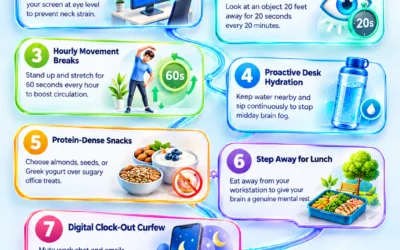
🟢 Get Moving: Use those five-minute Pomodoro breaks to stand up, walk around your room, or do some light stretching. Physical activity during breaks boosts blood flow, delivering much-needed oxygen and glucose to your brain, which is essential for optimal function.
🟡 Release Physical Tension: Sitting for long periods can lead to stiffness and discomfort. Use your breaks to consciously release tension. Roll your shoulders, gently stretch your neck, or even do a few desk-friendly yoga poses. This physical reset can make a surprising difference in your comfort and focus.
🟢 Hydrate, Hydrate, Hydrate: Dehydration is a silent killer of concentration. Make it a habit to drink a full glass of water during each recovery window. Even mild dehydration can significantly impair your short-term memory, attention span, and overall cognitive processing speed. Keep that water bottle close!
📝 5. Embrace Active Learning, Not Just Passive Reading
Let’s be honest, the act of simply reading text or highlighting passages can create a false sense of understanding. You might feel like you’re absorbing the information, but without active engagement, those neural pathways aren’t being strengthened for long-term memory. True comprehension and retention come from actively wrestling with the material.
🔶 Summarize in Your Own Words: After reading a section, put the book down and try to explain the key concepts in your own words. Write them down or say them out loud. This process forces your brain to process, organize, and truly understand the information, rather than just passively receiving it.
🔷 Ask Probing Questions: Don’t just read; interrogate the text! As you encounter new information, actively ask yourself questions: Why is this important? How does this connect to what I already know? What are the implications of this concept? This critical questioning drives deeper cognitive processing.
🔶 Master the Feynman Technique: This is a game-changer. Choose a concept you’ve just learned and try to explain it in the simplest terms possible, as if you were teaching it to a child or someone completely unfamiliar with the topic. Identify where you struggle to simplify or where your explanation becomes jargon-filled – these are your knowledge gaps. Go back and review those areas until you can explain them clearly and concisely.
🔄 6. The Power of Systematic and Regular Reviews
Forgetting is a natural part of how our brains work. Unless we actively reinforce new information, it tends to fade away pretty quickly. That’s why incorporating structured review cycles into your study routine is absolutely essential for long-term retention.
🟣 Daily Revision Ritual: Start each study session with a brief review of the material you covered the previous day. Even just 10-15 minutes dedicated to recalling yesterday’s lessons can significantly strengthen those neural connections before they have a chance to weaken.
🟪 Flashcards for Active Recall: Whether you use physical cards or digital apps (like Anki or Quizlet), flashcards are brilliant for testing your memory retrieval. The act of forcing your brain to *pull* information from your memory is far more effective for learning than passively re-reading notes or highlights.
🟣 Test Yourself Regularly: Don’t wait for the final exam to find out what you don’t know. Incorporate regular self-testing. Take practice quizzes, work through end-of-chapter problems, or even create your own mock exams under timed conditions. This not only identifies weak spots but also builds crucial psychological resilience for high-stakes testing situations.
🍏 7. Fuel Your Brain: Optimize Sleep and Metabolic Health
Your brain’s performance is inextricably linked to your overall physical health. A body that’s running on fumes – think poor sleep and inadequate nutrition – simply cannot support elite levels of focus or effectively consolidate new memories. Taking care of your physical self is non-negotiable for academic success.
🟤 Prioritize Sleep Quality and Consistency: Aim for 7-8 hours of high-quality, uninterrupted sleep each night. During the deep stages of sleep, your brain is busy consolidating memories, clearing out metabolic waste, and preparing itself for the next day’s learning. Consistent sleep windows are key.
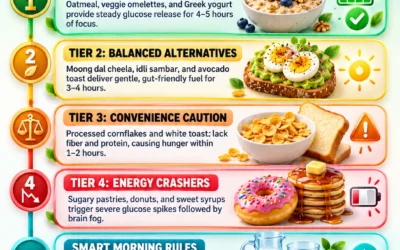
🔵 Nourish with Whole Foods: Steer clear of sugary snacks and ultra-processed foods that lead to energy spikes and crashes. Instead, fuel your brain with nutrient-dense whole foods: lean proteins, healthy fats (like avocados and nuts), complex carbohydrates (like oats and quinoa), and plenty of fruits and vegetables. This provides sustained energy for your brain.
🟤 Move Your Body Consistently: Regular physical exercise, whether it’s cardio or strength training, isn’t just good for your body; it’s fantastic for your brain. Exercise boosts neuroplasticity (your brain’s ability to form new connections) and releases neurotransmitters that are vital for focus, mood, and cognitive function.
🔵 Cultivate a Positive Mindset: Your mental state plays a huge role. Approach challenging subjects with a growth mindset, believing that you can improve with effort. Learning to manage stress effectively and maintaining an optimistic outlook can prevent the emotional fatigue that often sabotages even the best study plans.
🏆 The Unbeatable Power of Consistency
In the competitive arena of modern academics, sustained concentration is your ultimate advantage. By implementing these seven core principles – setting ultra-specific goals, creating distraction-free zones, mastering time-blocking techniques, actively engaging with material, and diligently safeguarding your physical and mental health – you’re building an optimal ecosystem for intellectual growth. True academic mastery isn’t achieved overnight; it’s forged through consistent, disciplined daily effort. Make these foundational strategies a regular part of your routine, and you’ll transform your study habits into a powerful engine driving your long-term academic and professional success. You’ve got this!