Hey there! Ever feel like managing your long-term metabolic health is a bit like trying to solve a super complex puzzle? We get it! When your doctor gives you the results of an HbA1c test, it’s like getting a clear snapshot of your average blood sugar levels over the past two to three months. 📊 High numbers? They’re a friendly nudge, showing that glucose has been hanging around your red blood cells more than it should, signaling it’s time for some intentional, positive lifestyle shifts. The truly fantastic news is that your body is incredibly responsive! Even small, consistent daily adjustments to what you eat, how you move, and how well you rest can make a huge difference. By fine-tuning when you eat, what you do after meals, and prioritizing quality sleep, you can steadily guide those numbers down into a healthier, safer zone. 🎯 Let’s dive into some super practical habits that will not only protect your cellular energy but also boost your overall metabolic health for the long haul.
🍏 Simple Lifestyle Adjustments to Lower Your HbA1c Levels Naturally 🍏
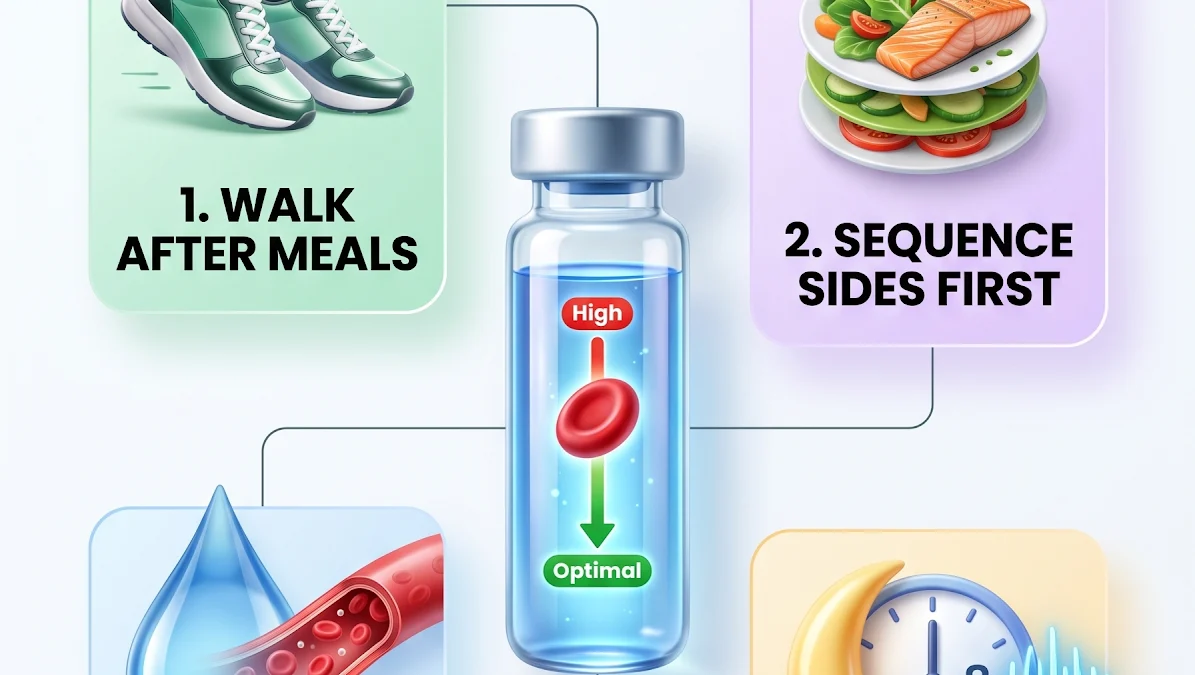
Curious about how to naturally bring down those HbA1c levels? It all boils down to making consistent, smart lifestyle changes. For instance, a quick 10 to 15-minute walk right after you eat can do wonders for clearing glucose from your blood. Plus, focusing on fiber-rich foods and prioritizing protein helps prevent those dreaded sharp insulin spikes. And let’s not forget the power of quality sleep, effective stress management, staying properly hydrated, and maintaining a healthy weight – all these factors work together to keep your long-term blood sugar levels stable and happy.

✨ Section 1: Rethinking Meal Sequence and Nutritional Architecture ✨
Let’s bust a common myth right here: managing your blood sugar doesn’t mean you have to say goodbye to all the foods you love! Recent studies in metabolic health are showing us something super exciting: the *order* in which you eat your food can dramatically impact your blood sugar levels after a meal. 🍽️ Seriously, tweaking your meal sequence is a surprisingly simple yet powerful way to protect your body from those jarring insulin spikes.
When you sit down for a meal, think about building a protective digestive buffer. 🥦 Starting your meal with specific types of macronutrients can actually change how your stomach empties, which in turn slows down how quickly sugars get absorbed into your bloodstream. It’s all about strategic eating!
- 🥩 Kick Off with Protein First: Beginning your lunch or dinner with a good source of lean protein helps trigger those important satiety hormones, essentially cushioning your system before the carbohydrates hit. This can make a big difference in preventing sharp glucose rises.
- 🌱 Load Up on Soluble Fiber: Think non-starchy vegetables, legumes, whole grains, and seeds. These fiber powerhouses create a gel-like mesh in your digestive tract, which naturally delays sugar absorption. It’s like a gentle brake on sugar entering your bloodstream.
- 🛑 Be Mindful of Added Sugars: Minimizing processed snacks, commercially baked goods, and sugary drinks is crucial. These items are often packed with high-fructose ingredients that can lead to intense systemic inflammation, which is the last thing your metabolic health needs.
By strategically placing carbohydrates towards the end of your meal, you allow your body to utilize those sugars for steady energy rather than a chaotic surge. 📈 This simple structural change can keep your energy levels stable for hours, helping you wave goodbye to those dreaded foggy afternoon crashes that often follow a carb-heavy lunch.
🏆 Best Practice
Here’s a fantastic example: If you’re having a meal that includes chicken, broccoli, and rice, try eating the broccoli first, then the chicken, and finally the rice. This sequence can significantly optimize your body’s metabolic response!
🚶♂️ Section 2: Harnessing Post-Meal Movement and Regular Activity 🚶♂️
Think of your muscles as your body’s personal glucose clearance crew! Every time you move, your skeletal muscle tissues actively pull glucose from your blood to use as immediate fuel. The amazing part? They can do this without requiring a massive surge of insulin. 🏃♂️ This makes intentional movement an incredibly powerful tool for managing your long-term health and keeping those HbA1c levels in check.
You absolutely don’t need to commit to grueling hours in the gym to see positive changes in your three-month marker. ⏱️ In fact, incorporating short bursts of physical activity into your regular day can create a significant compounding effect on your cellular metabolism:
- 👟 Embrace Post-Meal Walks: Committing to a simple 10 to 15-minute walk immediately after finishing a meal is a game-changer. It helps clear out excess glucose before it has a chance to cause a significant spike.
- 🏋️♂️ Integrate Strength Training: Aim to include two to three resistance or weight training sessions each week. Over time, this helps build more lean muscle mass, which is fantastic for metabolic health.
- 🔥 Stay Consistently Active: Strive for around 150 minutes of moderate-intensity movement per week. Think brisk walking, cycling, swimming, or dancing – activities that keep your metabolic engine running efficiently.
Building more lean muscle is like giving your body a larger, more efficient storage system for carbohydrates. 🌟 As this natural muscle expansion happens over time, it can permanently lower your body’s baseline need for insulin, making it much easier to manage your daily blood sugar numbers.
💡 Quick Tip
Instead of collapsing onto the couch to scroll through your phone right after dinner, try making it a habit to tidy up the kitchen or take a leisurely stroll around the block first. That little bit of movement can make a surprising difference!
💤 Section 3: Restoring Hormonal Equilibrium Through Sleep and Calm 💤
Your body’s intricate endocrine system relies heavily on regular, uninterrupted rest to properly manage crucial hormones like cortisol and insulin, especially in the morning. When you’re chronically sleep-deprived, your body perceives this exhaustion as a stressor, triggering the release of extra stress hormones. These hormones, in turn, signal your liver to release stored sugar into your bloodstream. 📉 This creates a hormonal imbalance that can quietly but consistently elevate your long-term blood sugar markers.
Combining quality sleep with active stress management techniques creates the calm internal environment your metabolism needs to repair and function optimally. 🧠 Let’s look at how different lifestyle environments can impact your body:
| Lifestyle Environment | Hormonal and Cellular Reaction | Long-Term Glucose Outcome |
|---|---|---|
| High Stress & Poor Sleep | Elevated cortisol levels, increased insulin resistance, frequent cravings for sugary or high-carb foods. | Consistent upward trend in three-month lab markers like HbA1c. |
| 7-9 Hours Sleep & Daily Calm Practices | Balanced nervous system, smoother insulin response, reduced morning sugar spikes from the liver. | Steady, natural decline towards healthy baseline blood sugar levels. |
Incorporating simple mindfulness practices such as deep breathing exercises, meditation, or gentle restorative yoga can help shift your nervous system out of that constant ‘fight or flight’ mode. 🌊 Bringing your body into a relaxed state allows your cells to more effectively utilize circulating energy without the need for excessive insulin intervention.
⚠️ Common Mistake
A common pitfall is obsessing over diet details while completely neglecting sleep. Cutting your nightly rest down to just five hours can actually negate the metabolic benefits you might be trying to achieve through healthy eating. Prioritize your sleep!
💧 Section 4: Hydration Mechanics and Weight Management Strategies 💧
Did you know that even mild dehydration can concentrate the sugar in your bloodstream? When your body has less water, the volume of blood decreases, leaving the circulating glucose more concentrated. 🥤 Drinking plenty of clean, pure water throughout the day acts as a natural dilution system. It helps your kidneys function more efficiently, allowing them to filter out excess glucose through your urine.
Similarly, carrying excess weight, particularly around your midsection, can lead to deeper cellular inflammation. This inflammation can interfere with how your insulin receptors work, leading to insulin resistance. 🛡️ Making gradual, sustainable lifestyle adjustments can be incredibly effective in reversing this resistance:
- 🌍 Prioritize Pure Water: Swap out sugary drinks, flavored waters, or even diet sodas for plain, clean water. This simple change helps thin your blood and supports your kidneys’ natural filtering processes.
- 💎 Aim for Gradual Weight Loss: Shedding even a modest amount of weight, like 5% to 10% of your total body weight, can drastically reduce internal cellular inflammation and improve insulin sensitivity.
- 🌱 Focus on Sustainable Habits: Prioritize making small, achievable changes week by week. This approach helps ensure that your progress is maintained long-term without triggering a stress response that could be counterproductive.
Losing that excess abdominal fat can significantly clear the pathways for your internal systems to function smoothly again. 🚀 Your liver, pancreas, and muscle tissues can begin to communicate more effectively, making it much easier to maintain stable blood sugar levels over the long haul.
🧠 Expert Insight
It’s crucial to remember that improving your metabolic health isn’t an all-or-nothing endeavor. Small, consistent changes implemented today build momentum and create a powerful compounding effect that will reshape your metabolic future for the better over the coming years.
📌 Key Takeaways for Balancing Your Lab Numbers 📌
Keeping a simple checklist of these foundational habits can make it much easier to stay on track, even during your busiest weeks. 📝 Use these core strategies to guide your daily routines this month:
- 🚀 Sequence Every Meal Wisely: Make it a point to eat your fibrous greens and lean proteins *before* indulging in refined carbohydrates.
- 🎯 Move Right After Eating: Carve out a dedicated 10 to 15-minute window for a post-meal walk immediately following your main meals.
- 💎 Prioritize Bedtime Habits: Aim for a consistent 7-9 hours of quality sleep each night to help prevent stress hormones from unnecessarily spiking your blood sugar.
- 🧠 Maintain Smooth Hydration: Keep a water bottle handy throughout the day to help your kidneys naturally filter out excess glucose.
🔮 Final Thoughts on Designing a Vibrant, Healthy Future 🔮
Taking control of your metabolic markers is absolutely achievable through the daily habits you choose to cultivate. 🌟 By shifting away from overly restrictive diets and embracing these smart, sustainable lifestyle changes, you’re providing your body with exactly what it needs to achieve lasting internal balance and improved health.
Commit to taking that short, ten-minute walk after your largest meal tomorrow afternoon. 🚀 View that movement as a powerful investment in your well-being, protect that routine from the daily hustle, and truly savor the physical benefits. For more practical wellness frameworks, insightful health tracking systems, and valuable lifestyle resources, keep exploring our expert archives right here at Top Best Rated. Your journey to better health starts now!