The Journey to Unshakable Mental Strength
Have you ever wondered why some people seem to breeze through life’s toughest storms while others struggle to keep their heads above water? It is not necessarily because they have fewer problems—it is because they have developed the art of mental toughness. Mental strength is not about suppressing your emotions or acting like a robot; it is about cultivating the resilience, emotional intelligence, and grit needed to navigate life’s inevitable ups and downs with grace and confidence.
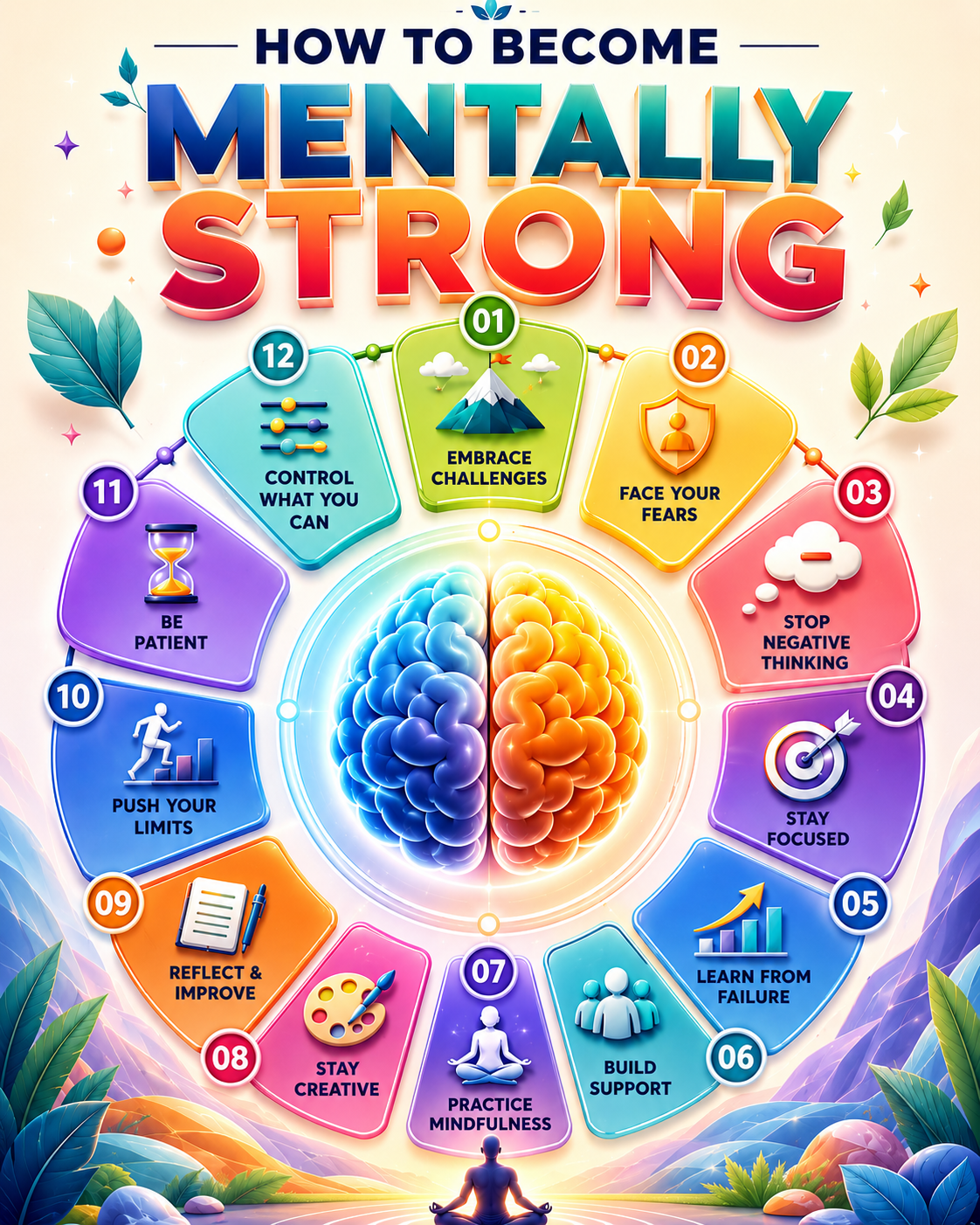
In today’s high-pressure, fast-paced world, building a resilient mindset is no longer just a ‘nice-to-have’ skill—it is essential for your long-term health, productivity, and happiness. Whether you are dealing with a difficult career transition, personal relationship hurdles, or just the everyday stress of modern living, the way you process your thoughts determines your reality. Let’s dive deep into 12 powerful, actionable habits that will help you build mental fortitude from the inside out.

1. Treating Challenges as Your Training Ground
The most mentally strong individuals don’t look for the path of least resistance. Instead, they view every challenge, roadblock, and difficult situation as a masterclass in growth. Think of it like physical exercise: you don’t build muscle by lifting air; you build it by putting your body through resistance. The same applies to your mind.
When you shift your perspective to see obstacles as opportunities to sharpen your skills, your fear of failure begins to evaporate. You stop asking, “Why is this happening to me?” and start asking, “What is this teaching me?” This fundamental shift is the bedrock of resilience.
2. Facing Your Fears Head-On
We all have fears. Whether it is the fear of rejection, the fear of public speaking, or the fear of the unknown, these emotions are hardwired into our biology. However, letting fear dictate your life is the fastest way to shrink your potential. Mentally strong people acknowledge their fear, but they don’t let it sit in the driver’s seat.
By taking small, calculated risks and pushing past your comfort zone, you build a “confidence bank.” Every time you do something that scares you, you prove to yourself that you are capable of handling discomfort. Over time, those big, scary fears start to feel like manageable hurdles.
3. Mastering the Art of Cognitive Reframing
Your thoughts dictate your feelings, and your feelings drive your actions. If you are constantly telling yourself, “I’m not good enough,” or “Everything is going to go wrong,” your brain will look for evidence to support those claims. This is where cognitive reframing comes in.
Instead of letting negative thoughts spiral, challenge them. Ask yourself: “Is this thought actually true? Is there a more balanced way to look at this?” By catching these negative loops and swapping them for realistic, constructive alternatives, you can drastically reduce your stress and improve your overall emotional regulation.
4. Staying in Your Own Lane
In the era of social media, it is incredibly easy to fall into the comparison trap. You see someone else’s highlight reel and start questioning your own behind-the-scenes reality. This is a recipe for anxiety and dissatisfaction. Mentally strong people understand that everyone is on a unique timeline.
True success isn’t about beating others; it is about being better than you were yesterday. When you focus entirely on your own growth, goals, and values, you reclaim the energy you would otherwise spend on envy. Remember, you only have full control over one person’s life: yours.
5. Redefining Failure
Society often treats failure like a scarlet letter. But in reality, failure is simply data. It is the most effective way to learn what doesn’t work so you can pivot toward what does. If you aren’t failing occasionally, you probably aren’t aiming high enough.
When you stumble, don’t waste time on self-shame. Analyze the situation objectively, extract the lesson, and adjust your strategy. This analytical approach keeps you moving forward rather than getting stuck in a loop of regret.
6. Investing in Your Support System
The myth of the “self-made person” is just that—a myth. We are social creatures who thrive on connection. Having a strong support network is one of the best predictors of mental health and long-term resilience. These are the people who will cheer for your wins and hold you up during your losses.
Don’t be afraid to lean on mentors, friends, or family. Vulnerability isn’t a sign of weakness; it is a sign of wisdom. Knowing when to ask for help is a hallmark of someone who is truly mentally strong.
7. The Power of Mindfulness
Mindfulness is often misunderstood as just sitting in silence, but it is actually a high-level cognitive skill. It is the ability to observe your thoughts and feelings without being hijacked by them. When you are mindful, you are present in the moment, which significantly lowers cortisol levels and prevents the “what-if” anxiety loop.
Even just five minutes of deep breathing or focused observation each day can rewire your brain to stay calm under pressure. By training your mind to be present, you gain a massive advantage in decision-making and emotional stability.
8. Embracing Creative Outlets
Creativity is more than just making art; it is a form of cognitive flexibility. When you engage in creative hobbies—whether it is cooking, writing, gardening, or coding—you are forcing your brain to think outside its usual patterns. This helps reduce stress and prevents mental fatigue.
Think of creativity as a “mental reset button.” When you are deeply engaged in a task that requires your focus and imagination, you get into a state of flow. This flow state is incredibly restorative for the mind and helps build the inner strength needed to tackle complex problems.
9. Cultivating a Habit of Self-Reflection
If you aren’t reflecting, you aren’t growing. It’s easy to get caught up in the grind, moving from one task to the next without pausing to see if you’re actually heading in the right direction. Set aside time each week for a “mental check-in.”
Ask yourself: What were my biggest wins? Where did I get stuck? How did I handle stress? By regularly reviewing your progress, you turn your life into a deliberate practice rather than a series of reactions.
10. Consistently Pushing Your Limits
Mental strength is a muscle that needs consistent exercise. You don’t have to overhaul your life overnight, but you should consistently look for ways to step just outside your current capabilities. This could be learning a new language, starting a difficult project, or finally addressing a habit you’ve been meaning to break.
Every time you push yourself, you increase your tolerance for discomfort. The more comfortable you become with being uncomfortable, the more resilient you become in the face of life’s unexpected challenges.
11. The Virtue of Patience
In a world of instant gratification, patience is a superpower. Many people give up on their goals because they don’t see immediate results. But real, lasting change—whether it’s building mental toughness or changing your lifestyle—takes time.
Embrace the process. Understand that there will be plateaus and setbacks. By adopting a long-term mindset, you remove the pressure to be perfect and give yourself the grace needed to keep going even when progress feels slow.
12. Focusing on Your Circle of Control
Finally, the most powerful habit of all is learning to distinguish between what you can control and what you cannot. You cannot control the weather, the economy, or other people’s opinions. You can, however, control your attitude, your effort, and your daily actions.
When you stop wasting emotional energy on things you cannot influence, you suddenly have a massive surplus of energy to pour into the things you can. This focus is the ultimate secret to staying calm and effective, no matter what is happening around you.
The Bottom Line: Your Mindset is a Choice
Building mental strength is a lifelong journey, not a destination. It requires patience, consistency, and a healthy dose of self-compassion. You don’t have to be perfect, and you don’t have to be fearless. You just have to be willing to show up for yourself every single day.
By integrating these habits into your daily routine, you are doing more than just building resilience—you are creating a version of yourself that is better equipped to handle whatever life throws your way. Start small, stay consistent, and watch how your inner world transforms.