Feeling that oppressive heat creeping in? Summer heatwaves and even just a scorching hot day can leave you feeling sluggish, irritable, and completely drained. When your body’s internal thermostat is working overtime to keep you cool, knowing how to shed that excess heat quickly is crucial for maintaining your energy levels and, more importantly, avoiding dangerous heat-related illnesses. ⚡
Your body has natural cooling mechanisms, primarily through sweating and regulating blood flow. However, extreme temperatures or intense physical activity can easily overwhelm these systems. 💧 That’s where smart cooling strategies come in. By targeting specific areas and employing simple techniques, you can help your body’s vascular network release heat efficiently, bringing you instant relief and protecting your vital organs. 🧠
So, how exactly can you cool down your body temperature quickly and safely?
The secret often lies in applying cool (not freezing!) sensations to key areas, sipping water strategically, misting your skin, and adjusting your environment. We’ll dive into 14 science-backed methods that can help you beat the heat, ranging from immediate relief techniques to smart lifestyle adjustments. Let’s explore these practical, medically-supported strategies to keep you comfortable and safe all season long! 🧊

🎯 Targeted Vascular Cooling: Instant Relief at Your Pulse Points ⚡
Think of certain spots on your body as major expressways for your blood vessels. These are your pulse points, where major arteries run close to the surface of your skin. 🩺 By cooling these specific areas, you’re effectively cooling the blood as it flows through them. This cooled blood then circulates throughout your entire body, helping to lower your core temperature much faster than just applying cold to a random spot. ❄️
Here’s how to leverage this powerful technique:
- Apply cold compresses or ice packs (wrapped in a thin towel!) to your wrists and temples. These areas are rich in blood vessels, making them prime spots for rapid heat exchange.
- Rest ice packs under your armpits and in your groin area. These are two other key locations where large blood vessels are close to the skin, allowing for significant cooling of the blood.
- Soak your feet in a basin of cool water for about 10-15 minutes. Your feet have a vast network of blood vessels, and this can be surprisingly effective for overall body cooling.
- Run cold tap water over your inner forearms. This is a quick and easy method to cool down after being exposed to the heat.
Because these pulse points are so accessible to the surface, applying cold there provides almost immediate thermal relief. 💓 This trick is a lifesaver when you’re feeling suddenly overheated, whether from sitting in a hot car or just walking around outside on a sweltering day. 🚗
Pairing this targeted cooling with a gentle breeze from a fan can amplify the sensation of freshness and provide immediate comfort across your entire nervous system. 🌬️
📌 Key Takeaway
Targeting your pulse points with cold applications is one of the fastest ways to lower your body temperature because it directly cools the blood before it circulates to your vital organs like your heart and brain.
💧 Strategic Hydration: Cooling From the Inside Out 🥤
Sweating is your body’s natural air conditioner, but when you’re losing a lot of fluids and electrolytes, your ability to sweat efficiently diminishes. 📉 Staying properly hydrated is absolutely essential for keeping your internal temperature regulation system running smoothly. 🧠
Here’s how to hydrate smart when it’s hot:
- Sip cool or room-temperature water steadily throughout the day. Avoid chugging ice-cold drinks, which can shock your system.
- Snack on high-water-content foods. Think watermelon, cucumbers, strawberries, oranges, and celery – these are nature’s hydration boosters!
- Replenish lost electrolytes. If you’re sweating heavily, consider a light electrolyte powder mixed with water to replace essential minerals like sodium and potassium.
- Enjoy chilled herbal teas. Peppermint or chrysanthemum teas can be both hydrating and offer a subtle cooling effect.
While downing a glass of ice water might sound appealing, it can actually lead to stomach cramps and cause your blood vessels to constrict, potentially trapping heat inside your body. 🌊 Opting for cooler, but not frigid, water allows your digestive system to absorb fluids more effectively. Foods packed with water also provide vital minerals that help maintain cellular function and energy levels during hot weather. 🥗
⚠️ Common Mistake
Drinking large amounts of ice-cold water too quickly can cause stomach spasms and constrict peripheral blood vessels, which can paradoxically make it harder for your body to release heat.
🌬️ Evaporative Cooling Techniques: Boosting Your Natural Sweat 💨
Sweat is incredibly effective at cooling you down, but only when it can evaporate off your skin and into the air. 🍃 When the air is humid or there’s no breeze, this natural process slows down. Helping this evaporation along can significantly speed up heat release. 🚿
Try these evaporative methods:
- Mist yourself with cool water while sitting in front of a fan. The fan accelerates the evaporation of the water droplets on your skin, creating a powerful cooling effect.
- Take a lukewarm shower or bath. Resist the urge for an ice-cold blast! A lukewarm shower is more effective for long-term cooling.
- Drape a damp, cool towel over your shoulders or neck. This provides continuous evaporative cooling right where major blood vessels are located.
- Use peppermint oil sprays. A light mist of water with a drop or two of peppermint essential oil can provide a refreshing, cooling sensation.
A lukewarm shower is actually more beneficial than a freezing cold one. 🚿 Ice-cold water can cause your body to conserve heat by constricting blood vessels and even shivering, while lukewarm water helps to open up your pores and keep blood vessels dilated, allowing heat to escape more freely. 🛁 The menthol in peppermint oil interacts with your skin’s cold receptors, tricking your brain into feeling cooler, even if the room temperature hasn’t changed. 🌿
🧠 Expert Insight
Menthol, found in peppermint oil, stimulates specific nerve receptors (TRPM8) in your skin. This stimulation sends signals to your brain that create a cooling sensation, making you feel refreshed without actually lowering your core body temperature drastically.
🏡 Smart Environment and Clothing Choices for Heat Waves 👕
Your surroundings and what you wear play a huge role in how much heat your body absorbs and retains, especially during peak sunshine hours. ☀️ By making smart adjustments to your environment and wardrobe, you can reduce the workload on your body’s cooling systems. 🚪
Here’s how to optimize your space and attire:
- Wear loose-fitting, light-colored clothing made from natural, breathable fabrics like cotton or linen. These materials allow air to circulate and moisture to evaporate.
- Keep your home cool by closing blinds and curtains on sun-facing windows during the hottest parts of the day. Blocking direct sunlight prevents your indoor spaces from heating up like an oven.
- Create cross-ventilation by opening windows on opposite sides of your home, especially at night. This allows cooler evening air to flush out the accumulated heat.
- Turn off unnecessary electronics and heat-generating appliances. TVs, computers, and even light bulbs can add significant heat to a room.
Tight, synthetic clothing traps heat and moisture against your skin, creating a personal sauna. 🧵 In contrast, loose natural fibers allow air to flow freely, wicking away sweat and promoting evaporation. 🌾 Blocking the sun’s rays before they hit your windows and furniture keeps your living space cooler, making it easier to relax and sleep soundly. 🌙
💡 Quick Tip
Create a DIY swamp cooler! Place a bowl filled with ice directly in front of a portable fan. As the ice melts, the fan will blow cooler, slightly humidified air into the room, offering a localized cooling effect.
📊 Understanding the Difference: Heat Discomfort vs. Heat Exhaustion 🚨
It’s vital to recognize the early warning signs of heat-related illness. Knowing the difference between feeling uncomfortably hot and experiencing actual heat exhaustion can help you take the right action quickly, preventing a minor issue from becoming a serious medical emergency. 📋
Here’s a breakdown of the signs:
- Mild Overheating: You might feel slightly flushed, notice mild sweating, experience thirst, and feel a bit fatigued. Action: Drink water, find a cooler spot, and rest.
- Heat Exhaustion: Symptoms include heavy sweating, pale and clammy skin, dizziness, muscle cramps, nausea, and a rapid, weak pulse. Action: Move to a cool place immediately, lie down with your legs elevated, loosen clothing, sip water, and seek medical attention if symptoms don’t improve quickly.
- Heat Stroke Emergency: This is a life-threatening condition. Signs include a very high body temperature (103°F or higher), hot and dry skin (or sometimes heavy sweating), confusion, vomiting, throbbing headache, slurred speech, and loss of consciousness. Action: CALL EMERGENCY MEDICAL SERVICES (911 or your local equivalent) IMMEDIATELY.
If you start feeling dizzy, nauseous, or experience muscle cramps, stop all physical activity immediately and get to the coolest place you can find. 🛌 Lying down with your legs slightly elevated can help improve blood flow to your brain. 🧠
Never hesitate to seek professional medical help if your symptoms are severe or don’t improve within about 30 minutes of cooling down. 🏥
🏆 Best Practice
During extreme heat waves, schedule any strenuous outdoor activities, like exercising, gardening, or running errands, for the early morning hours (before 9 AM) when temperatures and humidity are typically at their lowest.
📌 Quick Recap: Your Cooling Down Checklist 📌
Let’s quickly summarize the most effective strategies for staying cool, calm, and protected when the temperatures soar:
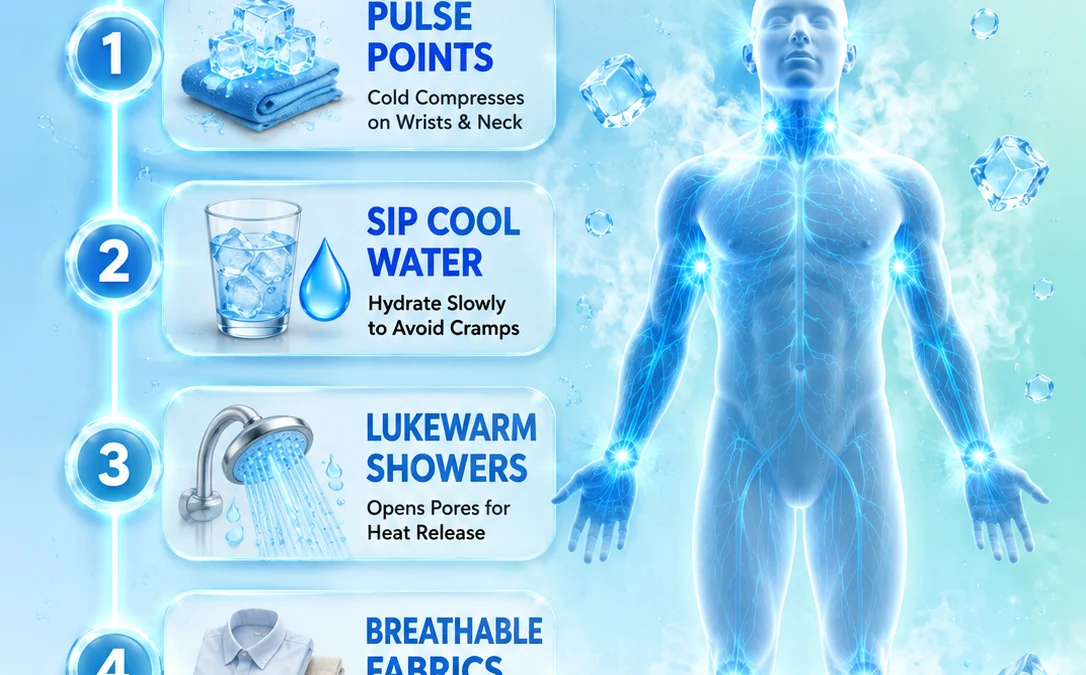
- Pulse Point Power: Apply cold compresses to wrists, neck, and temples for rapid systemic cooling.
- Hydrate Wisely: Sip cool water steadily and eat water-rich foods to support natural sweating.
- Lukewarm, Not Icy: Opt for lukewarm showers to keep blood vessels dilated for effective heat release.
- Breathable Fabrics: Wear loose-fitting cotton or linen to allow sweat to evaporate freely.
- Know the Signs: Be aware of dizziness, nausea, and other symptoms of heat exhaustion and act fast.
🏁 Final Thoughts: Master Your Thermal Health This Summer 🌿
Effectively managing high temperatures is all about working *with* your body’s natural cooling mechanisms, not against them. 🌿 By integrating these science-backed strategies – from targeted pulse-point cooling and smart hydration to simple environmental adjustments – you can navigate even the most intense summer weather safely and comfortably. 🎯
The most crucial takeaway? Listen to your body! Pay attention to those early physical signals. Take breaks, seek shade, and give your internal thermostat the support it needs to keep you feeling energized and well all summer long! 🌟