Ever feel like your day starts in a fog, and you’re playing catch-up before you’ve even had your first sip of coffee? You’re not alone! The way you kick off your morning can be a massive predictor of your overall productivity, focus, and even your mood for the rest of the day. Think about it: those first 60 minutes after waking up set the tone for the next 16 hours. If you’re hitting snooze multiple times, scrolling through stressful emails before your eyes are fully open, or rushing out the door with a lukewarm coffee, you’re likely starting your day already feeling drained and reactive. But what if the secret to unlocking peak performance isn’t about adding more to your morning, but about strategically removing the habits that are holding you back?
Here at BestRated.top, we’re all about helping you live your best life by cutting through the noise and identifying what truly works. Today, we’re diving deep into the 12 common morning habits that are silently sabotaging your productivity, focus, and overall well-being. It’s time to ditch these energy-drainers and reclaim your mornings, your focus, and your happiness. Let’s get started on transforming your daily routine! ⚒

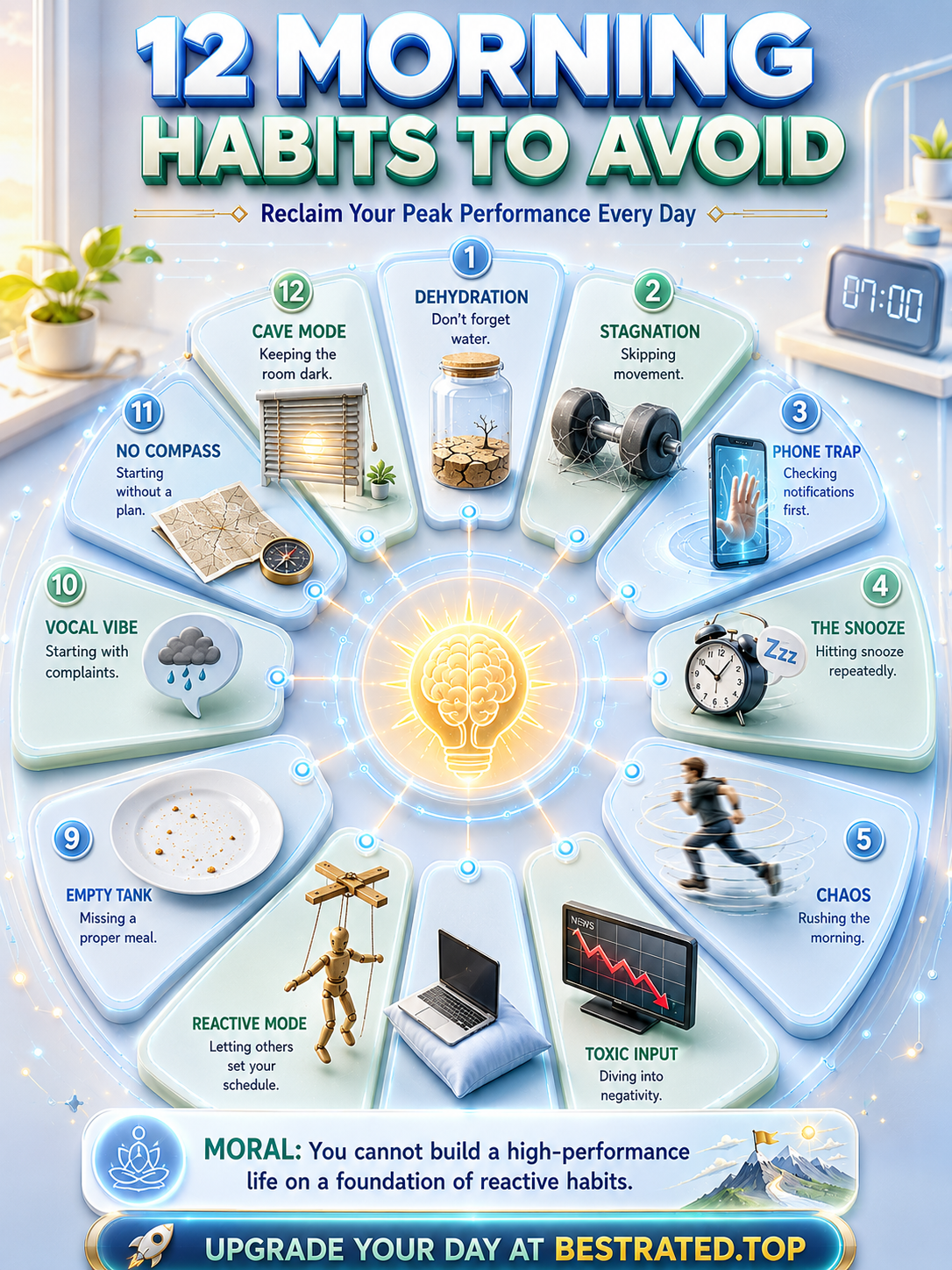
1. Forgetting to Hydrate: The Water Wake-Up Call ☁
You’ve just spent 7-9 hours sleeping, and guess what? Your body is in a state of dehydration. It’s craving water, not caffeine! Many of us reach for that dark roast coffee first thing, but coffee is a diuretic – meaning it actually makes you lose fluids. This can exacerbate dehydration and contribute to that sluggish feeling.
- The Smart Swap: Before you even think about coffee or tea, chug 16 ounces of room-temperature water. This simple act kickstarts your metabolism, helps flush out toxins, rehydrates your cells, and clears that morning brain fog faster than you can say “caffeine.” It’s the ultimate natural energy booster!
2. Skipping Movement: The Sedentary Start Trap ⚔
It’s tempting to stay curled up in bed, but being completely sedentary right after waking up isn’t doing your body any favors. While you don’t need to run a marathon, prolonged inactivity can keep your stress hormone, cortisol, elevated and your energy levels low. Think of it as keeping your body in ‘sleep mode’ for too long.
- The Energizing Fix: Incorporate even just five to ten minutes of light movement. This could be gentle stretching, a few yoga poses, or a brisk walk around the block. This signals to your nervous system that it’s time to wake up and perform, boosting circulation and preparing your body for the day ahead.
3. Reaching for Your Phone Instantly: The Digital Drip Feed ⛔
This is arguably one of the most detrimental habits you can have. As soon as you wake up, grabbing your phone and diving into emails, social media, or the news is like handing over the reins of your day to everyone else. You immediately get bombarded with other people’s agendas, stressful updates, and the endless cycle of social comparison, all before your brain has even had a chance to fully wake up and set its own intentions.
- The Danger Zone: This habit forces your brain into a constant state of ‘reaction’ mode, rather than proactive ‘intention’ mode. You spend your precious morning energy responding to external demands instead of focusing on what truly matters to you. ⚠
- The Productivity Power-Up: Designate a ‘no-phone zone’ for at least the first 30-60 minutes after waking. Use this time for activities that serve *you*, like hydrating, moving, or planning your day.
4. Hitting Snooze Repeatedly: The Grogginess Generator ⌛
Ah, the snooze button. It feels like a small victory, a few extra minutes of comfort. But in reality, hitting snooze doesn’t give you restorative rest. Instead, it fragments your sleep cycle. Each time you drift back to sleep for those brief intervals, you enter a different sleep stage, and then you’re jolted awake again. This process leads to ‘sleep inertia’ – that heavy, groggy feeling that makes you feel even more tired than if you had just gotten up the first time your alarm went off.
- The Wake-Up Strategy: The most effective trick? Place your alarm clock across the room. This forces you to physically get out of bed to turn it off, breaking the snooze cycle and making it much harder to fall back asleep.
5. Rushing Through Your Morning: The Stressful Sprint ⏳
If your mornings are a constant race against the clock, you’re essentially starting your day in a state of ‘fight or flight.’ This elevated stress response, triggered by the pressure of being late, can have lingering effects. It primes your body for stress, making it harder to engage in focused, creative thinking or make calm, rational decisions later in the day. Your brain is too busy managing the perceived threat of being late to perform at its best.
- The Calm Approach: Build a little buffer time into your morning routine. Even 15-20 extra minutes can make a world of difference, allowing you to move with intention rather than panic. Prepare as much as possible the night before – lay out clothes, pack lunches, organize your workspace.
6. Consuming Negativity: The Mental Contamination ⚠
What you expose your mind to first thing in the morning can significantly color your entire day. Whether it’s doom-scrolling through negative news headlines, engaging with a toxic group chat, or even just succumbing to self-critical thoughts, starting your day with negativity acts like a stain on your mental filter. It primes you to look for problems rather than solutions, fostering a pessimistic outlook.
- The Positive Pivot: Be intentional about your morning input. Choose uplifting podcasts, inspiring articles, or simply focus on positive affirmations. If you must check news or messages, do it after you’ve established a positive mindset. ⚙
7. Working From Bed: The Sanctuary Slipper ⛔
Your bed should be a sacred space dedicated to rest, relaxation, and sleep. When you start blurring the lines by bringing your laptop, work emails, or tasks into bed, you disrupt this crucial boundary. Your brain begins to associate your bed with stress and wakefulness, rather than sleep and recovery. This can lead to a host of problems, including difficulty falling asleep (insomnia) and a general decrease in your work efficiency because your mind is constantly stressed.
- The Boundary Builder: Keep your bedroom – and especially your bed – a work-free zone. If you need to start working early, do it at a desk or a designated workspace.
8. Letting Others Dictate Your Schedule: The Reactivity Trap ☰
Is your first ‘productive’ task of the day replying to DMs, emails, or messages? If so, you’re not setting your own priorities; you’re letting others do it for you. This reactive approach means you’re constantly jumping to address external demands, often before you’ve even had a chance to focus on your own most important goals. It’s a surefire way to end the day feeling busy but not necessarily accomplished.
- The Proactive Plan: Dedicate the first hour of your workday (or even just the first 60 minutes after waking, if your schedule allows) to your most crucial tasks – your ‘Deep Work.’ Tackle your ‘Most Important Task’ (MIT) before you even glance at your inbox or notifications. ★
9. Skipping a Proper Breakfast: The Energy Void ✍
Breakfast literally means ‘breaking the fast’ – the period of sleep when your body has been without fuel. Skipping this vital meal or opting for a sugary, low-nutrient pastry means you’re starting your day with an energy deficit. A balanced breakfast, rich in protein and healthy fats, is essential for stabilizing your blood sugar levels. Without it, you’re setting yourself up for a dreaded mid-morning energy crash that no amount of coffee can truly fix. You’ll feel tired, unfocused, and prone to reaching for unhealthy snacks.
- The Fueling Formula: Aim for a breakfast that includes protein (eggs, Greek yogurt, protein powder), healthy fats (avocado, nuts, seeds), and complex carbohydrates (oatmeal, whole-grain toast). This combination provides sustained energy release and keeps you feeling full and focused.
10. Starting Your Day with Complaints: The Victim Mindset Magnet ⚖
The very first thoughts and words you utter (or even think) in the morning have a powerful influence on your overall mindset and ‘vibration’ for the day. If you wake up and immediately start complaining about being tired, how much you have to do, or how difficult things are, you are reinforcing a victim mentality. You’re telling your brain to focus on the negatives and expect challenges, which can become a self-fulfilling prophecy.
- The Gratitude Game-Changer: Flip the script! Instead of complaining, start your day with a brief gratitude practice. Take just one minute to think of three things you are genuinely thankful for. This simple shift can profoundly impact your outlook, fostering a more positive and empowered mindset. ☯
11. Beginning the Day Without a Plan: The Decision Fatigue Drain ✏
Wandering into your day without a clear sense of purpose or a defined plan is a recipe for decision fatigue. When you don’t know what your top priorities are, you spend your most valuable mental energy – especially in the morning when your mind is freshest – trying to figure out *what* to do. This constant decision-making drains your cognitive resources, leaving you less effective for the actual tasks you need to accomplish. It’s like trying to drive without a map; you’ll get somewhere, but it won’t be efficient.
- The Planning Power: Before you end your workday or first thing in the morning, identify your ‘Top 3’ most important tasks for the day. Write them down. This clarity eliminates guesswork and allows you to dive straight into focused action.
12. Keeping Your Room Dark: The Circadian Rhythm Saboteur ☀
Light is a powerful signal for your body’s internal clock, known as the circadian rhythm. Exposure to natural light, especially in the morning, tells your brain that it’s time to wake up and suppresses the production of melatonin, the hormone that makes you feel sleepy. If you keep your bedroom curtains drawn and stay in a dark environment for too long after waking, your body may continue to produce melatonin, leaving you feeling groggy and disoriented.
- The Light Hack: As soon as you wake up, throw open those curtains! If possible, step outside for just two minutes of natural sunlight. This simple act helps to ‘reset’ your internal clock, signaling to your body that a new day has begun and boosting alertness. ☀
The Profound Psychological Impact of a Controlled Morning ⚙
Mastering these 12 habits is about so much more than just ticking boxes on a productivity checklist. It’s fundamentally about cultivating self-respect and taking ownership of your day. Every time you choose to drink water instead of mindlessly scrolling through Instagram, or opt for a planned task over hitting the snooze button, you are sending a powerful message to yourself: your time, your focus, and your mental well-being are incredibly valuable. This conscious decision-making builds self-efficacy and a sense of control.
The benefits extend far beyond just feeling less rushed. Research consistently shows that individuals who consciously avoid these common ‘morning traps’ and implement more intentional routines often report significant improvements:
- Up to 40% Higher Focus: By eliminating digital distractions and reactive tasks in the crucial early hours, you can dedicate your prime mental energy to what truly matters. ★
- Significantly Lower Cortisol Levels: Habits like rushing, consuming negativity, and starting the day stressed can keep your cortisol (the stress hormone) elevated. By replacing these with calming, intentional activities, you reduce physiological stress. ☯
- Potential for Increased Longevity and Well-being: Better hydration, regular movement, reduced stress, and improved sleep quality (by not disrupting your circadian rhythm) all contribute to overall health and potentially a longer, more vibrant life. ✅
Crafting Your Winning Morning Routine ★
It’s a fundamental truth: You cannot build a high-performance life, a successful career, or a deeply fulfilling existence on a foundation of reactive, haphazard habits. True success isn’t usually the result of one grand, heroic effort; it’s the cumulative outcome of small, consistent, disciplined choices made day after day, especially during those critical pre-9:00 AM hours. By consciously identifying and removing these 12 common friction points – these productivity killers – you are clearing the path. You’re creating fertile ground for your best work, your sharpest thinking, and your most resilient self to emerge.
Stop letting your morning simply happen to you. It’s time to take the reins and consciously make it happen for you. This is your opportunity to design a morning that sets you up for success, not stress.
Ready to unlock your full potential? Head over to BestRated.top for more expertly curated rankings, actionable tips, and in-depth guides on health, wellness, productivity, and personal growth. Start your transformation journey tomorrow morning and experience the difference a deliberate start can make! ☀ ★