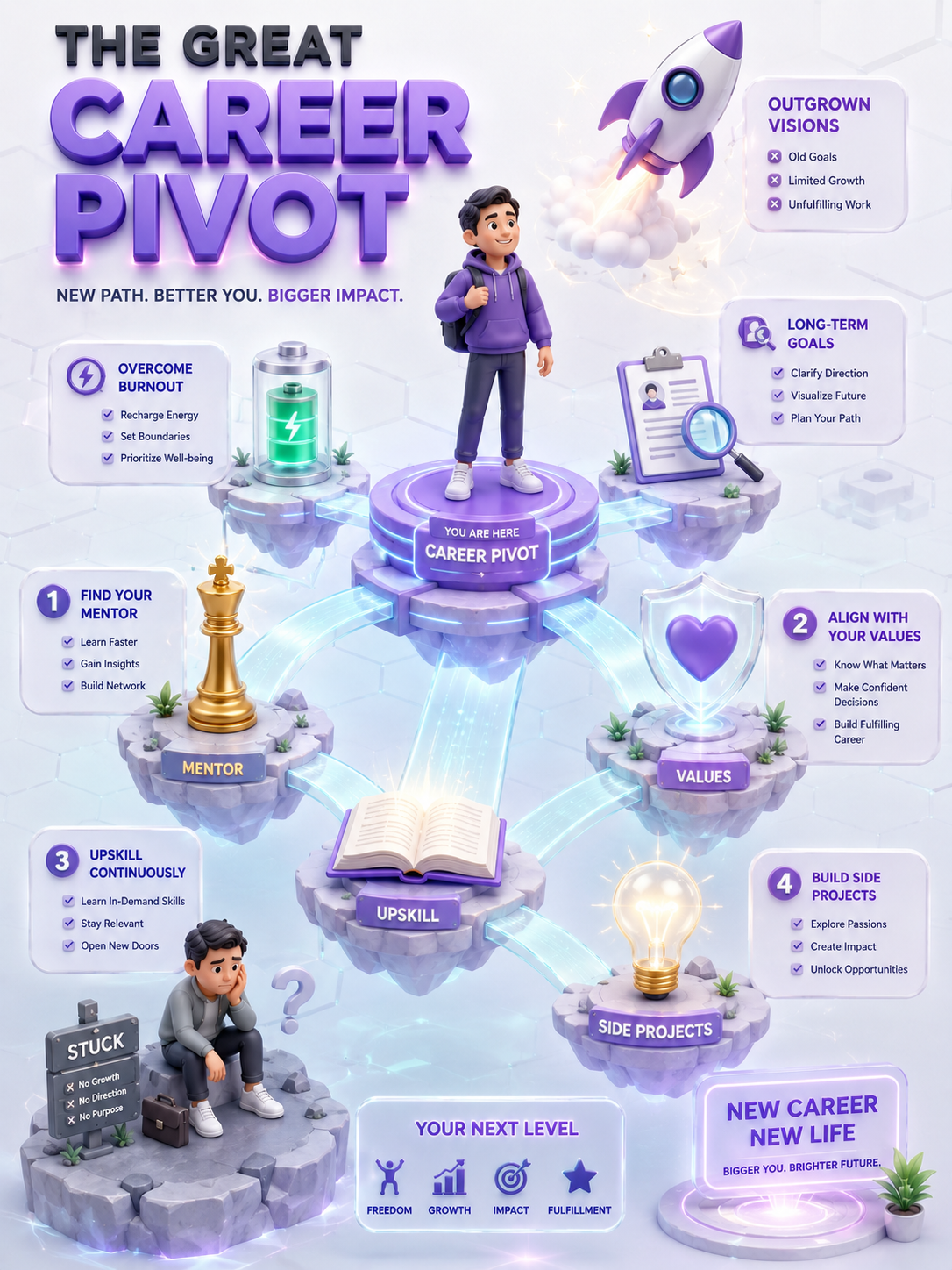
Hey there! Ever get that nagging feeling on a Sunday night that your job just… isn’t it anymore? You used to love it, remember? The excitement, the challenges, the feeling of being on top of the world. But now? It feels more like going through the motions. You’re not alone! It’s a common, yet deeply unsettling, realization that you might have simply outgrown your current career path. Think of it like a plant that’s become too big for its pot – it’s time for a bigger, brighter space to bloom.
Recognizing these signals early is super important. It’s your career’s way of telling you it’s time for a change, and paying attention can save you from the dreaded burnout and steer you toward a role that truly reignites your passion. So, let’s dive deep into the seven critical signs that scream ‘It’s time to move on!’ and, more importantly, how to navigate that pivot successfully. Ready to explore your next chapter?

1. Your Professional Growth Feels Completely Stagnant ⛔
Let’s be honest, nobody likes feeling stuck in neutral. If your daily grind feels like a carbon copy of yesterday, and tomorrow looks exactly the same, that’s not just boredom knocking – it’s a major red flag! When you’re no longer learning, challenged, or pushing your boundaries, your career can start to feel like a treadmill that’s stuck on the lowest setting. This lack of forward momentum can quickly lead to a decline in your skills, a dip in your motivation, and a general feeling of ‘Is this all there is?’
What’s really happening? You’ve mastered your current tasks, and there are no new horizons to explore within your existing role. The skills you’re using are becoming stale, and the mental stimulation you crave is nowhere to be found. This stagnation isn’t just a minor inconvenience; it can actively erode your confidence and make you feel like you’re falling behind in your field. It’s like trying to keep a plant alive in a tiny pot – it needs more space to grow!
The Fix: First, try to inject some new life into your current role. Can you volunteer for a new project? Can you take on additional responsibilities that stretch your abilities? Have a conversation with your manager about potential growth opportunities within the company. If internal options are limited, it’s a strong signal that it’s time to start exploring external opportunities. Look for roles that offer clear pathways for learning, development, and advancement. Don’t be afraid to seek out that bigger pot!
2. Your Personal Values No Longer Align with the Company ⚖
Your career is a significant part of your life, and it should ideally reflect who you are and what you believe in. When the company’s mission, its leadership’s actions, or the overall workplace culture start to clash with your core values, it’s like wearing shoes that are two sizes too small – it’s uncomfortable and unsustainable. You might find yourself questioning decisions, feeling uneasy about the company’s direction, or even experiencing guilt about the work you’re doing.
What’s really happening? This misalignment creates internal conflict. You might be asked to do things that go against your moral compass, or the company’s priorities might simply be so far removed from what you deem important that you feel like an outsider. This can lead to a persistent sense of frustration, cynicism, and a feeling of being inauthentic. The mental toll of constantly battling your own beliefs versus your work environment can be incredibly draining and toxic.
The Fix: Start by clarifying your own core values. What is non-negotiable for you in a workplace? What kind of impact do you want to make? Once you have a clear picture, research companies and industries that genuinely align with those values. Networking becomes crucial here. Talk to people who work in fields or organizations that resonate with you. Attend industry events, join professional groups, and explore companies with strong Corporate Social Responsibility (CSR) initiatives if that’s important to you. Finding a workplace that shares your values will not only make your work more fulfilling but also significantly reduce your stress levels.
3. The Stress is Taking a Serious Toll on Your Health ⚠
Your body is incredibly perceptive. Long before your mind fully accepts that you’ve outgrown your career, your physical and mental health might start sending out distress signals. Chronic stress, persistent fatigue, sleep disturbances, anxiety, or even physical ailments like headaches and digestive issues can all be your body’s way of saying, ‘This isn’t working anymore!’ High performance and ambition are fantastic, but they should never come at the expense of your well-being. Your health is your most valuable asset, and no job is worth sacrificing it.
What’s really happening? When your job consistently demands more than you can sustainably give, or when the environment is inherently stressful, your body’s stress response system can become chronically activated. This ‘fight or flight’ mode, when constantly engaged, can lead to a cascade of negative health effects. Burnout isn’t just feeling tired; it’s a state of emotional, physical, and mental exhaustion caused by prolonged stress. It can rob you of joy, energy, and your ability to cope with everyday life, impacting not just your work but your personal relationships and overall quality of life.
The Fix: The first step is acknowledging the problem. If you’re experiencing these symptoms, it’s time to take them seriously. Identify your biggest stressors at work. Is it the workload, specific deadlines, a difficult colleague, or a lack of control? Once identified, you can start to address them. This might involve having an open conversation with your manager about workload or seeking support. It’s also vital to set firm boundaries – learn to say no, protect your personal time, and disconnect from work when you’re off the clock. Delegation, where possible, can also be a lifesaver. If these strategies aren’t enough, consider seeking professional help from a doctor or therapist, and explore roles that offer a healthier work-life balance.
4. You Feel Consistently Undervalued and Unseen ★
We all want to feel like our efforts matter, right? Knowing that your contributions are recognized and appreciated is a huge motivator. When you’re pouring your energy into your work, giving it your all, but your efforts consistently go unnoticed or unacknowledged by leadership, that disconnect can be incredibly disheartening. It’s like shouting into the void – you’re putting in the effort, but there’s no echo of appreciation coming back.
What’s really happening? This lack of recognition can breed resentment. Over time, you might start to feel taken for granted, as if your hard work is expected and not valued. This can erode your engagement and lead to a phenomenon known as ‘quiet quitting,’ where you do the bare minimum required, no longer investing discretionary effort because it feels unrewarded. It’s a natural defense mechanism against feeling exploited or overlooked. The psychological impact is significant; it can make you question your own worth and your place within the organization.
The Fix: Start by becoming your own advocate. Keep a detailed record of your accomplishments, projects you’ve led, and positive feedback you’ve received. During performance reviews or one-on-one meetings, proactively present this information. Don’t just wait to be asked; highlight your successes and the value you bring. Also, actively seek feedback – ask your manager and colleagues for constructive criticism and suggestions for growth. This shows initiative and opens the door for discussions about your development and recognition. If, despite your best efforts, recognition remains elusive, it might be time to explore environments where your contributions are more likely to be seen and celebrated.
5. You’re More Excited About Side Projects Than Your Main Job ✏
Where does your mind wander when you’re bored at work? If your thoughts are consistently drifting to your passion projects, your freelance gigs, or that creative endeavor you’re pursuing in your ‘off’ hours, it’s a telling sign. The energy, enthusiasm, and creative spark you feel when working on these personal pursuits often dwarf the enthusiasm you have for your day job. Your ‘5 to 9’ (the hours after work) might be significantly more fulfilling than your ‘9 to 5’.
What’s really happening? This indicates that your true passions and interests lie outside your current professional role. Your current job might be paying the bills, but it’s not feeding your soul or igniting your imagination. When your side projects are where you feel most alive, most engaged, and most yourself, it means your current career path isn’t utilizing your full potential or tapping into what truly drives you. This can lead to distraction, decreased productivity in your main job, and a feeling of being unfulfilled.
The Fix: Embrace this! Your side projects are a treasure trove of information about what you truly love to do. Start by identifying the skills you’re using and developing in these passion projects. How can you leverage these skills in a professional setting? Consider upskilling in these areas – take courses, attend workshops, or pursue certifications. Then, begin exploring career paths that incorporate these interests. This might involve a gradual transition, perhaps by taking on more responsibilities related to your passion within your current company, or it could mean a more significant leap into a new field where your side hustle becomes your main hustle. It’s time to let your passion lead the way!
6. You Feel Disconnected From Leadership and Culture ♦
Leadership doesn’t just manage; they inspire. They set the tone, define the vision, and shape the overall culture of an organization. If you find yourself consistently disagreeing with the direction leadership is taking, questioning their decisions, or feeling a general lack of trust or inspiration from the top, it’s incredibly difficult to stay engaged and motivated. A disconnect from leadership often spills over into a broader cultural disconnect.
What’s really happening? When you can’t get behind your leaders, it’s hard to get behind the company’s mission or even the day-to-day tasks. This can create a sense of alienation and cynicism. You might start to view every directive as a chore rather than a contribution to a shared goal. A toxic or unsupportive culture, often perpetuated by leadership, can further exacerbate this feeling, making the workplace a place you dread rather than look forward to. This lack of connection can lead to disengagement, reduced collaboration, and a feeling of not belonging.
The Fix: Sometimes, navigating a challenging leadership or cultural landscape is possible. Look for allies and mentors within the organization who can offer guidance, support, and a different perspective. These internal champions can help you understand the dynamics at play and find ways to stay motivated or identify opportunities for positive change. If the disconnect is too profound, however, and the culture feels fundamentally misaligned with your needs, it’s a strong indicator that you need to seek an environment where leadership is more inspiring and the culture is more supportive. Look for companies with strong values, transparent communication, and a demonstrated commitment to employee well-being.
7. You’ve Outgrown the Company’s Long-Term Vision ⚑
What once felt like your dream job can, over time, start to feel like a stepping stone. This isn’t a negative reflection on the job itself, but rather a testament to your own growth and evolving aspirations. If you find yourself looking at the company’s five-year plan and realizing it doesn’t align with your own personal or professional long-term goals, it’s a clear sign that you’ve outpaced your current role or organization.
What’s really happening? You’ve reached a point where you feel, ‘I’ve done this, I’ve learned this, what’s next?’ The challenges that once excited you are now routine. The opportunities for advancement within the company are either non-existent or don’t align with where you want to go. This ‘been there, done that’ feeling can lead to a lack of ambition and a sense of being unfulfilled, even if the job is objectively good. Your personal growth trajectory has simply diverged from the company’s potential to support it.
The Fix: This is the perfect time for some serious introspection. Take the time to clearly define your long-term career goals. What do you want to achieve in the next 5, 10, or even 20 years? What kind of impact do you want to make? Once you have a clear vision, assess whether your current company can provide the path to get you there. If the answer is no, then it’s time to actively seek out organizations or roles that offer the growth, challenges, and opportunities that align with your aspirations. This might mean looking for roles with clear promotion tracks, opportunities to lead new initiatives, or companies in rapidly growing sectors that align with your future vision.
Don’t Settle for a Career That No Longer Fits ☀
Experiencing these signs isn’t a failure; it’s a natural and often exciting part of your professional journey. It means you’ve grown, learned, and are ready for what’s next! Think of it as your career compass pointing you toward a new, more fulfilling direction. Whether it’s about finding a mentor to help you navigate a tough workplace culture, upskilling to transform a passion project into your main gig, or simply seeking out a role that offers better growth potential, the power to pivot and create the career you truly desire is entirely within your hands.
Your career should be a dynamic engine for your personal and professional evolution, not a comfortable but confining cage. When these seven signs start to appear, pay attention. They are valuable indicators guiding you toward your next great adventure and a more aligned, fulfilling professional life. Don’t ignore them – embrace them as opportunities!
Are you ready to break free from stagnation and step into a phase of exciting growth? Visit bestrated.top today! We’re packed with career-transforming resources, actionable advice, and the tools you need to identify your next dream role and make that successful pivot. Let’s make your next career move your absolute best one yet! ⛓⚖