Ever notice how some folks seem to be magnets for conflict, toxic relationships, and just general emotional chaos? It’s like they’re walking through life with a drama-seeking radar. While it’s easy to chalk it up to bad luck, the truth is often more complex. More often than not, it’s about repeated patterns, ingrained habits, and fuzzy boundaries that inadvertently invite certain people and situations into their lives. If this sounds familiar, don’t worry – you’re not alone, and more importantly, you can change it. This deep dive is all about understanding *why* this happens and, crucially, *how* to break free from the cycle for good.
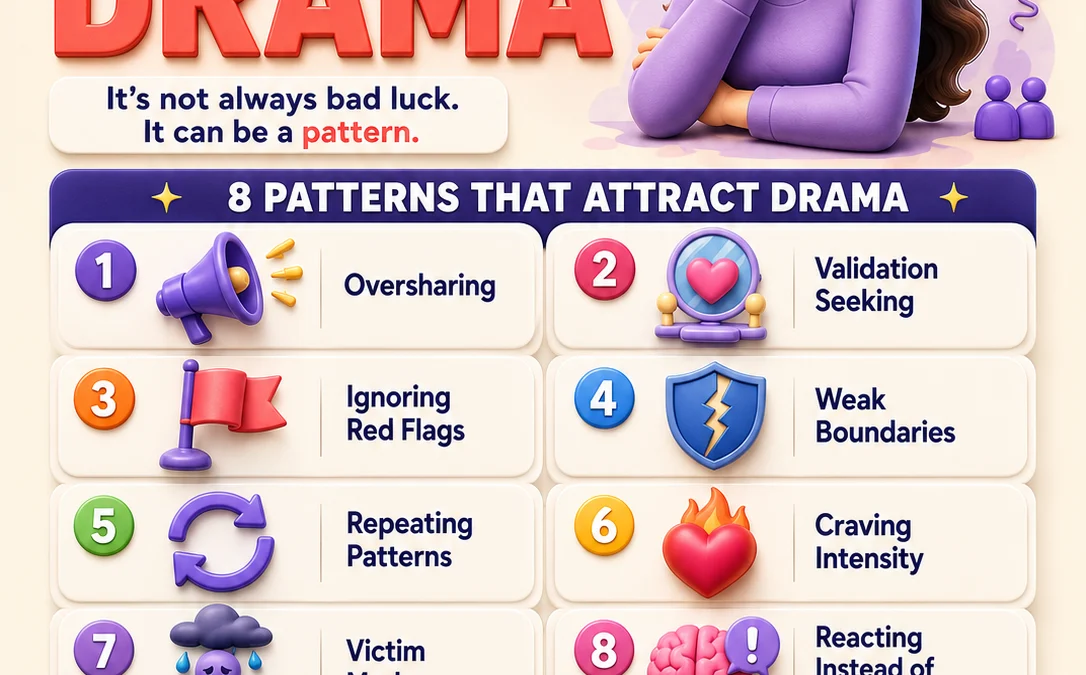
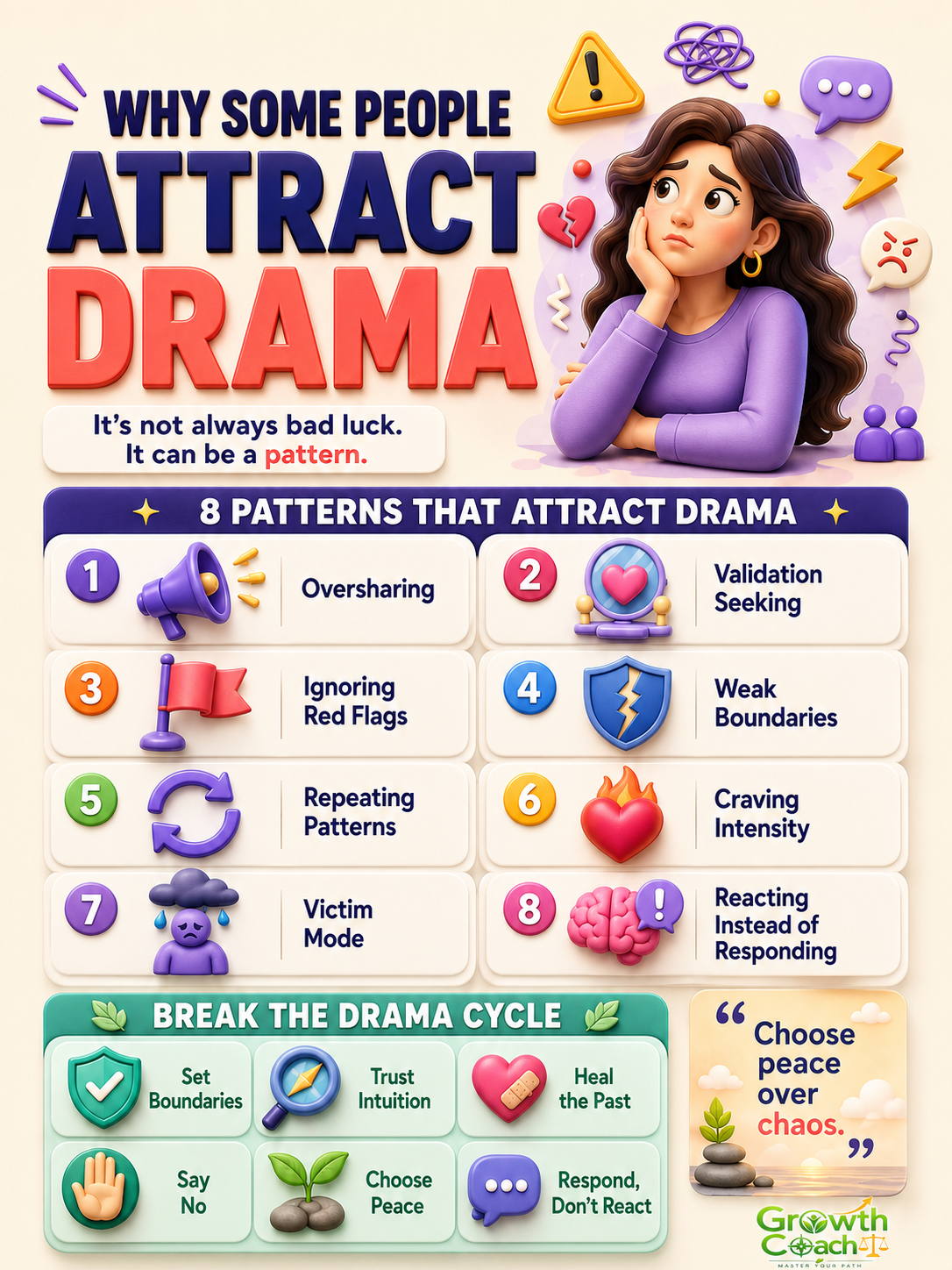
We’re going to explore eight common reasons why people might find themselves constantly entangled in drama. Think oversharing, a constant need for external validation, a tendency to ignore those pesky red flags, struggling to set firm boundaries, repeating unresolved issues from the past, mistaking excitement for genuine connection, getting stuck in a victim mentality, and reacting impulsively instead of responding thoughtfully. Sound like a familiar script? Keep reading!
We’ll also shine a light on the tell-tale signs that drama has become a recurring theme in your life. Are you feeling emotionally exhausted all the time? Is there a constant stream of conflict? Do other people’s problems somehow always end up on your plate? We’ll cover these and more.
But here’s the best part: this isn’t just about identifying the problem. We’re going to equip you with practical, actionable strategies to shatter that cycle. We’re talking about building rock-solid boundaries, learning to trust your gut (and back it up with facts!), healing old wounds, mastering the art of saying ‘no’ without an ounce of guilt, choosing peace over unnecessary turmoil, cultivating healthier connections, and responding to life’s challenges with intention and grace. The ultimate goal? Greater self-awareness, rock-solid emotional stability, truly fulfilling relationships, and a daily life that feels significantly calmer and more intentional.
When Drama Keeps Repeating, Look Beyond “Bad Luck”
Let’s be real: some people seem to navigate a perpetual storm of interpersonal conflict. One messy friendship bleeds into a toxic romantic entanglement, followed by workplace tension that escalates into yet another dispute. Suddenly, other people’s crises become their personal responsibility. It’s a tiring, relentless cycle.
It’s incredibly tempting to just throw your hands up and declare it’s just your unfortunate lot in life – pure bad luck. But when these conflicts keep popping up, again and again, it’s worth digging a little deeper. Often, this recurring pattern isn’t about cosmic misfortune but is intrinsically linked to our own habits, expectations, ingrained emotional responses, and, crucially, our boundaries – or lack thereof.
Now, before we go any further, let’s be crystal clear: this is NOT about blaming victims. We are absolutely not saying that anyone is responsible for the harmful, toxic, manipulative, or dishonest behavior of others. Those actions are choices made by the individuals perpetuating them. Full stop. However, by honestly examining our own patterns and behaviors, we can start to identify the situations that we might be, perhaps unintentionally, making it easier for ourselves to enter, tolerate, or even repeat. Understanding this crucial distinction is the first step toward building healthier relationships, establishing stronger emotional shields, and ultimately, finding lasting peace of mind.
So, instead of asking that frustrating question, “Why does drama keep finding me?”, let’s reframe it. A much more productive and empowering question to ask yourself is:
“What patterns might be making unhealthy situations easier to enter, tolerate, or repeat?”
This subtle shift in perspective is foundational. It moves you from a passive observer of your life to an active participant, ready to make conscious choices that lead to healthier connections and a more peaceful existence.
8 Reasons People May Attract Drama
🔹 1. Oversharing Creates Unnecessary Access
Being open and vulnerable can be a beautiful way to deepen connections. However, there’s a fine line between healthy sharing and oversharing. When we spill too much information too soon, or share details with too many people, we can inadvertently open the door for unsolicited opinions, judgment, gossip, or even outright interference in our lives. This might look like revealing deeply personal struggles before a solid foundation of trust has been built, discussing private conflicts with a wide circle of acquaintances, or feeling the need to constantly justify every single personal decision.
Effective communication isn’t just about *what* you say, but also *who* you say it to and *when*. It requires discernment. Not everyone in your orbit needs access to every intimate detail of your life. A simple, yet powerful, guiding principle here is: privacy is not the same as secrecy. Maintaining your privacy is about protecting your personal space and energy. Choosing carefully who you share what with, and when, can significantly reduce unnecessary interpersonal complications and keep the drama at bay. It’s about being intentional with your personal information.
🔹 2. Constantly Seeking Validation
We all appreciate a bit of encouragement and constructive feedback – it helps us grow! But when our sense of self-worth becomes heavily reliant on external approval, our relationships can become unnecessarily complicated. If your confidence hinges on what others think, you might find yourself tolerating attention-seeking behavior, putting up with subpar treatment, or constantly seeking reassurance about your decisions and actions. This external validation can become a crutch, making you vulnerable.
True validation is healthiest when it *complements* your existing self-confidence, not when it *replaces* it. Building that inner confidence means learning to evaluate your choices based on your own values, what you know to be true, your priorities, and your long-term goals. It’s about developing an internal compass that guides you, rather than constantly looking to others to tell you if you’re “good enough.” When you trust your own judgment, you become less susceptible to the whims and dramas of others.
🔹 3. Ignoring Red Flags
Red flags are those early warning signals – subtle (or not so subtle) indicators that a person, relationship, or situation might be heading towards unhealthy territory. These can manifest in many ways: consistent dishonesty, controlling tendencies, blatant disrespect for your boundaries, excessive jealousy, manipulative tactics, a perpetual cloud of negativity, or a consistent pattern of blaming everyone else for their problems. Ignoring these signals is like driving with your eyes closed – you’re bound to crash.
The key isn’t to be overly judgmental or to write people off based on a single imperfect moment. Instead, it’s about paying attention to consistent patterns of behavior. Do you see the same problematic actions repeating themselves? Healthy relationships don’t require you to turn a blind eye to warning signs in order to maintain the connection. Learning to recognize and respect these red flags is a critical skill for self-preservation and fostering genuine, healthy bonds.

🔹 4. Struggling With Boundaries
One of the most powerful shields you can erect against unnecessary drama is the ability to set and maintain clear, firm boundaries. Boundaries are not about controlling others; they are about defining what you will and will not accept in your interactions and relationships. When you consistently say “yes” when your inner voice is screaming “no,” you unintentionally create openings for manipulation, overcommitment, simmering resentment, and debilitating emotional exhaustion. It’s like leaving your front door wide open in a rough neighborhood.
Effective boundaries encompass several key areas:
🛡️ Protecting your personal time and energy: Knowing when to say no to requests that drain you.
🚪 Limiting access to your private information: Deciding who gets to know what about your life.
⏳ Saying no to unreasonable demands: Upholding your limits even when pressured.
💬 Communicating your expectations clearly: Letting others know what you need and expect.
⚖️ Refusing to take responsibility for others’ problems: Understanding what is and isn’t your burden to carry.
Remember, a boundary isn’t a punishment for someone else. It’s a definition of your own limits and a statement of your self-respect. It clarifies what you will participate in, accept, or continue. When you uphold your boundaries consistently, people learn how to treat you.
🔹 5. Repeating Unresolved Patterns
Our past experiences, especially those that were emotionally charged or left unresolved, can cast a long shadow over our present choices, particularly in relationships. For instance, if you grew up in an environment filled with instability and unpredictability, you might unconsciously find yourself drawn to intense or chaotic relationships because they feel familiar, even if they’re unhealthy. This isn’t to say that every difficult relationship stems from past trauma, but when you notice a recurring theme of similar conflicts or relationship dynamics playing out, it’s a strong signal to explore what might be unresolved within you.
Self-reflection is your best tool here. Look for recurring themes in your life:
🔍 Similar types of conflicts: Are you finding yourself in the same arguments or disagreements across different relationships or situations?
🔄 Familiar relationship dynamics: Do you consistently choose partners or friends who exhibit the same unhealthy traits or behaviors?
🧩 Overlooking the same warning signs: Are you repeatedly ignoring the same red flags that later lead to trouble?
💭 Feeling “comfortable” with stress: Do objectively stressful or dramatic situations feel strangely familiar or even normal to you?
Recognizing these patterns isn’t about assigning blame to yourself or others. It’s about gaining insight into your own behavior so you can make different, healthier choices moving forward. It’s an opportunity for growth.
🔹 6. Mistaking Excitement for Connection
Let’s face it, drama can be… exciting. The intense emotions, the highs and lows, the constant back-and-forth – it all produces a powerful emotional stimulation that can be addictive. Think constant arguments followed by passionate reconciliations, intense jealousy, unpredictable behavior, and a general sense of being on an emotional rollercoaster. This intensity, however, is often mistaken for deep intimacy or a strong connection. But intensity is not the same as a healthy, stable bond.
True, healthy connection often feels calmer, especially in the beginning. It’s built on a foundation of trust, consistency, mutual respect, and emotional safety. These qualities foster a sense of security rather than constant adrenaline. Remember, calm does not automatically mean boring. A peaceful, stable relationship can offer profound emotional depth and connection without the exhausting drama. It provides a sense of security and reliability that allows both individuals to thrive.
🔹 7. Staying Stuck in Victim Mode
Experiencing mistreatment, betrayal, or unfairness is never your fault. You are not responsible for the actions of others who harm you. However, if you find yourself consistently adopting a “victim” mentality – focusing solely on your powerlessness and how others have wronged you – it can make it incredibly difficult to see the choices and agency you *do* still possess. This perspective can keep you trapped in cycles of negativity and prevent you from taking steps to improve your situation.
A more empowering and healthier approach is to carefully separate responsibility from blame. You are not to blame for someone else’s bad behavior. But you *are* responsible for how you respond to it and manage your own life going forward. You may not be able to control another person’s actions, but you can often control whether you continue to engage with them, what boundaries you establish, who you choose to trust, and how you react to difficult situations. Shifting from a feeling of helplessness to one of agency is a powerful step towards making better decisions and fostering healthier relationship patterns.
🔹 8. Reacting Instead of Responding
When faced with a challenging situation or a perceived slight, our immediate, gut emotional reaction can often escalate things rather than resolve them. A harsh text message might trigger an equally harsh reply. A defensive comment can quickly spiral into a full-blown argument. A stressful situation can magnify exponentially when every response is driven purely by anger, fear, frustration, or hurt. This reactive mode is like throwing gasoline on a fire.
Responding, on the other hand, involves a crucial pause – a space between the stimulus (the event or comment) and your action (your reply or behavior). This pause allows you to:
🧘 Pause before replying: Give yourself a moment to process.
🌬️ Take a breath: Literally, a deep breath can calm your nervous system.
🧠 Identify what actually happened: Separate the facts from your emotional interpretation.
💬 Communicate the issue without unnecessary attacks: Focus on the problem, not on attacking the person.
🎯 Focus on the desired outcome: What do you want to achieve, rather than just “winning” the argument?
Emotional regulation isn’t about suppressing your feelings; it’s about choosing how those feelings influence your behavior. Learning to respond thoughtfully, rather than react impulsively, is a game-changer for conflict resolution and maintaining peace.
Signs That Drama Has Become a Recurring Pattern
Recognizing that you might be caught in a recurring drama cycle is the first crucial step toward breaking free. It allows you to intervene before the pattern becomes even more entrenched. Watch out for these warning signs that suggest your interpersonal stress isn’t just occasional bad luck, but a repetitive theme:
🌪️ Chaos follows you from situation to situation: You notice remarkably similar conflicts cropping up across different friendships, romantic relationships, workplaces, or even social circles. It’s like the same movie playing out with different actors.
🎭 Relationships feel unusually intense: Instead of steady, consistent connections, you find yourself experiencing extreme emotional highs and lows. Stability feels foreign, while drama feels familiar.
🚨 Toxic people repeatedly enter your inner circle: Manipulative, emotionally unavailable, controlling, or consistently negative individuals seem to gravitate towards you and occupy significant emotional space in your life.
📣 Other people’s problems become your problems: You frequently find yourself acting as the mediator, the rescuer, the go-between, or the person expected to fix everyone else’s conflicts, often at your own expense.
🔋 You feel emotionally drained after certain interactions: Instead of feeling supported or energized by your relationships, repeated contact with certain individuals leaves you feeling depleted, exhausted, and overwhelmed.
These signs aren’t necessarily proof that you’re intentionally “attracting” drama. Rather, they are important signals. They’re cues worth examining closely if you find yourself consistently navigating the same difficult patterns.
How to Break the Drama Cycle
Changing ingrained relationship patterns and breaking free from the drama cycle requires more than just a passive desire for things to be different. It involves actively cultivating healthier habits in how you choose relationships, how you communicate, and how you respond to life’s inevitable challenges. It’s about taking intentional action.
🛡️ Set Stronger Boundaries
The foundation of breaking the drama cycle lies in establishing and maintaining robust boundaries. Start by honestly assessing where your time, energy, privacy, and emotional resources are being overextended. Where are you giving too much? Where are you allowing intrusions?
A boundary doesn’t need to be lengthy or complicated. Often, short and direct statements are most effective:
“I’m not available for that right now.”
“I’m not comfortable discussing this topic.”
“I can’t take responsibility for that situation.”
The true power of boundaries lies in consistency. Communicating a limit once is a start, but enforcing it repeatedly is what makes it stick. If you communicate a boundary but then allow it to be crossed without consequence, it sends a mixed message and can lead to confusion and further boundary violations.
🔎 Trust Your Intuition While Checking the Facts
Your intuition is a powerful inner compass. It can often be the first to signal that something feels “off” or doesn’t sit right. However, intuition works best when it’s combined with observable behavior and rational evaluation. Don’t just dismiss a gut feeling, but don’t act on it solely without seeking evidence either.
Instead of ignoring that nagging discomfort, use it as a prompt to investigate. Ask yourself:
🔍 What specifically happened that triggered this feeling?
🔍 Has this particular behavior or situation happened repeatedly?
🔍 Are the person’s words and actions consistent?
🔍 Does this relationship consistently respect reasonable boundaries?
This balanced approach helps you distinguish between genuine warning signs of unhealthy dynamics and temporary misunderstandings or fleeting doubts.
🧩 Address Unresolved Patterns
Often, recurring patterns in our relationships and life experiences are rooted in unresolved emotional issues or past experiences that we haven’t fully processed. Self-reflection is key to uncovering these hidden drivers. What seems like a random string of bad luck might actually be a subconscious replay of familiar, albeit unhealthy, dynamics.
Engaging in practices like journaling, structured self-reflection exercises, working with a coach, or seeking appropriate professional support (like therapy) can provide invaluable insights. These tools can help you understand *why* certain situations feel so familiar and, more importantly, how you can consciously choose to respond differently next time. The goal isn’t to dwell endlessly on the past, but to use the wisdom gained from understanding it to make better, healthier choices for your future.
✋ Learn to Say No Without Guilt
Mastering the art of saying “no” is a cornerstone of boundary setting and a vital skill for reducing drama. It’s a common misconception that saying no automatically makes you selfish, difficult, or uncaring. In reality, a well-placed “no” is often an act of self-preservation and respect for your own capacity.
A healthy “no” can protect your valuable time and energy, prevent the build-up of resentment, and free you from unnecessary obligations that drain you and leave you feeling overwhelmed. The aim isn’t to become a hermit or to shut everyone out. It’s about becoming more intentional and discerning about where you invest your limited resources – your time, energy, and emotional bandwidth. Saying no to the non-essential allows you to say a more wholehearted yes to what truly matters.
🌿 Choose Peace Over Unnecessary Excitement
As we’ve discussed, the thrill of drama can be mistaken for genuine connection. A more mature and sustainable approach to relationships recognizes the profound value of stability, consistency, and peace. Healthy connections, while perhaps less outwardly dramatic, offer a far greater foundation for long-term well-being and happiness.
What does a truly healthy connection look like?
🤝 Mutual respect: Valuing each other’s opinions, feelings, and boundaries.
💬 Honest and open communication: Being able to express needs and concerns directly and kindly.
🧭 Consistent and reliable behavior: Knowing you can count on the other person.
🫶 Emotional safety: Feeling secure enough to be vulnerable without fear of judgment or ridicule.
🌱 Space for individual growth: Supporting each other’s personal development and autonomy.
While a peaceful relationship might not provide the constant adrenaline rush of drama, it offers something far more valuable: a stable, supportive environment where genuine intimacy and lasting happiness can flourish.
👥 Surround Yourself With Healthier People
The social environments we inhabit significantly shape our expectations, beliefs, and behaviors. Actively choosing to spend time with people who demonstrate healthy relationship dynamics can profoundly influence your own patterns. Seek out individuals who:
- Respect your boundaries without question.
- Communicate their needs and feelings directly and respectfully.
- Take responsibility for their own actions and choices.
- Encourage your growth and celebrate your successes.
When you are consistently exposed to healthy behavior, it starts to feel more normal and achievable for you too. The goal isn’t to find flawless individuals – everyone makes mistakes. Instead, aim to build relationships where disagreements can be navigated constructively, mistakes can be addressed with understanding, and healthy connection is the norm, not the exception.
❤️ Respond Instead of Reacting
One of the most practical and immediate ways to de-escalate conflict and reduce unnecessary drama is to cultivate the skill of pausing before responding. This simple act of creating a gap between a triggering event and your reaction can be incredibly powerful.
Before you fire off that email, send that text, or blurt out that retort, take a moment and ask yourself:
“Will this response improve the situation or simply intensify it?”
This brief pause allows your rational brain to catch up with your emotional impulses. It creates the necessary space for emotional regulation, clearer thinking, more effective communication, and ultimately, better decision-making. It’s the difference between acting out of impulse and acting with intention.
Why Familiar Patterns Can Feel Comfortable
One of the most counterintuitive yet crucial insights into why we might repeatedly fall into drama-filled situations is this: familiarity can often be mistaken for comfort. Over time, we develop unconscious expectations about what relationships and life experiences *should* feel like. If your past has been characterized by instability, conflict, or intense emotional swings, then a calm, stable, and predictable environment might initially feel foreign, uncomfortable, or even “boring.”
This doesn’t mean you consciously *desire* drama or unhappiness. It simply means that familiarity can deeply influence our perception and our choices, sometimes leading us to gravitate towards what feels known, even if it’s unhealthy. Recognizing this tendency is vital. It helps you begin to distinguish between what simply feels familiar and what is genuinely healthy, supportive, and conducive to your well-being.
Drama Is Not Always Your Responsibility
It is absolutely critical to approach the concept of “attracting drama” with nuance and to avoid falling into the trap of self-blame. People can and do encounter dishonest, manipulative, abusive, or unpredictable individuals regardless of how strong their personal boundaries are or how well they manage their own patterns. No personal habit or behavior on your part gives another person a license or an excuse to behave badly towards you.
Therefore, the true purpose of identifying personal patterns is not to say:
“You caused this drama because of something you did.”
Instead, the healthier, more empowering question to ask is:
“What can I control about my participation in recurring situations, and how can I make choices that lead to healthier outcomes?”
This distinction is crucial. It allows you to take ownership of your own actions and choices without unfairly assigning responsibility for another person’s harmful behavior or decisions. It’s about agency, not blame.
A Healthier Definition of Peace
Breaking free from the drama cycle doesn’t mean striving for a life devoid of all disagreement or conflict. That’s an unrealistic and ultimately unfulfilling goal. Healthy relationships, by their very nature, will still involve differences of opinion, occasional misunderstandings, necessary difficult conversations, and even moments of conflict.
The fundamental difference lies in *how* these situations are handled. In healthy relationships, conflict is an opportunity for growth. It allows individuals to communicate concerns constructively, respect each other’s boundaries even during disagreement, work towards repairing mistakes, and ultimately move forward stronger together. It’s a process of navigating challenges collaboratively.
Unhealthy drama, conversely, often transforms ordinary disagreements into destructive, repeated cycles of blame, manipulation, emotional escalation, defensiveness, and ultimately, exhaustion. It leaves everyone feeling worse.
So, the ultimate goal isn’t a conflict-free existence. Instead, it is about achieving:
Better conflict management skills, stronger and more respected boundaries, genuinely healthier relationships, and a greater sense of overall emotional stability.
Final Takeaway
Recurring drama in life can often be linked to specific patterns involving the need for external validation, the struggle to set and maintain boundaries, a tendency to overlook red flags, unresolved past experiences influencing present choices, mistaking emotional intensity for true connection, or habitually reacting impulsively rather than responding thoughtfully. The cycle feels unbreakable, but the good news is that patterns, by their very nature, can be examined, understood, and ultimately changed.
Here’s a quick recap of how to shift the tide:
🛡️ Strong boundaries are your first line of defense, reducing unnecessary access and protecting your energy.
🔎 Greater self-awareness helps you spot warning signs earlier and understand your own role in patterns.
🌱 Cultivating healthier relationships can replace familiar but damaging dynamics with supportive connections.
🧘 Thoughtful responses, rather than reactive outbursts, prevent avoidable escalation and foster understanding.
❤️ Choosing peace and stability over unnecessary excitement can become a significant strength, not a limitation.
The most impactful shift you can make is moving from asking, “Why does drama keep happening *to* me?” to asking, “What choices, boundaries, and responses can help me *create* healthier situations?” This question pivots your focus away from blame and towards awareness, personal agency, and the power to enact meaningful, positive change in your life and relationships.