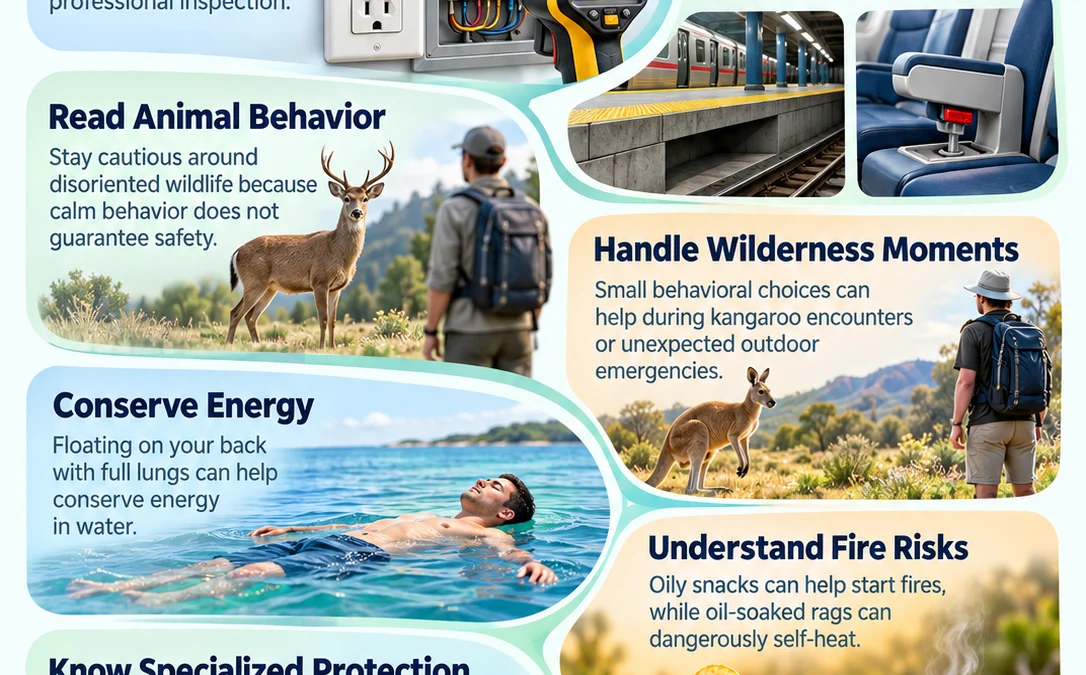

Life throws curveballs, and sometimes those curveballs turn into full-blown emergencies. In those high-stress moments, when your mind races and time feels like it’s evaporating, having a few key safety facts tucked away can make all the difference. We’re not talking about complex survival skills here; often, it’s the small, easily overlooked details that can help you recognize a danger early and respond more calmly and deliberately. From strange smells in your home to unexpected encounters in the wild, understanding these practical safety insights can empower you to navigate difficult situations more effectively. Let’s dive into some crucial emergency safety facts that could genuinely help you when things go wrong.
Think about it: a faint, unusual odor near an electrical outlet, a different emergency number popping up while you’re traveling abroad, an animal acting decidedly out of the ordinary, or even a pile of oily rags left carelessly aside – these aren’t just minor annoyances. They can be early warning signs of potentially dangerous situations. Knowing how to interpret these signals and what to do next is the essence of smart emergency preparedness. The following facts cover a diverse range of scenarios, from household hazards and travel safety to wildlife encounters and even nuclear emergencies. While they are never a substitute for professional help or official guidance during a crisis, they provide invaluable context for recognizing risks and maintaining a clear head under pressure.
Quick Answer: What Emergency Safety Facts Should You Keep Top of Mind?
When it comes to emergency preparedness, some knowledge is incredibly practical. Key facts include recognizing potential electrical hazards by their tell-tale smells, understanding that emergency numbers vary significantly by country, knowing how to handle certain wildlife encounters (like kangaroos!), conserving energy when floating in water, safely managing oily materials to prevent fires, and understanding the role of stable iodine in specific nuclear emergencies. These are the kinds of details that can shift a dangerous situation into one you can manage.

Home and Travel Hazards: Early Warning Signs You Shouldn’t Ignore
Many emergency situations don’t appear out of nowhere. They often develop gradually, giving us subtle clues if we know what to look for. Paying close attention to these unusual signs and understanding the purpose of specific safety features can be crucial in preventing minor issues from escalating into major emergencies. Let’s explore some of these critical insights.
1. That Fishy Smell Near Electrical Outlets? It’s a Warning.
Ever noticed a strange, fishy odor emanating from your electrical outlets or around appliances? This isn’t just a weird smell; it’s a significant warning sign that components within your electrical system might be overheating. The plastic insulation on wires can degrade and emit this distinct odor. The best course of action? Don’t try to be a DIY electrician. Call a qualified professional immediately to inspect the outlets, wiring, or circuit breakers. Ignoring this could lead to a fire.
2. Emergency Numbers Abroad: 911 Isn’t Universal!
When you’re traveling, your immediate instinct might be to dial 911 for emergencies, just like you would at home. However, this number doesn’t work universally. While 911 is indeed the emergency number in Canada and also used in places like Fiji, many other countries have entirely different emergency numbers. Before you travel, it’s essential to research and note down the local emergency contact numbers for your destination. Knowing this simple fact can save precious time in a critical situation.
3. That Aisle Armrest on Airplanes? It Has a Purpose.
Ever wondered about that armrest on the aisle side of your airplane seat? It’s not just for comfort. Many commercial aircraft are equipped with a special feature: the aisle armrest can often be raised. Look for a button or lever underneath. This design is primarily for accessibility, making it easier for passengers with mobility challenges to get in and out of their seats. However, this feature can also be incredibly helpful during an emergency evacuation, providing a little extra space to maneuver quickly.
11 Essential Emergency Safety Facts to Anchor Your Preparedness
Let’s break down these critical safety tips into actionable points. Understanding these can significantly enhance your safety awareness and preparedness.
01. Know How Emergency Numbers Work When Traveling
As mentioned, 911 isn’t a global standard. Some countries may redirect 911 calls to their local emergency services, but you can’t count on it. Always research and save the specific emergency numbers for your travel destinations. This is a fundamental piece of travel safety knowledge.
02. Treat a Fishy Electrical Smell as a Serious Warning Sign
That unusual, fish-like odor around electrical outlets or appliances is a red flag for overheating electrical components. Don’t ignore it! Contact a qualified electrician to diagnose and fix the issue before it becomes a fire hazard.
03. Understand the Purpose of an Aisle Armrest on an Airplane
The aisle armrest on planes often has a hidden lift mechanism. This accessibility feature can be a lifesaver in an emergency, providing extra room to exit your seat quickly during an evacuation.
04. Treat Unusual Kangaroo Behavior with Caution
While kangaroos are often seen as docile, they can be dangerous if they feel threatened. If you encounter one, the advice is to make yourself appear smaller and emit a soft, non-threatening cough. This signals submission and can de-escalate a potentially dangerous encounter. Always maintain a safe distance from wildlife.
05. Certain Corn-Based Snack Chips Can Help Start a Fire
In a survival or backcountry situation, oily corn-based snacks (like Doritos or Fritos) can actually be used as effective fire starters due to their oil content. This is a niche survival tip, not a recommendation for fire-starting practices, but good to know in a pinch!
06. Know That Subway Platforms May Have Emergency Alcoves
If someone falls onto subway tracks and can’t get out in time, there are often small alcoves built into the platform walls. These can provide a crucial space for shelter from an approaching train. Be aware of your surroundings and any posted emergency instructions.
07. Use Body Buoyancy to Conserve Energy in the Water
In a water survival situation, remember that the human body is naturally buoyant. By filling your lungs with air and floating on your back, you can conserve valuable energy while waiting for rescue. This is a vital survival technique for open water emergencies.
08. Do Not Mistake a Strangely Calm Wild Animal for a Friendly One
A wild animal behaving unusually calm or disoriented could be a sign of illness, such as the paralytic form of rabies. Never assume that unusual behavior makes a wild animal safe to approach. Maintain a respectful distance at all times.
09. Understand Why Oily Rags Are a Fire Hazard
Oily rags, especially those used with linseed oil or other drying oils, can spontaneously combust. The oil oxidizes, generating heat. If these rags are piled up and heat can’t dissipate, they can reach ignition temperature. Always store them in a sealed metal container with water or detergent.
10. Know the Basic Principle Behind Stable Iodine Protection
In the event of a nuclear emergency involving radioactive iodine (like Iodine-131), taking stable (non-radioactive) iodine can protect your thyroid gland. It saturates the thyroid, preventing it from absorbing the dangerous radioactive iodine. This is a specific emergency measure and should only be taken under official guidance.
11. Dogs and the Earth’s Magnetic Field: A Curious Finding
A fascinating study suggested dogs tend to align themselves with the Earth’s magnetic north-south axis when defecating. While an interesting tidbit of animal behavior research, it’s not a practical survival or navigation tip for humans!
Ultimately, emergency preparedness isn’t about memorizing dramatic survival stunts. It’s about cultivating awareness, recognizing potential dangers before they escalate, understanding your environment, and knowing when and how to seek professional help. These seemingly small facts are building blocks for a safer you.
Why These Small Safety Details Can Be Game-Changers in an Emergency
The scenarios we’ve touched upon – from electrical hazards and travel mishaps to wildlife encounters and potential radiation events – are incredibly diverse. Yet, they all share a common thread: the most effective response often begins with noticing and understanding a detail that many people might simply overlook or dismiss. This ability to recognize subtle cues is the first step toward a safe and effective response.
The Key Principle: Recognition Precedes Response.
Whether it’s an unusual smell indicating an electrical problem, an animal behaving strangely in the wild, a pile of oily rags posing a fire risk, or an unfamiliar emergency number in a foreign country, recognizing these signs is paramount. Your ability to identify a potential hazard dictates your subsequent actions.
Distinguishing Information from Immediate Action: A Crucial Safety Mindset
It’s important to understand that not all safety knowledge requires immediate physical action. Some facts are purely for awareness, helping you understand potential risks. Others, like the fishy electrical smell, demand a specific, prompt response – in this case, calling a professional. Similarly, interactions with wildlife require caution, and specialized emergencies like nuclear incidents necessitate following strict official guidance. True emergency preparedness lies in pairing this knowledge with sound judgment, knowing when to act and when to seek expert advice.
Key Takeaways: What to Remember From These Emergency Safety Facts
- 01 — Notice Warning Signs: Don’t dismiss odd electrical smells; they’re often indicators of underlying problems that need professional attention.
- 02 — Know Your Surroundings: Risks vary greatly between travel, urban transit, and wilderness environments. Be aware of the specific dangers in each.
- 03 — Treat Wildlife Cautiously: An animal’s behavior can be deceptive. Calmness doesn’t equate to friendliness. Always maintain a safe distance and avoid provoking them.
- 04 — Prevent Avoidable Hazards: Proper storage of materials like oily rags and early attention to potential issues like electrical smells can prevent serious accidents.
- 05 — Follow Official Guidance: For specialized emergencies (like nuclear events), rely on and follow instructions from the appropriate authorities. They have the expertise and information needed.
Practical Safety Knowledge: It’s About Preparation, Not Panic
The most valuable emergency facts are often the simplest. They empower you to recognize a hazard, understand what your environment is telling you, conserve energy when survival is key, and crucially, avoid turning an already uncertain situation into something far more dangerous.
Always keep these unusual safety facts in perspective. When a situation escalates, your primary resources should be emergency professionals, local authorities, and official instructions. Preparedness is most effective when it fosters calm, informed action, allowing you to respond intelligently rather than react with fear.
Build a More Practical Approach to Everyday Well-being and Safety
Want more practical guidance on health, wellness, and everyday safety? Explore Health Guard’s personal health and well-being resources for continuous learning and preparedness.
