🩺 Debunking Viral Health Myths: How to Spot Misinformation and Protect Your Well-Being ⚠️
Hey there! If you’ve been scrolling through social media lately, you’ve probably noticed an avalanche of health claims. It’s like a digital marketplace filled with miracle cures and quick fixes, right? 📱 Everywhere you look, short videos and eye-catching graphics are shouting about how a single, everyday ingredient can magically solve complex health issues overnight. It’s enough to make anyone feel a bit overwhelmed, isn’t it? 🧙♂️
You’ll see phrases like “doctors don’t want you to know this” or “secret natural cures” popping up constantly. These are carefully crafted to grab your attention and, let’s be honest, play on your hopes and anxieties. Now, nobody is saying that eating whole foods and getting enough sleep aren’t fantastic for you – they absolutely are! But when we oversimplify the incredible complexity of human biology, we can end up making choices that are not just ineffective, but potentially dangerous. Here at Health Guard, we’re all about empowering you with honest, science-backed guidance, steering clear of the sensationalized clickbait that floods our feeds. 🛡️
How can you identify viral health misinformation and sensational medical claims online?
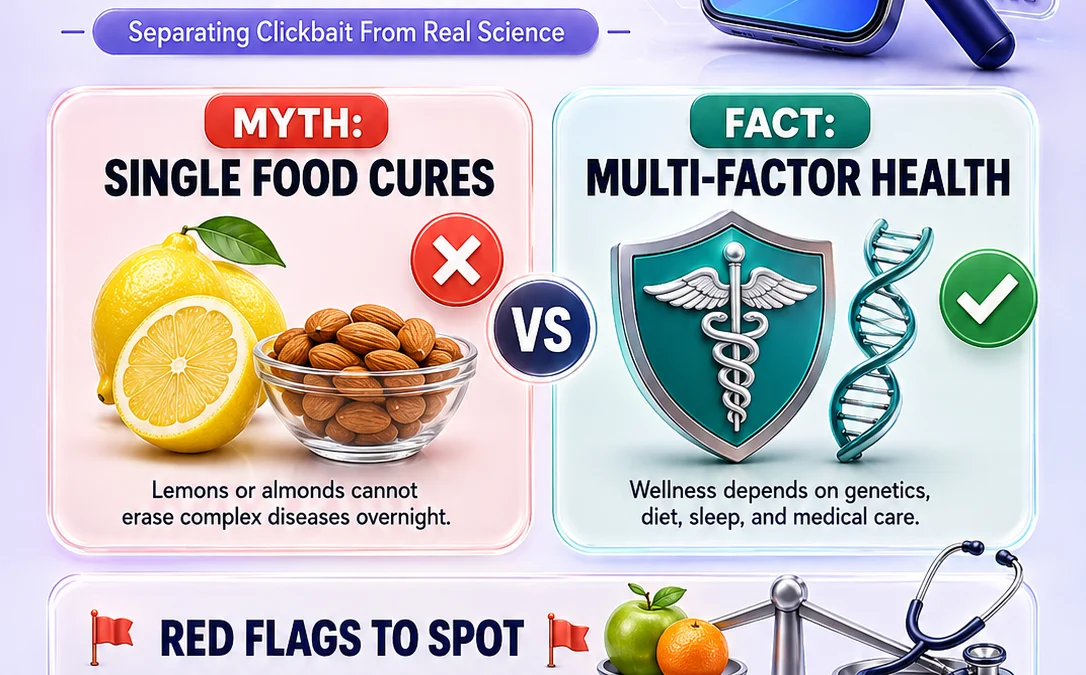
You can spot health misinformation by watching for sensational language like ‘miracle cure’ or ‘doctors hide this,’ extreme oversimplifications that promise single foods treat complex diseases, a total lack of peer-reviewed scientific sources, and graphics that encourage you to ditch professional medical advice entirely.

Look, it’s completely understandable why you might be drawn to these quick-fix promises. When you’re grappling with issues related to energy levels, weight management, or just general long-term health, you’re often searching for answers, and these viral posts seem to offer them in spades. 🧭 But here’s the thing: learning to distinguish between a viral myth and biological reality is incredibly empowering. It equips you to make smart, safe decisions for your health. So, let’s dive in and take an honest look at some of the most common health traps you’ll find online and, more importantly, how you can spot those red flags instantly.
🔍 Anatomy of Clickbait: Why Viral Health Claims Are So Easy to Fall For 🪤
Have you ever noticed how many viral health graphics seem to follow a similar, almost formulaic, pattern? That’s because they’re often designed specifically to capture the attention of social media algorithms and, by extension, users like you and me. 📈 They typically take a kernel of truth – something genuinely healthy, like eating fresh fruit or drinking warm water – and then attach wildly exaggerated, dramatic promises to it. 🍋 This potent mix of partial truth and extreme hype is what makes the content feel plausible and even exciting at first glance.
🚩 Conspiracy Messaging: You’ll often see phrases like “what doctors hide” or “the medical establishment doesn’t want you to know.” This is a classic tactic to build distrust in legitimate healthcare professionals and systems, making you more receptive to alternative, often unproven, claims.
🚩 Absolute Guarantees: These claims are usually presented without any nuance. Think “zero fat” or “no disease ever again” from eating a specific food. In reality, health is rarely about absolutes.
🚩 Total Oversimplification: The idea that complex biological systems, like weight management or immune function, can be perfectly managed with a single daily snack or habit is a massive oversimplification. Your body is far more intricate than that.
🚩 Lack of Context: These viral posts often completely ignore critical factors that influence health, such as your unique genetic makeup, your overall dietary patterns, your level of physical activity, and the quality of your sleep.
When content creators present complex health challenges as simple problems with simple solutions, they strip away the essential nuance that real medical science requires. 🧬 Human health is rarely a simple equation of one input leading to one output. Instead, it’s a dynamic, intricate balance influenced by your environment, your genetics, and a constellation of your daily habits. Understanding this complexity is key to staying grounded when you’re navigating the vast sea of online health information. ⚖️
💡 Quick Tip
Whenever you see a graphic claiming a single food “cures” or “prevents” a serious illness, take a moment to pause and critically assess. Ask yourself: Is there a link to a peer-reviewed human study supporting this, or is this content primarily designed to generate shares and engagement? 🔬
🧪 Fact vs. Fiction: Breaking Down Common Online Health Promises 🥑
To really get a handle on how health misinformation spreads like wildfire, it’s super helpful to look at some real-world examples of popular claims you’ll see online. 🥗 You’ll notice that many of these viral posts feature foods that are genuinely healthy and beneficial. The problem isn’t the food itself, but how it’s framed – often as a magical replacement for actual medical care or a balanced lifestyle. Let’s break down some of these exaggerated internet statements and contrast them with what established nutritional science and medical understanding actually tell us. 📊
| Viral Online Claim 💬 | Scientific & Biological Reality 🧬 | Actual Health Value 🌿 |
|---|---|---|
| “Drink lemon water daily for zero body fat” | No single food item has the power to magically burn fat on its own. Sustainable weight management is a complex process that relies on achieving an overall metabolic balance through diet, exercise, and lifestyle. | Promotes daily hydration and provides a good dose of Vitamin C, which is essential for immune function and skin health. 💧 |
| “Eat garlic every day to avoid all infections” | Garlic does possess some mild antimicrobial and immune-boosting properties. However, it is not a substitute for vaccines, antibiotics, or proper hygiene in preventing or treating serious clinical infections. | Can support a healthy gut microbiome and adds a wonderful, rich flavor to countless dishes. 🧄 |
| “Eat four almonds daily to prevent cancer” | Cancer is an incredibly complex, multi-factorial condition. Its development is influenced by a wide range of factors, including genetics, environmental exposures, lifestyle choices, and more. No single food can guarantee prevention. | A fantastic source of healthy monounsaturated fats, dietary fiber, protein, and Vitamin E, contributing to heart health and providing antioxidants. 🥜 |
As you can see from these examples, the underlying foods – lemons, garlic, almonds – are indeed fantastic additions to a healthy, balanced diet. They offer valuable nutrients and contribute positively to your well-being. However, the claims made about them in viral posts are wildly out of proportion and lack scientific backing. 📈 Enjoying these foods can nourish your body and enhance your diet, but relying on them as a sole defense against serious health conditions can be detrimental. It might even lead you to delay seeking necessary medical attention when you truly need it. 🩺
⚠️ Common Mistake
A particularly dangerous mistake is stopping prescribed medications or skipping routine doctor check-ups in favor of a hyped-up “miracle” diet trend or supplement. 🛑 Remember, evidence-based healthy habits and natural approaches work best when they complement, not replace, qualified medical care and professional advice.
🛡️ Building a Reliable Filter: How to Evaluate Health Advice Online 🕵️♂️
Living in the digital age means you’re constantly bombarded with new health trends, wellness hacks, and bold, often unverified, claims. 🌊 Developing a healthy sense of skepticism isn’t about dismissing all wellness advice; it’s about learning to filter information effectively, relying on evidence and common sense. 🧠
🔍 Check the Source: Who is making the claim? Is the advice coming from a qualified healthcare professional with relevant expertise, an accredited research institution, or an anonymous social media account that seems more interested in clicks and engagement?
🔍 Look for Nuance: Genuine medical experts and scientists tend to speak with caution. They rarely make absolute guarantees using words like “always,” “never,” or “100% cured.” They acknowledge the complexities and variations in human health.
🔍 Beware of Fear-Mongering: Content that is primarily designed to make you feel panicked, anxious, or distrustful of basic, established medical care is often a red flag. This emotional manipulation is frequently used to push unproven products or services.
🔍 Verify With Multiple Outlets: If you encounter a bold new wellness claim, especially one that sounds too good to be true, make it a habit to cross-reference it with information from reputable health organizations, established medical journals, and trusted sources before making any significant changes to your health regimen.
When you approach online health content with these critical questions in mind, you’re much better equipped to protect yourself from emotional manipulation and misinformation. 🛡️ True, sustainable health advice encourages you to build lifelong habits and make informed choices, rather than chasing after quick shortcuts that sound appealing but lack real substance. 🌅
🧠 Expert Insight
Good medical science is inherently cautious and iterative. 🔬 Reliable researchers and healthcare professionals rigorously test hypotheses, acknowledge the limitations of their findings, and are willing to update their guidance as new evidence emerges. Be wary of anyone who claims to have found an instant, secret, and universally applicable answer to complex health issues!
🌱 Sustainable Foundations: What Real, Evidence-Based Wellness Looks Like 🧘♂️
Shifting your focus away from the allure of clickbait health claims allows you to invest your energy and attention into practices that genuinely work and yield results over the long term. 🌟 Sustainable wellness isn’t built on secret ingredients, magic potions, or extreme, unsustainable restrictions. Instead, it’s grounded in foundational daily practices that support your body’s innate resilience and ability to thrive. 🏗️
🥦 Whole-Food Diversity: Embrace a wide variety of colorful vegetables, fruits, whole grains, lean proteins, and healthy fats. A diverse diet ensures you get a broad spectrum of essential nutrients.
💧 Consistent Hydration: Drinking an adequate amount of water throughout your day is crucial for virtually every bodily function, from digestion and nutrient transport to temperature regulation and waste removal.
🏃♂️ Regular Physical Movement: Incorporate physical activity that you enjoy into your routine. This could be anything from brisk walking and dancing to strength training and yoga. Regular movement strengthens your cardiovascular system, builds muscle, improves joint health, and boosts mood.
🛌 Restorative Nightly Rest: Aim for 7 to 9 hours of quality sleep per night. Sleep is when your body repairs itself, consolidates memories, and regulates hormones. Prioritizing good sleep is fundamental for both physical and mental well-being.
These core habits might not sound as dramatic or exciting as a “miracle cure” video promising overnight transformation, but they are the bedrock of health, supported by decades of robust scientific research. 📚 When you consistently invest in these fundamental behaviors, you provide your body with the strongest possible foundation for long-term health and vitality. ⚓
📖 Mini Summary
While single foods can offer significant nutritional benefits and contribute to a healthy diet, they cannot replace comprehensive medical care or magically erase complex diseases. 🧩 True, lasting health is built through consistent hydration, a balanced and varied diet, regular physical movement, and seeking guidance from trusted medical professionals.
📌 Key Takeaways for Navigating Online Health Content
Keep these practical guidelines in mind whenever you encounter viral health advice or wellness claims online. They’ll serve as your compass in the digital information jungle: 🗺️
📌 Question Extreme Claims: If a post or video promises that a single food or simple trick can cure complex diseases or guarantee specific outcomes, approach it with healthy skepticism.
📌 Spot the Fear Tactics: Be vigilant for content that aims to undermine your trust in qualified medical professionals or established healthcare systems. This is a common tactic used to promote unproven alternatives.
📌 Value Whole Foods Correctly: Enjoy the nutritional benefits of fruits, vegetables, nuts, and spices for what they are – healthy components of a balanced diet. Do not view them as magic bullets or replacements for medical treatment.
📌 Focus on Consistency: Prioritize long-term, sustainable habits like adequate sleep, regular hydration, and consistent physical activity over fleeting and often unsubstantiated internet trends.
📌 Consult Real Professionals: Always make it a priority to discuss any significant health concerns, symptoms, or planned major dietary shifts with a licensed healthcare provider or registered dietitian.
📌 Key Takeaway
Protecting your health and well-being is a journey that requires a thoughtful balance between adopting sensible lifestyle choices and adhering to sound medical guidance. 🌿 Don’t let flashy, sensational graphics or overly simplistic claims push you toward potentially harmful shortcuts. Instead, stick to proven, evidence-based practices for achieving lasting, genuine well-being.
🌅 Final Thoughts: Empowering Yourself With Honest Health Knowledge 🏆
Navigating the complexities of today’s digital landscape demands critical thinking skills, especially when the topic at hand is your physical and mental health. 🌅 By actively recognizing the warning signs of clickbait, exaggerated claims, and oversimplified health advice, you take powerful control of your personal wellness journey in a safe, sensible, and informed manner. Your body and mind deserve genuine care rooted in real, scientific understanding, not sensationalized promises designed solely to capture clicks and generate engagement. Embrace and celebrate the simple, steady habits that truly contribute to keeping you feeling your absolute best, day in and day out. ✨
Are you ready to leave the sensational health myths behind and fully embrace evidence-based wellness strategies that actually deliver results? 🌟 Join our growing Health Guard community today! Subscribe to our newsletter for a steady stream of honest, science-backed health insights delivered right to your inbox. Don’t forget to share this article with a friend who enjoys exploring online health trends – together, let’s build a smarter, healthier, and more informed community! 💌