⚠️ 7 Signs Your Body Needs More Magnesium Right Now 🌿
Hey there! Ever wake up with those annoying, sudden leg cramps that feel like they come out of nowhere? Or maybe you’re just feeling way more tired than usual, even after a full night’s sleep? 😴 Sometimes, it’s easy to brush these off as just a tough week or the natural aging process. But what if your body is actually sending you subtle, yet important, signals that you’re missing a key nutrient? 💡
Let’s talk about magnesium. This incredible mineral is like the unsung hero working behind the scenes in your body, powering over 300 essential biochemical reactions every single day. ⚙️ It’s absolutely vital for keeping everything running smoothly. The surprising thing is, despite its importance, millions of people walk around with low magnesium levels without even realizing it. 📉 It’s a silent deficiency that can fly under the radar.
The good news? Learning to spot these quiet warning signals early is your superpower! By recognizing them, you can take steps to restore your daily energy levels, sharpen your mental focus, and help your muscles finally relax. 🧘♀️ It’s all about listening to what your body is trying to tell you.
What Are the Main Clues Your Body Needs More Magnesium?
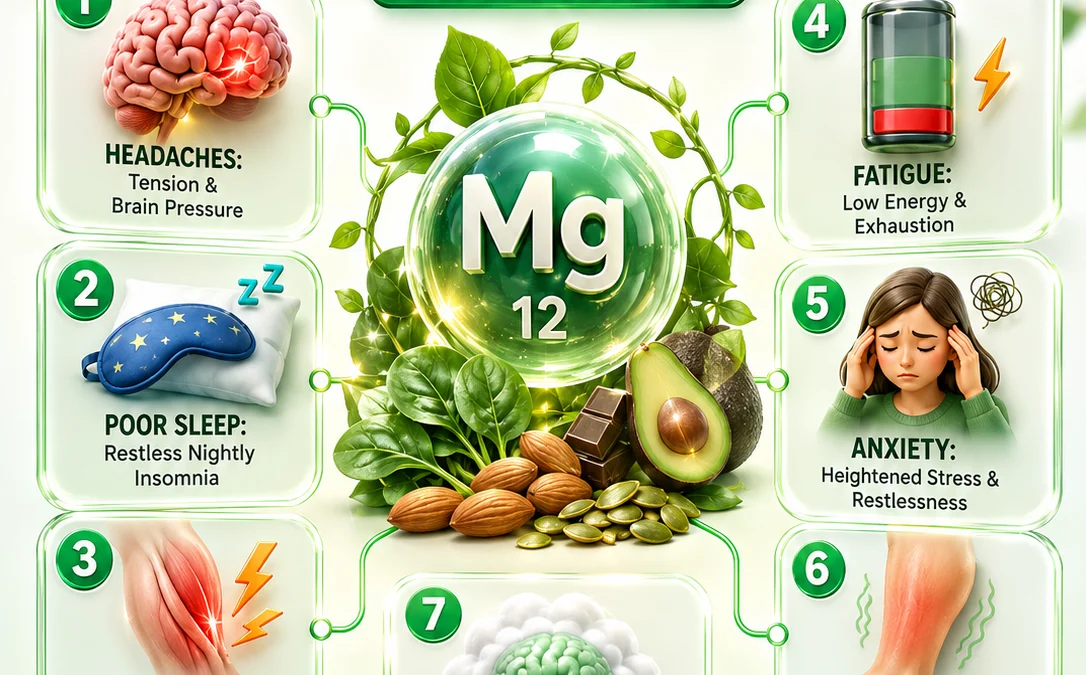
So, what exactly are these signs? The primary indicators of a magnesium deficiency often include persistent headaches that just won’t quit, experiencing poor sleep quality that leaves you feeling groggy, frequent and uncomfortable muscle cramps, a chronic sense of fatigue that drains you, heightened feelings of anxiety or nervousness, persistent leg tension that makes it hard to get comfortable, and that frustrating brain fog that makes it hard to concentrate. If any of these sound familiar, it might be time to consider your magnesium intake. Addressing low magnesium levels, whether through nutrient-dense foods or a carefully chosen supplement, is key to restoring smooth nerve function, promoting muscle relaxation, and ensuring steady cellular energy production. It’s about getting your body back into its optimal rhythm.

In this deep dive, we’ll break down exactly how this crucial mineral works its magic in your body and explore those seven common warning signs you might be experiencing right now. Let’s get to the bottom of it! 🔍
🧠 Understanding the Master Mineral: Magnesium’s Role in Your Daily Health ⚡
Think of magnesium as the ultimate multitasker in your body’s complex machinery. It’s like the master spark plug that ignites countless processes, ensuring everything runs efficiently. 🚗 More than just a supporting player, magnesium is actively involved in turning the food you eat into usable energy for your cells, while also playing a critical role in keeping your nervous system balanced, calm, and well-regulated. 🛡️ It’s the mineral that helps you feel steady and grounded.
⚡ Powers Cellular Energy: It’s fundamental for regulating the production of ATP (adenosine triphosphate), the primary energy currency of your cells, throughout the day.
🧬 Aids Muscle Repair: Magnesium is crucial for protein synthesis, which is essential for repairing and building muscle tissue, especially after physical activity.
💓 Supports Heart Health: It plays a vital role in maintaining stable heart rhythms and helps regulate healthy blood pressure levels, keeping your cardiovascular system in check.
🦴 Builds Strong Bones: Alongside calcium and vitamin D3, magnesium is a key component in building and maintaining strong, healthy bones.
🧠 Balances Mood & Sleep: It acts as a natural regulator for key neurotransmitters that are responsible for governing your mood and promoting restful sleep.
Now, here’s a bit of a modern-day challenge: our diets. Unfortunately, many processed foods we consume today have been stripped of their natural mineral content during processing. 🥗 This means that even if you’re eating regularly, you might not be getting enough magnesium from your meals. Adding to this, modern agricultural practices and soil depletion mean that even the fresh produce we buy might contain lower levels of minerals compared to what was available decades ago. 🌾
When your dietary intake of magnesium consistently falls short, your body is incredibly smart – it starts to compensate. It will pull stored magnesium from your bones and tissues to ensure that vital functions, like keeping your heart beating smoothly, continue uninterrupted. 💓 While this is a survival mechanism, over time, this constant internal borrowing can start to trigger those uncomfortable physical symptoms we often overlook. 🚨
📌 Key Takeaway
Magnesium isn’t just another mineral; it’s fundamental to hundreds of bodily functions. A subtle shortage might not show up on standard blood tests right away, but it can manifest as physical tightness, mental fogginess, or restless sleep long before a severe deficiency is detected. Recognizing the early physical indicators is your first step towards preventing minor annoyances from escalating into significant health disruptions. 🎯
🚨 The 7 Common Warning Signals of Magnesium Deficiency You Should Never Ignore 📋
Your body is remarkably good at communicating its needs, and it rarely stays completely silent when it’s lacking essential building blocks. 🗣️ Pay close attention, because here are the seven most common red flags that often signal low magnesium levels. If you’re nodding along to several of these, it’s a strong indicator to investigate further. 🚩
💥 1. Frequent Headaches: Ever notice that tension headaches seem to cluster? This can be linked to magnesium deficiency, which may contribute to tightness in your neck and shoulder muscles and constricted blood vessels in the head, triggering recurring tension headaches.
🛌 2. Poor Sleep Quality: Tossing and turning, struggling to fall asleep, or waking up frequently during the night? This could be due to low magnesium levels impacting neurotransmitter activity. Magnesium helps regulate GABA (gamma-aminobutyric acid), a key neurotransmitter that calms the nervous system and promotes sleep.
⚡ 3. Muscle Cramps and Spasms: Those sudden, painful muscle cramps, especially in your legs, calves, or even your arms, can be a classic sign. Magnesium plays a crucial role in muscle relaxation, and a deficiency can lead to involuntary muscle contractions, spasms, and twitching, often occurring during workouts or even at rest.
🪫 4. Persistent Fatigue: Feeling drained, sluggish, and like your energy reserves are constantly depleted? This pervasive fatigue can stem from impaired cellular energy production. Magnesium is vital for converting food into energy, so low levels mean your body’s internal battery is running on empty.
😟 5. Unexplained Anxiety and Mood Swings: A persistent feeling of inner restlessness, nervousness, irritability, or being easily overwhelmed by stress? Magnesium helps regulate the nervous system and neurotransmitters involved in mood. A deficiency can make you more susceptible to anxiety, panic attacks, and mood fluctuations.
🦵 6. Persistent Leg Tension and Twitching: Beyond nighttime cramps, you might experience restless legs syndrome (RLS) or persistent twitching in your calves and legs, particularly noticeable when you’re trying to relax or lie down. This is another sign that your muscles aren’t getting the signal to fully relax.
🌫️ 7. Persistent Brain Fog: Struggling to focus, experiencing slow cognitive processing, memory lapses, or just a general feeling of mental cloudiness? Magnesium is crucial for nerve function and the transmission of nerve signals, including those involved in cognitive processes. Low levels can directly contribute to brain fog and difficulty concentrating.
Take a moment to notice the common thread running through many of these symptoms: they are directly related to muscle contraction and nervous system regulation. ⚡ When your body doesn’t have enough magnesium to help your muscles properly relax after contracting, they can remain in a state of mild, continuous tension. 😣 This constant, low-level tension is incredibly draining, not only on your physical body but also on your mental focus. It can disrupt your natural sleep-wake cycle (circadian rhythm) and leave you feeling exhausted, even if you’ve managed to get some sleep.
⚠️ Common Mistake to Avoid
It’s easy to fall into the trap of thinking that muscle cramps, twitching, or general fatigue are solely due to dehydration. While staying hydrated with water is absolutely essential for health, simply drinking more water might not be enough to resolve these issues. If your body is also lacking crucial minerals like magnesium and potassium, which work in tandem with water to regulate muscle and nerve function, hydration alone won’t stop those annoying twitches or muscle tightness.
Let’s dive deeper into how magnesium specifically impacts three major areas of your well-being: your mind, your sleep patterns, and the physical state of your muscles. Understanding these connections can be truly eye-opening. 🧩
🧘 How Magnesium Acts as Your Body’s Natural Buffer Against Stress and Fatigue 🔋
Life throws stress at us constantly, and when it hits, your body has a natural response: it releases magnesium into your bloodstream to help calm your nervous system and manage the ‘fight or flight’ reaction. 🌊 The problem is, if you’re under high daily stress, you’re essentially burning through your magnesium reserves at a significantly faster rate. 📈 This means that chronic stress can directly deplete your magnesium levels, creating a vicious cycle where stress depletes magnesium, and low magnesium makes you feel even more stressed.
🧠 Calms an Overactive Nervous System: Magnesium acts as a natural gatekeeper for nerve signals. It binds to receptors for GABA (gamma-aminobutyric acid), a calming neurotransmitter, helping to ease racing thoughts and quiet the mental chatter, especially beneficial before bedtime.
🌿 Regulates Stress Hormones: It plays a role in managing the release of cortisol, the primary stress hormone. By helping to regulate cortisol, magnesium allows your body to more easily shift from a state of high alert to a ‘rest-and-digest’ mode, promoting relaxation and recovery.
⚡ Fuels Your Cellular Engines: Magnesium is a critical cofactor in the biochemical reactions that generate energy within your mitochondria, the powerhouses of your cells. Adequate magnesium levels are essential for maintaining consistent physical stamina and combating fatigue.
💓 Ensures Smooth Muscle Function: Beyond skeletal muscles, magnesium is vital for the smooth muscles in your blood vessels. It helps arteries relax and dilate properly, which is crucial for supporting optimal blood circulation and maintaining healthy blood pressure levels.
When your nervous system is adequately supplied with the minerals it needs, navigating the daily stressors of life feels significantly more manageable. 🛡️ Instead of feeling immediately overwhelmed or reactive, you can respond with greater resilience and a sense of calm. 🧘♂️
Similarly, your physical workouts can feel much smoother and more effective. Your muscle fibers can contract powerfully when needed and, crucially, relax fully afterward without developing painful knots or lingering soreness. 🏋️ This efficient contraction and relaxation cycle is key to athletic performance and injury prevention.
🧠 Expert Insight
The relationship between magnesium and stress is a classic two-way street. Experiencing high levels of stress leads to a significant depletion of your body’s magnesium stores. Conversely, having low magnesium levels makes your entire system far more sensitive and reactive to stress. Breaking this cycle by ensuring adequate magnesium intake is absolutely crucial for achieving long-term health and well-being.
Now, let’s get practical. How do your current eating habits stack up when it comes to providing your body with the daily mineral density it truly needs? 📊 It’s time for a nutritional check-up!
📊 Food vs. Deficiency: Your Guide to Delicious Magnesium Sources 🥑
The most effective way to rebuild your body’s mineral baseline and ensure you’re getting enough magnesium is to focus on what’s on your plate. 🍽️ Incorporating nutrient-rich, whole foods into your diet provides your body with easily absorbable, organic forms of magnesium, often bundled with other essential vitamins, minerals, and co-factors that enhance its utilization. It’s nature’s perfect package deal! 🍇
🥬 Dark Leafy Greens: Think spinach, Swiss chard, kale, and collard greens. These are nutritional powerhouses, packed with active chlorophyll and a significant amount of magnesium.
🥜 Nuts & Seeds: Pumpkin seeds are particularly rich, but almonds, cashews, chia seeds, and flaxseeds also offer a substantial mineral boost along with healthy fats and fiber.
🍌 Fresh Fruits: While not as concentrated as greens or seeds, fruits like bananas, avocados (yes, a fruit!), and figs contribute to your magnesium intake, alongside providing natural electrolytes and healthy fats.
🍫 Dark Chocolate: Good news for chocolate lovers! Opt for dark chocolate with 70% cacao content or higher. It’s not only a delicious treat but also a surprisingly good source of antioxidants and organic magnesium.
🫘 Whole Legumes: Black beans, lentils, chickpeas, edamame, and other beans are excellent sources of magnesium, fiber, and plant-based protein, supporting both digestive health and overall cellular nutrition.
Making small, consistent changes can have a big impact. For example, simply adding a generous handful of pumpkin seeds to your morning oatmeal or swapping your usual milk chocolate bar for a square or two of dark chocolate can make a noticeable difference in your magnesium intake over a few weeks. 🍫
Remember, proper hydration is key to nutrient absorption. Drinking plenty of clean, filtered water throughout the day ensures that the magnesium from your food can be smoothly absorbed through your digestive wall and effectively delivered to your cells where it’s needed most. 💧
💡 Quick Tip for Maximum Magnesium Intake
Don’t underestimate the power of pumpkin seeds (pepitas)! They are one of the most concentrated natural sources of magnesium available. Just a single ounce (about 28 grams) can provide nearly 30% of your recommended daily allowance (RDA) for magnesium. Sprinkle them on salads, yogurt, or enjoy them as a crunchy snack!
If you’ve ramped up your intake of magnesium-rich foods but are still struggling with persistent symptoms, it might be time to explore the world of supplements. Understanding your options is the logical next step to ensure you’re getting enough. 💊
💎 Navigating the Different Forms of Magnesium for Your Specific Wellness Goals 🎯
When it comes to magnesium supplements, it’s crucial to understand that they aren’t all created equal. 🧪 Different forms of magnesium are bound to different molecules, which affects how well they are absorbed by your body and which specific health concerns they are best suited to address. Some are fantastic for digestive support, while others excel at promoting deep mental relaxation or boosting energy. Choosing the right form can make all the difference in achieving your desired health outcomes. 🩺
🌙 Magnesium Glycinate: This is a highly absorbable form of magnesium chelated with the amino acid glycine. It’s renowned for being very gentle on the stomach, making it an excellent choice for individuals prone to digestive upset. It’s particularly beneficial for improving sleep quality, reducing anxiety, and promoting overall relaxation.
⚡ Magnesium Malate: This form is magnesium bound to malic acid, a compound found naturally in fruits. Malic acid plays a role in the Krebs cycle, the process of energy production in the body. Magnesium Malate is often recommended for boosting morning energy levels and alleviating muscle soreness, making it a popular choice for athletes and active individuals.
🧠 Magnesium L-Threonate: This is a newer form of magnesium that has shown a remarkable ability to cross the blood-brain barrier effectively. This makes it uniquely suited for targeting cognitive functions, improving brain fog, enhancing memory, and supporting overall brain health.
🍋 Magnesium Citrate: One of the most common and widely available forms, magnesium citrate is magnesium bound to citric acid. It is well-absorbed and often used for its mild laxative effect, making it helpful for short-term digestive regularity and relieving occasional constipation, as well as helping with muscle cramps.
The key takeaway here is that selecting the appropriate form of magnesium ensures you’re targeting your specific wellness goals effectively, without experiencing unwanted side effects like stomach upset. 🌿
As a general best practice, it’s wise to start with a modest daily dose, especially when trying a new form. Taking it with food can also help your digestive system adapt more comfortably. 🍲
🏆 Best Practice for Sleep Support
If your primary goal is to improve sleep and reduce anxiety, magnesium glycinate is often the top recommendation. Try taking it about 30 to 60 minutes before your intended bedtime. Pairing it with a calming evening routine—like reading, gentle stretching, or a warm bath—can further signal to your brain and body that it’s time to unwind, relax, and prepare for restorative sleep.
Before we wrap up, let’s quickly recap the fundamental points you should keep in mind as you embark on the journey of replenishing your body’s essential mineral levels. 📌
📌 Key Takeaways: Your Magnesium Checklist 📌
📌 Essential for Life: Magnesium is not just important; it’s fundamental, powering over 300 vital biological processes that influence everything from your energy levels and mood to muscle contraction and nerve function.
📌 Listen to Your Body: Common signs of a shortage are often subtle but significant, including persistent headaches, restless sleep, involuntary muscle cramps, chronic fatigue, heightened anxiety, and that frustrating brain fog.
📌 Stress Depletes Reserves: Chronic stress acts like a siphon, rapidly draining your body’s internal magnesium stores. Replenishment is crucial, especially if you lead a high-stress lifestyle.
📌 Nature’s Pharmacy: Excellent dietary sources are readily available in whole foods like dark leafy greens (spinach, kale), nuts and seeds (pumpkin, almonds), avocados, and dark chocolate (70%+ cacao).
📌 Choose Wisely: When supplementing, selecting the correct form based on your needs—like Magnesium Glycinate for sleep support or Magnesium Malate for energy and muscle recovery—optimizes your results and minimizes potential side effects.
🏁 Final Thoughts: Tuning In to Your Body’s Subtle, Yet Powerful, Hints 🌿
Your path to better health doesn’t always require drastic, overwhelming changes. Often, it’s about the small, consistent acts of listening to the subtle physical signals your body sends you every single day. 🌿 Those nagging muscle twitches, moments of scattered focus, or nights spent staring at the ceiling aren’t just minor inconveniences you have to accept as part of life. They are frequently clear, gentle invitations from your body to nourish it with the fundamental building blocks it might be missing.
By consciously bringing more mineral-dense, whole foods into your kitchen and adopting mindful daily habits, you equip your body with the precise tools it needs to relax more deeply, rebuild itself more effectively, and ultimately, thrive. 🌟 Don’t wait for major issues to arise. Start small today – perhaps by adding a handful of magnesium-rich pumpkin seeds to your salad or including a serving of dark leafy greens in your next meal. Trust us, your muscles, your mind, and your overall sense of well-being will thank you for it! 💚