Hey there, health enthusiasts! Ever wonder if you’re really getting the most out of the magnesium in your diet? It’s a common question, and the answer might surprise you. Magnesium is an absolute powerhouse mineral, playing a crucial role in hundreds of bodily functions, from energy production and muscle function to nerve signaling and even mood regulation. But here’s the catch: simply eating foods rich in magnesium isn’t always enough. How well your body actually absorbs and utilizes that magnesium is a whole other ball game, and believe it or not, the other foods on your plate can significantly influence this process!
It’s not just about the number on the nutrition label or the milligrams listed on a supplement bottle. Your body has to actively absorb and then put that magnesium to work. And guess what? Certain dietary components can act as helpful sidekicks, making that absorption process smoother and more efficient. Some foods are superstars because they not only pack a magnesium punch but also come loaded with other beneficial compounds like protein, fermentable fiber, lactose, probiotics, or unique plant compounds that may enhance mineral availability. Others might require a little prep work – think soaking or cooking – to dial down substances that could potentially put the brakes on magnesium uptake.
So, if you’re looking to supercharge your magnesium intake, you need to think about the ‘food environment’ your magnesium is entering. We’ve dived deep into the science to bring you seven fantastic foods that are highlighted for their potential to support your body’s magnesium absorption. We’ll break down exactly what makes each one special, explore the science behind it, and also touch upon where the current evidence might be a bit more limited. Ready to unlock your body’s full magnesium potential? Let’s get started!
Quick Take: Wondering which foods might be your magnesium absorption allies? Look no further than chicken, oats, berries, milk, bananas, yogurt, and chickpeas! Each of these brings a unique nutritional profile – think protein, fermentable fiber, beneficial dairy components, gut-loving probiotics, or special plant compounds – that could help your body make better use of magnesium. While the scientific backing varies a bit from food to food, incorporating these into your diet is a smart move for overall mineral wellness.
7 Foods That Can Supercharge Your Magnesium Absorption
Before we dive into the specifics, it’s crucial to understand that these foods aren’t magic bullets. Their real power lies in the dynamic duo: their inherent magnesium content combined with other nutritional elements that can positively influence how magnesium is digested, absorbed, and ultimately utilized by your body. It’s all about synergy!

01 • Chicken: The Protein Powerhouse for Magnesium Uptake
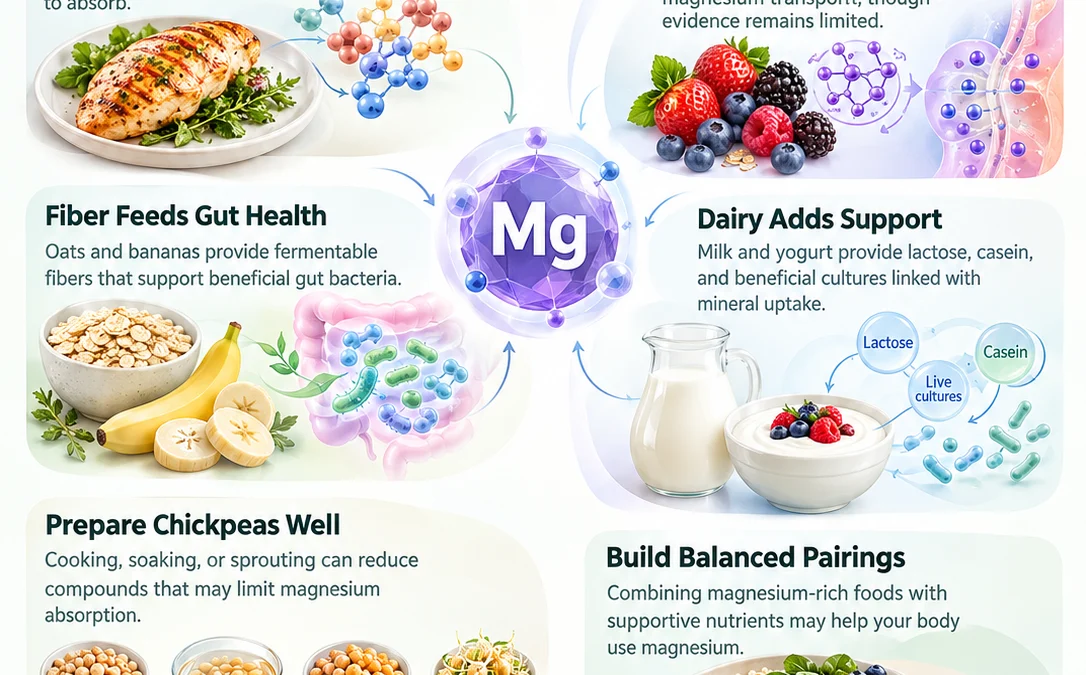
When we talk about chicken in the context of magnesium absorption, it’s less about its direct magnesium content (which is present but not exceptionally high) and more about its stellar protein profile. During digestion, proteins are broken down into smaller building blocks called peptides. Here’s where the magic happens: these protein-derived peptides can actually bind to magnesium. According to research, this binding action can make the magnesium more ‘friendly’ to your intestinal walls, essentially making it easier for your body to absorb. Think of these peptides as tiny escorts, guiding magnesium through the absorption process.
Even better, these peptides may offer a protective shield for magnesium. They can help prevent it from interacting with substances like phytates, which are naturally found in many plant foods and are notorious for hindering mineral absorption. So, by pairing a meal or supplement containing magnesium with a protein-rich food like chicken, you might be giving your body a significant boost in its ability to effectively utilize that essential mineral. It’s a smart dietary strategy for anyone looking to maximize their magnesium intake!
02 • Oats: Fiber-Rich Grains for Gut Health and Magnesium
Oats are a breakfast champion for a reason, and their contribution to magnesium absorption is another compelling point. Naturally, oats contain a decent amount of magnesium, making them a direct source. But what truly sets them apart is their impressive fiber content, particularly a type known as beta-glucan. Beta-glucans are a type of soluble, fermentable fiber, which means they aren’t fully digested by our bodies. Instead, they travel to the large intestine where they become a feast for the beneficial bacteria residing there – our gut microbiome!
A thriving gut microbiome is crucial for overall health, and it plays a role in the production of compounds that can influence nutrient availability and absorption. While the direct impact of oat fiber on magnesium absorption might be described as ‘modest’ in some research, the combination is still incredibly valuable. Think of it as a two-pronged approach: oats provide magnesium directly, and their fermentable fiber fosters a gut environment that’s more conducive to mineral absorption. So, a bowl of oatmeal isn’t just a hearty breakfast; it’s a gut-friendly, magnesium-supporting meal!
03 • Berries: Antioxidant Powerhouses That May Aid Magnesium Transport
These vibrant little fruits are more than just a delicious antioxidant boost! Berries, especially those rich in anthocyanins (the pigments that give them their deep colors), contain a wealth of beneficial plant compounds called polyphenols. Emerging research suggests that these powerful polyphenols might play a role in magnesium absorption by interacting with specific ‘transporters’ in the lining of your gut. Essentially, they may help ‘open the door’ or ‘activate the pathway’ that allows magnesium to move from your digestive tract into your bloodstream.
Now, here’s an important point to keep in mind: much of the compelling evidence for this specific mechanism – the direct influence of berry polyphenols on magnesium transporters – comes from laboratory studies, often conducted in cell cultures or animal models. While this is a fascinating area of research, the effect might not be as pronounced or directly observable in human studies just yet. However, let’s not discount the overall benefits! Berries are nutritional powerhouses, packed with vitamins, minerals, fiber, and those fantastic plant compounds. They contribute valuable nutrients to your diet and can certainly be part of a healthy eating pattern that supports overall mineral balance, even if their direct impact on magnesium absorption requires more human-centric research.
Remember, your body’s ability to absorb magnesium is influenced by the entire food environment of your meal, not just one single ingredient.
04 • Milk: The Dairy Duo Supporting Magnesium Uptake
Milk is often celebrated for its calcium content, but it also brings other nutrients to the table that can be beneficial for mineral absorption, including magnesium. The source highlights two key components in milk: lactose and casein. Lactose is the natural sugar found in milk, and casein is its primary protein. Both of these have been suggested to potentially enhance the absorption of magnesium in the intestines. It’s thought that lactose might interact with magnesium in a way that facilitates its passage, while casein, similar to other proteins, can form peptides that bind to magnesium, aiding its uptake.
Beyond these specific enhancers, milk also provides essential minerals like calcium and phosphorus. These minerals work together in complex ways to maintain the body’s overall mineral balance. This combined nutritional profile makes dairy products, like milk, a valuable part of a diet that aims to support not just magnesium intake but also the intricate interplay of various minerals within the body.
05 • Bananas: Sweet Fruit with Fiber for Your Gut and Magnesium
Who doesn’t love a banana? This convenient and naturally sweet fruit is a good source of magnesium and also offers another benefit: fermentable carbohydrates, including resistant starch. Resistant starch acts similarly to the fiber in oats; it resists digestion in the small intestine and travels to the large intestine, where it serves as fuel for beneficial gut bacteria. By supporting a healthy gut environment, these fermentable carbohydrates may indirectly contribute to better mineral absorption, including magnesium. It’s another example of how the gut microbiome influences nutrient uptake.
It’s worth noting that bananas, like many plant-based foods, do contain phytates. As we’ve discussed, phytates can sometimes interfere with mineral absorption. However, the source indicates that the amount of phytate in bananas is generally considered minor, and the overall nutritional package – magnesium plus beneficial fiber – likely outweighs this potential downside for most people. So, while not a perfect absorption enhancer, bananas remain a valuable and nutritious food choice that can contribute positively to your magnesium intake and gut health.
06 • Yogurt: Probiotics and Dairy Nutrients for Enhanced Absorption
Yogurt is a fantastic food that builds upon the benefits of milk while adding its own unique advantages. Like milk, yogurt provides lactose and casein, which may help with magnesium absorption. But the real star here is the presence of live active cultures – the probiotics! These beneficial bacteria are fundamental to maintaining a healthy and balanced gut microbiome. A robust gut microbiome is increasingly recognized for its significant role in how our bodies extract, utilize, and absorb various nutrients, including essential minerals like magnesium.
The combination of dairy components (lactose and casein) and the live probiotic cultures in yogurt creates a powerful synergy. This makes yogurt a particularly interesting food choice for supporting magnesium uptake through a food-based approach. While the exact mechanisms and the extent to which yogurt might boost magnesium absorption are still areas of active nutritional research, its dual action – providing key nutrients and fostering a healthy gut environment – makes it a valuable addition to a magnesium-supportive diet.
07 • Chickpeas: The Versatile Legume Packed with Benefits
Chickpeas, also known as garbanzo beans, are nutritional powerhouses that bring several key elements to the table for magnesium absorption. They are a good source of magnesium itself, but they also provide protein, fermentable fiber, and vitamin B6. Vitamin B6 is particularly noteworthy because it plays a vital role in helping magnesium perform its essential functions within the body, especially concerning muscle and nerve function. This makes chickpeas a well-rounded choice for supporting your body’s magnesium needs.
However, like many legumes, chickpeas contain compounds such as phytates and tannins, which can potentially inhibit the absorption of minerals. The good news? Preparation is key! The source specifically points out that methods like cooking, soaking, or even sprouting chickpeas can significantly reduce the levels of these inhibitory compounds. This makes the minerals, including magnesium, much more accessible for your body to absorb and utilize. Furthermore, the fermentable fibers found in chickpeas can offer an additional, albeit smaller, benefit by supporting a healthy gut environment. Chickpeas are a fantastic example of how understanding both the inherent nutritional value of a food and the impact of preparation methods is crucial for optimizing mineral absorption.
Unlock More Magnesium: The Power of Food Preparation
You’ve heard it before, but it bears repeating: how you prepare your food can make a real difference in its nutritional impact. Some foods contain natural compounds that can latch onto minerals, essentially making them unavailable for absorption. Chickpeas are a perfect case study, demonstrating how simple, traditional preparation techniques can help reduce these interfering substances and unlock more of the goodness within.
Soaking
Soaking legumes like chickpeas before cooking is a great first step. It helps to leach out and reduce compounds such as phytates and tannins, which can otherwise hinder mineral absorption.
Cooking
The heat from cooking further assists in breaking down or neutralizing some of the compounds that interfere with mineral uptake, making the nutrients more bioavailable.
Sprouting
Sprouting is another effective preparation method mentioned in the research. This process can significantly reduce the levels of phytates and other antinutrients, thereby enhancing the absorption of minerals like magnesium.
Your Magnesium Absorption Cheat Sheet: Key Takeaways
Let’s quickly recap how each of these fantastic foods contributes to better magnesium absorption:
Key Takeaways for Boosting Magnesium Absorption Naturally
The Big Picture: A Magnesium-Savvy Diet is About the Whole Plate
So, there you have it! Chicken, oats, berries, milk, bananas, yogurt, and chickpeas each bring their own unique strengths to the table when it comes to supporting your body’s magnesium journey. Some deliver magnesium directly, while others provide those crucial supporting players – protein, fermentable fiber, dairy goodness, gut-friendly probiotics, and beneficial plant compounds – that can influence how efficiently your body absorbs and utilizes this vital mineral.
The most practical takeaway here is to adopt a holistic view of your diet. Think about magnesium not in isolation, but as part of a balanced eating pattern. The combinations of foods you eat and the way you prepare them can indeed make a difference. However, it’s wise to approach the specific absorption-enhancing claims with a balanced perspective, recognizing that the strength of the evidence varies. These foods are best viewed as excellent, supportive dietary choices that contribute to overall magnesium status, rather than guaranteed, dramatic absorption boosters.
Want to dive deeper into building a nutrient-rich diet? Explore practical guidance on magnesium-rich foods and healthy eating strategies designed to fit seamlessly into your everyday meals.