Ever wondered why Japan consistently boasts one of the world’s highest life expectancies and a population that seems to age gracefully and joyfully? It’s not just about genetics; it’s deeply rooted in their unique way of life. The Japanese culture champions simplicity, mindful eating, consistent movement, strong community bonds, and a relentless pursuit of self-improvement. From finding your ‘reason for being’ with Ikigai to embracing gradual progress through Kaizen, and reconnecting with nature via Shinrin-yoku (forest bathing), these time-tested habits are powerful tools for enhancing both physical vitality and mental serenity. 🍵
In this comprehensive guide, we’ll dive deep into the core principles of Japanese wellness. You’ll learn about the wisdom of eating until you’re 80% full, the art of savoring fresh, seasonal foods, the calming practice of maintaining clean and organized living spaces, the importance of staying active throughout your life, and the stability found in consistent daily routines. These aren’t complicated or extreme diets or workout plans; they are elegant, simple practices that, when embraced consistently, lead to profound well-being. Get ready to unlock practical lessons from Japanese culture that can help you cultivate a more vibrant, peaceful, and fulfilling life, even amidst the hustle and bustle of modern living. 🌸✨
Unlocking the Secrets: Why Are Japanese People Healthier and Happier? Key Habits Revealed
Japan consistently tops the charts for life expectancy and boasts a population known for its healthy aging. While a genetic predisposition might play a part, the undeniable truth is that daily lifestyle choices and deeply ingrained cultural practices are the real MVPs behind Japanese well-being. Forget fad diets or grueling fitness regimens; the Japanese approach is built on a foundation of consistency, finding purpose, practicing moderation, and living in harmony with oneself and the environment. These aren’t just abstract ideas; they translate into tangible habits that nurture physical health, sharpen mental clarity, and foster emotional resilience. Let’s explore these powerful, yet simple, habits.
🌸 Why the Japanese Lifestyle is a Global Wellness Beacon
In a world constantly seeking answers to stress, burnout, and a lack of fulfillment, the Japanese way of life offers a refreshing and practical roadmap. Its principles are accessible and adaptable, meaning you don’t need to move to Japan to benefit from them. The core pillars that make this lifestyle so attractive and effective are:
✨ A Strong Sense of Purpose (Ikigai)
✨ The Beauty of Simplicity and Minimalism
✨ Valuing Community and Connection
✨ Mindful Eating and Nourishment
✨ Embracing Continuous Self-Improvement (Kaizen)
✨ Deep Respect for Nature and Surroundings
🌿 The Mindset and Daily Living Principles That Shape Well-being
At the heart of the Japanese approach to life are several guiding philosophies that influence daily actions and foster a deep sense of contentment and health. These aren’t rigid rules but rather gentle principles that guide individuals toward a more balanced existence.
🌅 Ikigai: Discovering Your Reason for Being
Perhaps one of the most profound and sought-after Japanese concepts is Ikigai. Often translated as ‘a reason for being’ or ‘the joy of always having something to do,’ Ikigai is more than just a job or a hobby; it’s the intersection of what you love, what you’re good at, what the world needs, and what you can be paid for. Having a clear sense of purpose is a powerful motivator, a source of resilience against life’s challenges, and a significant contributor to long-term happiness. It doesn’t require grand ambitions; your Ikigai could be found in nurturing your family, mastering a craft, contributing to your local community, or simply finding joy in your daily work. The act of waking up each day with a sense of purpose and enthusiasm is a cornerstone of a fulfilling life.
The Transformative Benefits of Embracing Ikigai:
🌼 Elevated Life Satisfaction: Knowing your ‘why’ brings a deeper sense of contentment.
🌼 Boosted Motivation: Purpose fuels action and drives personal growth.
🌼 Enhanced Emotional Well-being: A strong sense of purpose acts as a buffer against stress and anxiety.
🌼 Increased Resilience: Purpose helps individuals navigate difficult times with greater strength and adaptability.
Living with Ikigai means approaching each day with intention, making even mundane tasks feel meaningful. It’s about finding that sweet spot where your passions align with your actions, creating a life that feels truly yours.
🌱 Kaizen: The Power of Small, Consistent Improvements
In a culture that values progress, Kaizen stands out as a philosophy of continuous improvement. It’s the idea that small, incremental changes made consistently over time can lead to significant, sustainable results. Instead of aiming for massive, overwhelming transformations, Kaizen encourages focusing on making tiny, manageable adjustments to your habits, skills, or processes. Think about it: reading just a few pages of a book each day adds up to entire books over a year. Walking a little further each week builds endurance. Learning one new word or phrase daily expands your vocabulary. Even in the workplace, Kaizen principles are applied to gradually refine workflows and boost efficiency. This philosophy teaches us that consistency trumps intensity, and that small steps are the most effective path to long-term success and personal growth.
Everyday Examples of Kaizen in Action:
🍀 Reading a few pages daily to expand knowledge and imagination.
🍀 Walking a little farther each week to improve cardiovascular health and stamina.
🍀 Learning one new skill or fact regularly to keep the mind sharp.
🍀 Gradually improving work processes or personal habits for greater efficiency and well-being.
The beauty of Kaizen lies in its accessibility. It empowers individuals to take control of their self-improvement journey, making progress feel achievable and sustainable, rather than daunting.
🍃 Shinrin-yoku: Reconnecting with Nature Through Forest Bathing
In our increasingly digital and urbanized world, the restorative power of nature is more important than ever. Shinrin-yoku, often translated as ‘forest bathing,’ is the practice of immersing oneself in a natural environment, engaging all senses to promote relaxation and healing. It’s not about strenuous hiking or specific activities; it’s about being present and mindful in nature. Scientific research has increasingly validated the benefits of spending time in green spaces, linking it to significant improvements in mental and physical health. This practice offers a much-needed antidote to the stresses and mental fatigue often associated with modern life.
The Science-Backed Benefits of Shinrin-yoku:
🌲 Reduced Stress Hormones: Lowering cortisol levels naturally.
🌲 Improved Mood: Boosting feelings of happiness and reducing symptoms of depression.
🌲 Enhanced Concentration: Restoring focus and cognitive function.
🌲 Strengthened Immune System: Increasing the count of natural killer (NK) cells.
🌲 Better Mental Clarity: Clearing mental fog and promoting a sense of peace.
Even a short, mindful walk in a local park or spending a few minutes surrounded by trees can provide a significant boost to your well-being. The key is to slow down, breathe deeply, and allow the natural world to work its magic.
🏡 Embracing Simple Living: The Art of Decluttering Your Life
Minimalism isn’t just a trend; it’s a deeply ingrained aspect of Japanese culture that promotes clarity, peace, and intentionality. Simple living involves consciously reducing the number of possessions and distractions in your life, creating an environment that fosters calmness, focus, and appreciation for what truly matters. By decluttering physical spaces, you also declutter your mind, freeing yourself from the burden of excess and the constant need to acquire more. This mindful approach to possessions can lead to a more serene and focused existence.
The Profound Benefits of a Simplified Lifestyle:
✨ Reduced Mental Clutter: Less stuff means less to manage, organize, and worry about.
✨ Easier Decision-Making: With fewer choices, making decisions becomes less overwhelming.
✨ Lowered Stress Levels: A tidy, organized environment contributes to a calmer state of mind.
✨ Greater Appreciation: Focusing on experiences and meaningful items enhances gratitude.
✨ Increased Financial Freedom: Spending less on unnecessary items frees up resources.
A clean, organized home is often a reflection of a clear, organized mind. By embracing simplicity, you create space – both physically and mentally – for peace, creativity, and genuine happiness to flourish.
🍱 Nourishing Your Body: Japanese Food and Eating Habits for Longevity
The Japanese diet is world-renowned for its association with exceptional longevity and remarkably low rates of lifestyle-related diseases like heart disease and type 2 diabetes. This isn’t a coincidence; it’s the result of centuries-old culinary traditions and mindful eating practices that prioritize nutrient density, balance, and moderation.
🍚 Hara Hachi Bu: The Wisdom of Eating Until 80% Full
One of the most impactful and widely practiced Japanese eating principles is Hara Hachi Bu. This ancient Confucian teaching encourages diners to stop eating when they feel approximately 80% full, rather than pushing until they are completely stuffed. The idea is to satisfy your hunger and enjoy your meal without overindulging. This simple yet profound practice has a cascade of health benefits:
How Hara Hachi Bu Contributes to Well-being:
🌸 Supports Healthy Weight Management: By preventing overconsumption of calories, it naturally aids in maintaining a healthy weight.
🌸 Improves Digestion: Eating smaller, more moderate portions allows the digestive system to function more efficiently.
🌸 Prevents Overeating: It trains the body and mind to recognize satiety signals before fullness sets in.
🌸 Encourages Mindful Eating: The practice naturally leads to slower eating and greater appreciation for the food.
The key to Hara Hachi Bu is to eat slowly, savor each bite, and pay close attention to your body’s hunger and fullness cues. It’s about listening to your body and respecting its needs.
🥗 The Seasonal Bounty: Fresh Foods and Their Importance
Traditional Japanese cuisine places immense value on seasonal ingredients. This philosophy, known as ‘shun’ (旬), emphasizes eating foods at the peak of their freshness, flavor, and nutritional value. This not only ensures the highest quality produce but also fosters a deeper connection to nature and the changing seasons. A typical Japanese diet is rich in:
🐟 Fish and Seafood: Excellent sources of lean protein and omega-3 fatty acids.
🥬 Fresh Vegetables: Abundant in vitamins, minerals, and fiber.
🍚 Rice: A staple carbohydrate, often consumed in moderation.
🫘 Fermented Foods: Such as miso, natto, and pickles, which are rich in probiotics and beneficial for gut health.
🍵 Green Tea: Packed with antioxidants and known for its numerous health benefits.
By prioritizing seasonal, whole foods, the Japanese diet naturally provides a wide spectrum of nutrients while minimizing reliance on processed ingredients and artificial additives.
🍽 The Art of Balanced Meals and Portion Control
Japanese meals are often a beautiful display of variety and balance, typically consisting of several small dishes rather than one large main course. This approach, known as ‘ichiju-sansai’ (一汁三菜), which translates to ‘one soup, three side dishes,’ ensures a diverse intake of nutrients and flavors. A balanced meal might include:
🍚 A staple (like rice)
🐟 A protein source (fish, tofu, or lean meat)
🥬 One or two vegetable dishes (simmered, pickled, or dressed)
🥣 A soup (often miso soup)
🫘 A small fermented side dish (optional)
This style of eating naturally promotes portion control, allowing individuals to enjoy a variety of tastes and textures without overeating. It’s a mindful and satisfying way to consume a well-rounded meal.
🍡 Lower Sugar Consumption: A Sweet Approach to Health
Compared to many Western diets, traditional Japanese cuisine incorporates significantly less added sugar. Desserts, while enjoyed, are often subtle in sweetness and consumed in moderation. This lower intake of refined sugars plays a crucial role in overall health:
The Health Advantages of Reduced Sugar Intake:
✨ Improved Metabolic Health: Lowering the risk of insulin resistance and type 2 diabetes.
✨ Stable Energy Levels: Avoiding the sugar highs and crashes that disrupt daily energy.
✨ Better Dental Health: Reducing the likelihood of cavities and other oral health issues.
✨ Reduced Risk of Chronic Diseases: Contributing to lower rates of obesity and heart disease.
By relying on the natural sweetness of fruits and the complex flavors of savory dishes, the Japanese diet naturally limits sugar consumption, promoting long-term health and vitality.
🚶 Movement and Healthy Aging: Staying Active Throughout Life
In Japan, physical activity is often woven seamlessly into the fabric of daily life, rather than being confined to dedicated gym sessions. This integrated approach ensures consistent movement, contributing to healthy aging and sustained physical function well into later years.
🚶 The Ubiquitous Culture of Daily Walking
Walking is more than just transportation in Japan; it’s a fundamental part of the lifestyle. From commuting to work or school to running errands or visiting local shops, walking is the primary mode of getting around for many. This ingrained habit provides consistent, low-impact exercise:
Benefits of a Walking-Centric Lifestyle:
🌿 Enhanced Cardiovascular Health: Regular walking strengthens the heart and improves circulation.
🌿 Improved Mobility and Joint Health: It keeps joints lubricated and muscles toned.
🌿 Effective Weight Management: Consistent calorie expenditure aids in maintaining a healthy weight.
🌿 Reduced Stress and Improved Mood: Walking outdoors, especially in nature, has significant mental health benefits.
The simple act of choosing to walk instead of drive for short distances contributes significantly to daily activity levels and overall well-being.
🧘 Embracing Light Stretching and Gentle Exercise
Beyond walking, many Japanese individuals incorporate short, daily stretching routines into their lives. These gentle movements are crucial for maintaining flexibility, preventing stiffness, and supporting overall physical function as one ages. They are often performed:
🌸 In the morning to awaken the body.
🌸 During breaks to alleviate stiffness.
🌸 In the evening to relax before sleep.
Key Advantages of Regular Gentle Exercise:
🌸 Better Posture: Stretching can correct imbalances and improve alignment.
🌸 Improved Circulation: Gentle movements help blood flow more freely.
🌸 Reduced Stiffness and Aches: Especially beneficial for those with sedentary jobs or age-related concerns.
🌸 Enhanced Mobility: Maintaining range of motion in joints.
The emphasis here is on consistency and gentle engagement rather than high-intensity workouts, making it a sustainable practice for people of all ages and fitness levels.
👴 The Japanese Approach to Active Aging
Japan is a global leader in promoting active aging, a philosophy that encourages older adults to remain socially engaged and physically active throughout their later years. This isn’t just about preventing physical decline; it’s about maintaining cognitive function, emotional well-being, and a strong sense of community connection.
Components of Active Aging in Japan:
🌼 Community Participation: Engaging in local events, clubs, and volunteer activities.
🌼 Gardening: A popular pastime that combines physical activity with a connection to nature.
🌼 Walking Groups: Social outings that encourage exercise and companionship.
🌼 Lifelong Hobbies: Pursuing interests like calligraphy, tea ceremony, or traditional crafts.
By staying involved and continuing to learn and contribute, older adults in Japan often maintain a higher quality of life, a stronger sense of purpose, and improved overall health.
🧹 The Power of Cleanliness and Order: A Foundation for Well-being
In Japanese culture, cleanliness extends far beyond mere hygiene; it’s a practice imbued with mindfulness, respect, and a deep appreciation for order. Maintaining clean and organized surroundings is seen as essential for both physical health and mental clarity.
🏠 Regular Cleaning as Mental Renewal
The act of cleaning in Japan is often viewed as a form of mental renewal. It’s an opportunity to clear out not just physical dust and clutter but also mental and emotional stagnation. This mindful practice can lead to:
The Psychological Benefits of a Clean Environment:
✨ Reduced Stress and Anxiety: Orderly surroundings create a sense of calm and control.
✨ Improved Concentration: A clutter-free space minimizes distractions, enhancing focus.
✨ Greater Sense of Accomplishment: Completing cleaning tasks provides a tangible sense of achievement.
✨ Enhanced Productivity: A clean workspace or home can boost efficiency and creativity.
The Japanese often see cleaning as a way to reset and refresh, both their living spaces and their state of mind, preparing them for the day ahead or winding down in the evening.
👟 The Simple Yet Profound Habit: Shoes-Off Indoors
One of the most universally recognized Japanese customs is the practice of removing shoes before entering a home. This simple habit serves multiple purposes, contributing significantly to the overall sense of cleanliness, comfort, and separation between the outside world and the sanctuary of home.
Why the ‘Shoes-Off’ Rule Matters:
🌿 Superior Hygiene: Prevents dirt, germs, and pollutants from being tracked into living spaces.
🌿 Increased Comfort: Allows residents and guests to relax in comfortable indoor footwear or bare feet.
🌿 Preservation of Floors: Protects carpets and flooring from wear and tear.
🌿 Creates a Clear Boundary: Symbolically and practically separates the ‘outside’ from the ‘inside,’ fostering a sense of peace.
This tradition cultivates an environment of respect for shared spaces and promotes a cleaner, more comfortable living experience.
🌍 Shared Responsibility for Public Spaces
Japanese society places a strong emphasis on collective responsibility, and this extends to the care and upkeep of public spaces. While municipal services handle much of the maintenance, citizens actively participate in keeping their communities clean and pleasant.
Practices that Foster Civic Responsibility:
🌸 Keeping Public Areas Tidy: Individuals often pick up litter they see, even if it’s not theirs.
🌸 Respecting Shared Facilities: Using public restrooms, parks, and transportation with care.
🌸 Community Clean-up Events: Neighborhoods sometimes organize volunteer clean-up drives.
🌸 Encouraging Civic Pride: A shared commitment to maintaining a clean and orderly environment.
This collective ethos contributes to the remarkably clean and well-maintained public spaces often observed in Japan, fostering a sense of community pride and shared ownership.
☕ Social Life, Work, and Rest: Balancing the Elements
The Japanese approach to social interactions, work ethic, and rest is characterized by a deep respect for harmony, punctuality, and rituals that promote relaxation and well-being.
🤝 The Importance of Group Harmony and Respect (Wa)
Central to Japanese social interactions is the concept of Wa (和), which emphasizes group harmony, social cohesion, and mutual respect. Politeness, cooperation, and consideration for others’ feelings are highly valued. This focus on collective well-being strengthens social bonds and reduces interpersonal conflict.
How Group Harmony Enhances Well-being:
🌼 Robust Emotional Support: Strong relationships provide a safety net during challenging times.
🌼 Reduced Loneliness: A sense of belonging combats feelings of isolation.
🌼 Increased Life Satisfaction: Positive social connections are a key predictor of happiness.
🌼 Smoother Social Interactions: Understanding and respecting social norms facilitates positive relationships.
Community and connection are not just desirable; they are fundamental pillars of a healthy and fulfilling life in Japan.
⏰ Punctuality: A Sign of Respect and Reliability
In Japanese culture, punctuality is not merely about being on time; it’s considered a fundamental sign of respect for others’ time and a demonstration of reliability. Being punctual shows that you value the appointment, the person you are meeting, and the shared commitment.
The Benefits of Punctuality:
✨ Builds Trust: Consistently being on time fosters confidence in your reliability.
✨ Enhances Professionalism: It’s a key aspect of professional conduct.
✨ Reduces Social Friction: Avoids causing inconvenience or frustration to others.
✨ Minimizes Personal Stress: Reduces the anxiety associated with being late.
This ingrained respect for time contributes to the smooth functioning of society and strengthens interpersonal relationships.
🛁 The Ritual of Daily Hot Baths (Ofuro)
The practice of taking a daily hot bath, known as ‘ofuro’ (お風呂), is deeply embedded in Japanese culture. More than just a way to get clean, it’s a cherished ritual for relaxation, stress relief, and physical rejuvenation. After a long day, the warm water helps to soothe tired muscles and calm the mind.
Therapeutic Benefits of Hot Baths:
🌸 Profound Stress Reduction: The warmth and quiet provide a sanctuary for relaxation.
🌸 Muscle Relaxation and Pain Relief: Heat helps alleviate tension and soreness.
🌸 Improved Sleep Quality: A warm bath before bed can promote deeper, more restful sleep.
🌸 Enhanced Evening Routine: It signals the body to wind down and prepare for rest.
The ofuro is a simple yet powerful practice for self-care and well-being.
🌙 The Stability of Consistent Daily Routines
Maintaining consistent daily routines, particularly for sleep and meals, is a cornerstone of Japanese wellness. These predictable patterns provide a sense of stability and help regulate the body’s natural rhythms.
How Consistent Routines Support Health:
🌿 Improved Sleep Patterns: Going to bed and waking up around the same time helps regulate the circadian rhythm.
🌿 Enhanced Digestion: Eating meals at regular intervals supports efficient digestive processes.
🌿 Regulated Energy Levels: Consistent schedules help maintain stable energy throughout the day.
🌿 Greater Emotional Stability: Predictability can reduce anxiety and foster a sense of control.
While flexibility is important, establishing a reliable daily rhythm provides a solid foundation for both physical and mental health, demonstrating that small, consistent daily habits can have a profound cumulative effect.
🌟 Key Lessons from the Japanese Way of Living: Your Path to Well-being
The enduring appeal and effectiveness of the Japanese lifestyle lie in its emphasis on simple, sustainable habits rather than drastic, short-lived changes. It’s a testament to the power of consistency, mindfulness, and intentional living. By drawing inspiration from these time-honored practices, we can cultivate a more balanced, healthier, and happier existence.
Key Takeaways to Integrate into Your Life:
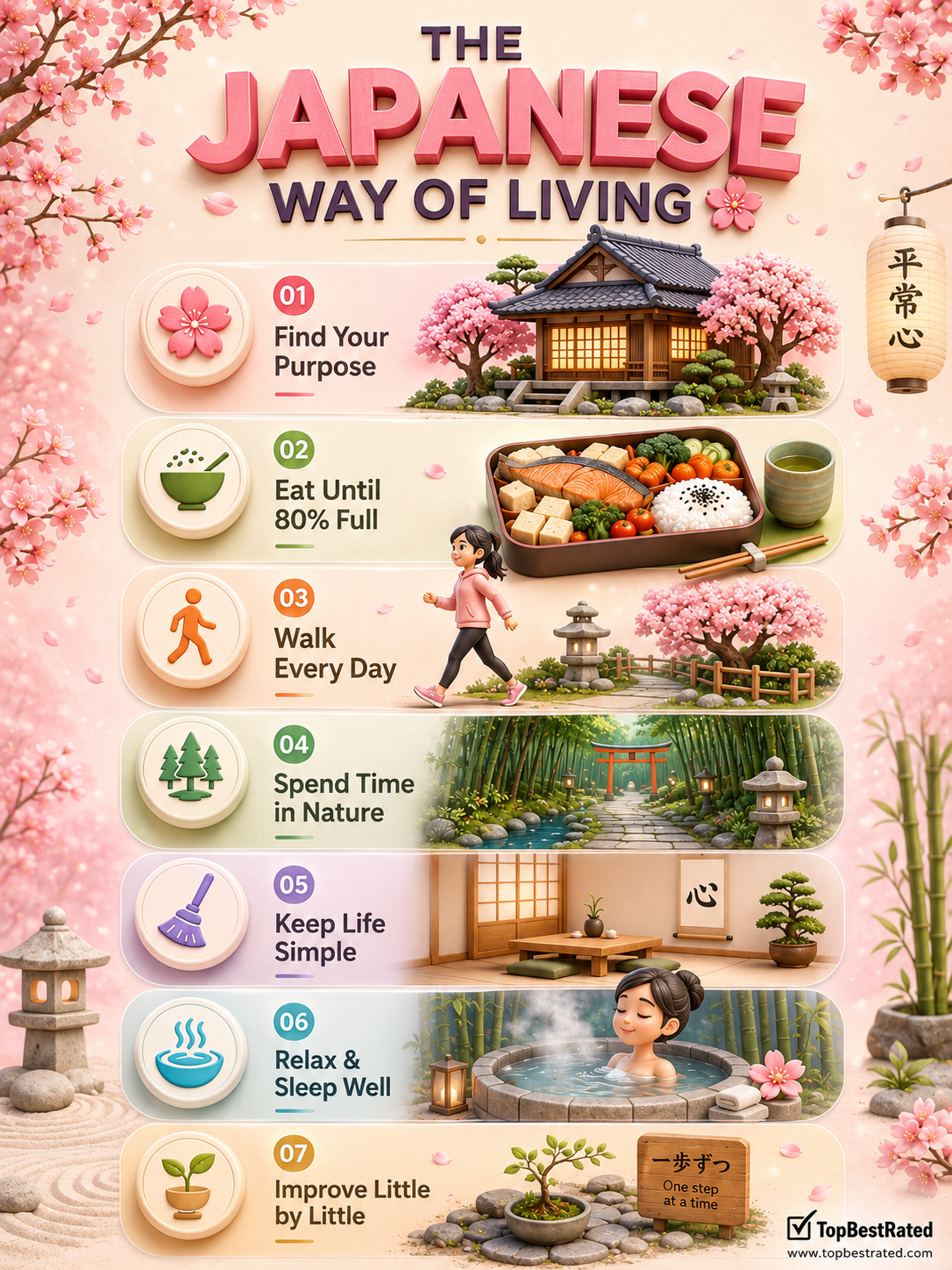
🍀 Mindful Moderation in Eating: Practice ‘Hara Hachi Bu’ – stop when you’re 80% full.
🍀 Embrace Consistent Movement: Make walking a daily habit and stay physically active.
🍀 Connect with Nature: Incorporate ‘Shinrin-yoku’ – spend time outdoors and in green spaces.
🍀 Cultivate Order: Maintain clean and organized living spaces for mental clarity.
🍀 Adopt the ‘Kaizen’ Mindset: Aim for small, daily improvements in all areas of life.
🍀 Nurture Relationships: Build and cherish meaningful connections with others.
🍀 Find Your Purpose: Discover and live by your ‘Ikigai’ – your reason for being.
🌸 Final Thoughts: Embracing a Healthier, Happier You
The Japanese way of living offers a rich tapestry of practical wisdom for anyone seeking to enhance their well-being. Its core tenets—purpose, moderation, simplicity, and continuous improvement—provide timeless principles that are incredibly relevant in our fast-paced modern world. This isn’t about striving for unattainable perfection; it’s about embracing gradual progress and cultivating a more mindful, intentional approach to daily life. Even adopting just a few of these powerful habits can significantly contribute to greater overall well-being, a noticeable reduction in stress, and a deeper, more fulfilling sense of joy in your everyday experiences. Start small, stay consistent, and watch your life transform.