Facing a peanut allergy emergency can be incredibly frightening. When an accidental exposure happens, panic can set in fast, making it tough to think clearly when every second truly counts. ⏱️ That’s why having a simple, crystal-clear plan is not just helpful – it’s vital. Knowing exactly what to do beforehand transforms potential confusion into decisive, life-saving action. 🛡️ This guide is designed to equip you or your loved ones with the confidence and knowledge to manage an unexpected allergic reaction safely. Staying calm and executing the right steps can prevent severe complications and, quite literally, save a life. 💙
Let’s walk through the precise actions you need to take to navigate a peanut allergy emergency with confidence and control. 🧭
Spotting the Signs: From Mild to Severe Anaphylaxis 🔍
It’s crucial to understand that allergic reactions aren’t always the same. What might start as a mild inconvenience can escalate rapidly into a life-threatening emergency known as anaphylaxis. ⚠️ Recognizing the subtle differences between mild symptoms and severe warning signs is key to a timely response.
- Mild Symptoms: These often include hives (itchy, raised welts on the skin), mild skin itching, a tingling sensation in the mouth, or a slightly runny nose. Sometimes, you might notice mild digestive upset like stomach discomfort or slight nausea shortly after eating.
- Severe Warning Signs: Pay close attention to these critical indicators. Difficulty breathing, wheezing, persistent coughing, or a feeling of tightness in the throat are serious red flags. Also, watch for critical circulation issues like dizziness, pale or bluish skin, confusion, or a sudden fainting spell.
Never adopt a ‘wait and see’ approach with allergic symptoms. ⏳ If you observe any signs of breathing problems or throat tightness, treat it as a critical emergency and act immediately. 🚑 This quick recognition between a localized skin reaction and a systemic, body-wide distress is paramount for reacting without hesitation. 🧠
📌 Key Takeaway: Anaphylaxis is a multi-system event. If skin symptoms appear alongside breathing difficulties or dizziness, it’s time for emergency action and medication.
Step 1: Immediate Epinephrine Auto-Injector Use 💉
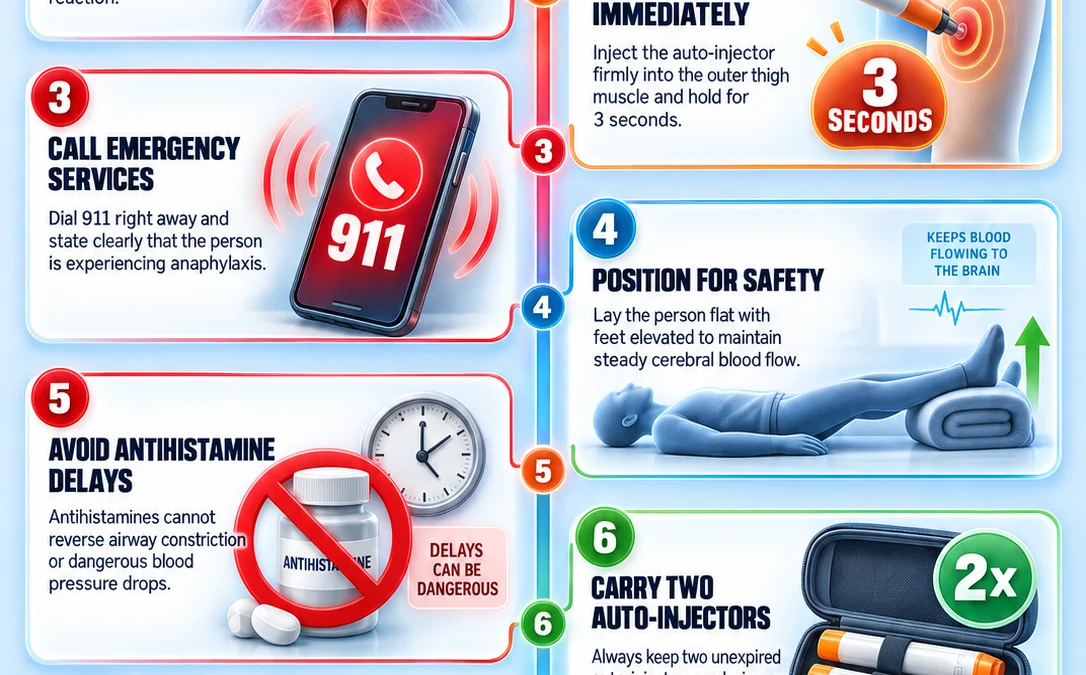
When severe symptoms strike, your very first, non-negotiable action is to administer epinephrine. 🎯 Epinephrine is the *only* first-line treatment for severe allergic reactions. While antihistamines might offer some relief for mild itching later on, they work far too slowly and cannot counteract life-threatening issues like throat swelling or dangerous drops in blood pressure. 📉
Here’s how to use your epinephrine auto-injector correctly:
- Locate the outer middle thigh: This is the primary injection site.
- Firmly press the device: Push the auto-injector firmly against the outer middle thigh. You can administer it right through clothing, like jeans, if removing them would waste precious time. 👖 The device is designed for rapid intramuscular injection.
- Hold for 3 seconds: Ensure you hold the injector in place for the full recommended duration (usually 3 seconds) to deliver the complete dose of medication.
- Massage the area: After removing the injector, gently massage the injection site for about 10 seconds to aid absorption.
- Safeguard the used device: Keep the used auto-injector handy to provide to the emergency medical personnel when they arrive.
It’s completely normal to experience a sudden rush of anxiety or a racing heart after the injection. 💓 This is simply the epinephrine working to stabilize your system, open up airways, and improve blood flow. 🫁 The needle is designed to penetrate clothing, ensuring quick delivery when every second counts. ⚡
⚠️ Common Mistake: Relying solely on oral antihistamines during a severe reaction is a dangerous error. Antihistamines primarily address skin symptoms like itching; they cannot open constricted airways or prevent a sudden, dangerous drop in blood pressure associated with anaphylaxis.
Step 2: Call Emergency Services & Position for Recovery 🚑
As soon as epinephrine has been administered, your immediate next step is to call for professional medical help. 📞 Even if the person starts feeling significantly better after the injection, it is absolutely critical to call emergency services (like 911 or your local equivalent) right away. 🚨 Why? Because the effects of epinephrine can wear off after about 15 to 20 minutes, potentially leading to a second wave of severe symptoms, known as a biphasic reaction. 🌊
When you call emergency services:
- State it’s Anaphylaxis: Clearly inform the operator that someone is experiencing anaphylaxis and has already received epinephrine. This helps them dispatch the appropriate medical team and equipment.
- Provide Location and Details: Give your exact location and any other relevant details about the person’s condition.
- Position the Person: Lay the individual flat on their back. Gently elevate their feet slightly (e.g., with a pillow or jacket). This position helps maintain crucial blood flow to the brain and vital organs, especially if blood pressure drops suddenly. 🩸
- Adjust if Necessary: If the person is vomiting or having significant difficulty breathing while lying flat, it’s often better to help them sit up gently. Avoid letting them stand up suddenly, as this can exacerbate a dangerous drop in blood circulation. 🛋️
Keep a close eye on the person’s breathing and overall condition until paramedics arrive. If symptoms don’t improve, or if they worsen again after 5 to 15 minutes, administer a second dose of epinephrine using a second auto-injector if one is available. 💊
🧠 Expert Insight: Biphasic reactions can occur hours after the initial allergic event. This is precisely why medical professionals typically recommend a period of observation in an emergency room (often 4 hours) following anaphylaxis to ensure symptoms do not return.
Being prepared turns a terrifying moment into a situation you can manage effectively. 🛡️
Step 3: Proactive Preparation for Future Safety 🛡️
Living with a peanut allergy, or caring for someone who does, means actively creating and maintaining safe environments. 🏫 This involves establishing consistent habits at home, school, work, and when dining out to prevent accidental cross-contamination and ensure preparedness. 🍏
Here are essential preparation steps:
- Carry Two Auto-Injectors: Always have at least two unexpired epinephrine auto-injectors with you at all times. They should be readily accessible, not buried deep in a bag.
- Read Labels Diligently: Make it a habit to read food labels meticulously *every single time* you purchase or consume a product, even if it’s a brand you’ve bought before. Ingredients and manufacturing processes can change.
- Wear Medical ID: A clear medical alert bracelet or necklace is vital. It immediately informs first responders and others about your allergy, which can save critical time in an emergency.
- Communicate Clearly: When dining out, always inform restaurant staff about your peanut allergy *before* ordering. Discuss ingredients and preparation methods to minimize risk.
- Proper Storage: Store your epinephrine auto-injectors at room temperature, away from extreme heat or cold. Never leave them in a hot car or expose them to freezing temperatures.
- Regular Inspection: Periodically check the clear viewing window on your auto-injector. The liquid inside should be clear. If it’s discolored or contains particles, it may not be effective and should be replaced.
- Share Your Plan: Ensure your written emergency action plan is shared with family members, close friends, teachers, school nurses, and anyone who regularly spends time with the allergic individual. Everyone should know the signs and what to do. 🤝
💡 Quick Tip: To avoid expired injectors, set a recurring calendar reminder on your phone about a month before they are due to expire. This gives you ample time to consult your doctor and get new prescriptions filled.
Key Takeaways: Your Peanut Allergy Action Checklist 📌
Let’s quickly recap the most critical points to ensure you feel ready and empowered:
- Recognize Severe Signs Fast: Throat tightness, difficulty breathing, wheezing, dizziness, or a sudden drop in blood pressure are urgent indicators requiring immediate treatment.
- Use Epinephrine First: Administer epinephrine into the outer thigh muscle at the first sign of severe symptoms. Do NOT delay or rely on oral antihistamines for anaphylaxis.
- Call for Help Immediately: Dial emergency services right away, even if symptoms seem to improve after the first epinephrine dose.
- Proper Positioning: Keep the person lying flat with their feet elevated unless they are vomiting or have severe trouble breathing, in which case sitting up may be better.
- Always Carry Two: Ensure you always have two working, unexpired epinephrine auto-injectors readily available and know their expiration dates.
Be Prepared, Stay Safe: Empowering Yourself Against Peanut Allergies 🏁
A peanut allergy emergency is undeniably scary, but knowledge and a well-rehearsed action plan put you in control. 🌿 By understanding the warning signs and practicing your emergency steps, you significantly enhance your ability to protect yourself and those you care about with confidence. 🎯
Take a moment today to check your epinephrine auto-injectors – are they in date and accessible? Update your personal or family action plan if needed. Most importantly, ensure the people around you – your support network – know exactly what to do in an emergency. Being prepared is, without a doubt, your most powerful defense. 🌟
Image: